
Why Business Income Coverage Is Your Financial Lifeline
Business income coverage is a type of commercial insurance that replaces lost income and covers ongoing expenses when your business must temporarily close due to covered property damage like fire, wind, or vandalism.
Key Facts About Business Income Coverage:
- What it covers: Lost profits, rent, payroll, and other continuing expenses during closure
- What triggers it: Direct physical damage to your property from covered perils
- How long it lasts: During the "period of restoration" (time to repair/rebuild)
- How it's purchased: As part of a Business Owner's Policy (BOP) or standalone policy
- Common exclusions: Floods, earthquakes, pandemics, and undocumented income
When disaster strikes your Long Island business, property insurance covers the physical repairs - but what about the income you lose while closed?
Only about 40% of small businesses have business interruption insurance, yet studies show that businesses without adequate coverage often struggle to survive major disruptions. A fire might take weeks to repair, but the lost income during that time can be devastating.
Business income coverage in Long Island acts as a financial bridge, helping you pay rent, employee wages, loan payments, and other essential expenses while your business gets back on its feet. It's the difference between a temporary setback and permanent closure.
What is Business Income Coverage and Why Is It Essential?
Picture this: you're running a successful restaurant in Patchogue when a kitchen fire forces you to close for two months. Your commercial property insurance covers rebuilding the kitchen, but who pays your rent while you're closed? What about your staff's paychecles? Your loan payments don't stop just because your business does.
This is exactly why business income coverage exists - and why it's often called a business owner's financial lifeline.
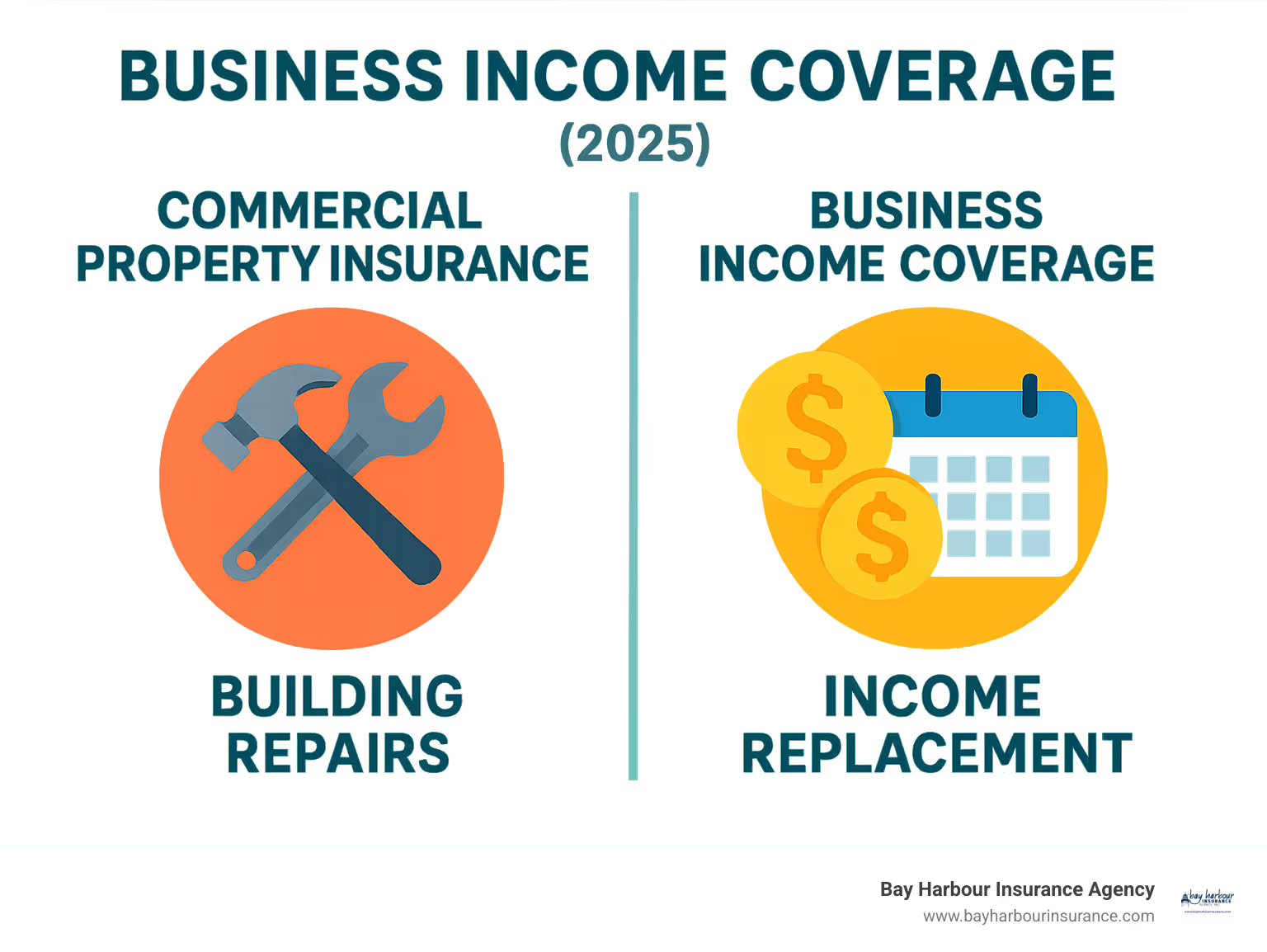
Business income coverage, also known as business interruption insurance, works hand-in-hand with your commercial property insurance but serves a completely different purpose. While property insurance fixes the physical damage to your building and equipment, business income coverage replaces the money you lose while your doors are closed.
Think of it as your business's safety net. It's designed to keep you financially stable during the recovery period, covering both your lost profits and the expenses that keep piling up even when you're not operating.
Without this protection, many businesses face a harsh reality: even after the physical repairs are complete, they've run out of money to reopen. It's not just about surviving the disaster - it's about surviving the downtime that follows.
For Long Island businesses, this coverage provides the peace of mind that comes from knowing a temporary setback won't become a permanent closure. Whether you're running a retail shop in Sayville or a manufacturing facility in Bay Shore, business income coverage keeps your financial foundation solid while you rebuild.
More info about our business insurance services.
What Financial Losses Are Covered?
When disaster strikes and forces you to suspend operations, business income coverage steps in to cover the financial losses that pile up during your closure. Here's what's typically protected:
Lost profits form the heart of this coverage. This represents the money your business would have earned if the interruption hadn't happened. Your insurer calculates this based on your financial records and projected earnings - essentially putting you back where you would have been financially.
Continuing operating expenses are equally important. These are the bills that don't stop just because your business does. Your rent or mortgage payments continue whether your doors are open or not. Loan payments keep coming due. Taxes still need to be paid. Payroll expenses are often covered too, which is crucial for keeping your valuable employees on board instead of losing them to other jobs while you're closed.
The coverage also handles those routine bills that never seem to stop - utilities, insurance premiums, and other fixed costs that continue regardless of whether you're serving customers.
If you need to operate from a temporary location while repairs are underway, many policies will cover relocation expenses. This includes the costs of moving, setting up shop elsewhere, and even advertising to let your customers know where to find you.
The goal is simple: keep your business financially stable while you get back on your feet. It's about turning a potentially devastating interruption into a manageable temporary setback.
How is Business Income Insurance Purchased?
Business income coverage isn't typically sold by itself. Instead, you'll usually get it one of two ways, both designed to make protection simple and comprehensive.
The most common approach is through a Business Owner's Policy (BOP). This bundled package combines three essential protections: commercial property insurance, general liability insurance, and business income coverage. For most small and medium-sized businesses, a BOP offers the best value and simplest management. You get comprehensive protection from physical damage, liability claims, and income loss all in one convenient policy.
For larger businesses or those with unique needs, business income coverage can be added as an endorsement or rider to an existing commercial property insurance policy. This approach allows for more customization of coverage limits and terms to match complex operational requirements.
Regardless of how you purchase it, this coverage is essential for any business that depends on a physical location to generate income. It fills the critical gap between property insurance and your business's financial survival.
While you're thinking about protecting your business comprehensively, don't forget about professional liability coverage: Secure your business with professional liability.
Understanding Your Policy: Key Terms and Triggers
Reading through insurance policies can feel like trying to solve a puzzle with half the pieces missing. But when it comes to your business income coverage, understanding a few key terms and triggers can make all the difference between getting the protection you need and facing an unpleasant surprise when you file a claim.
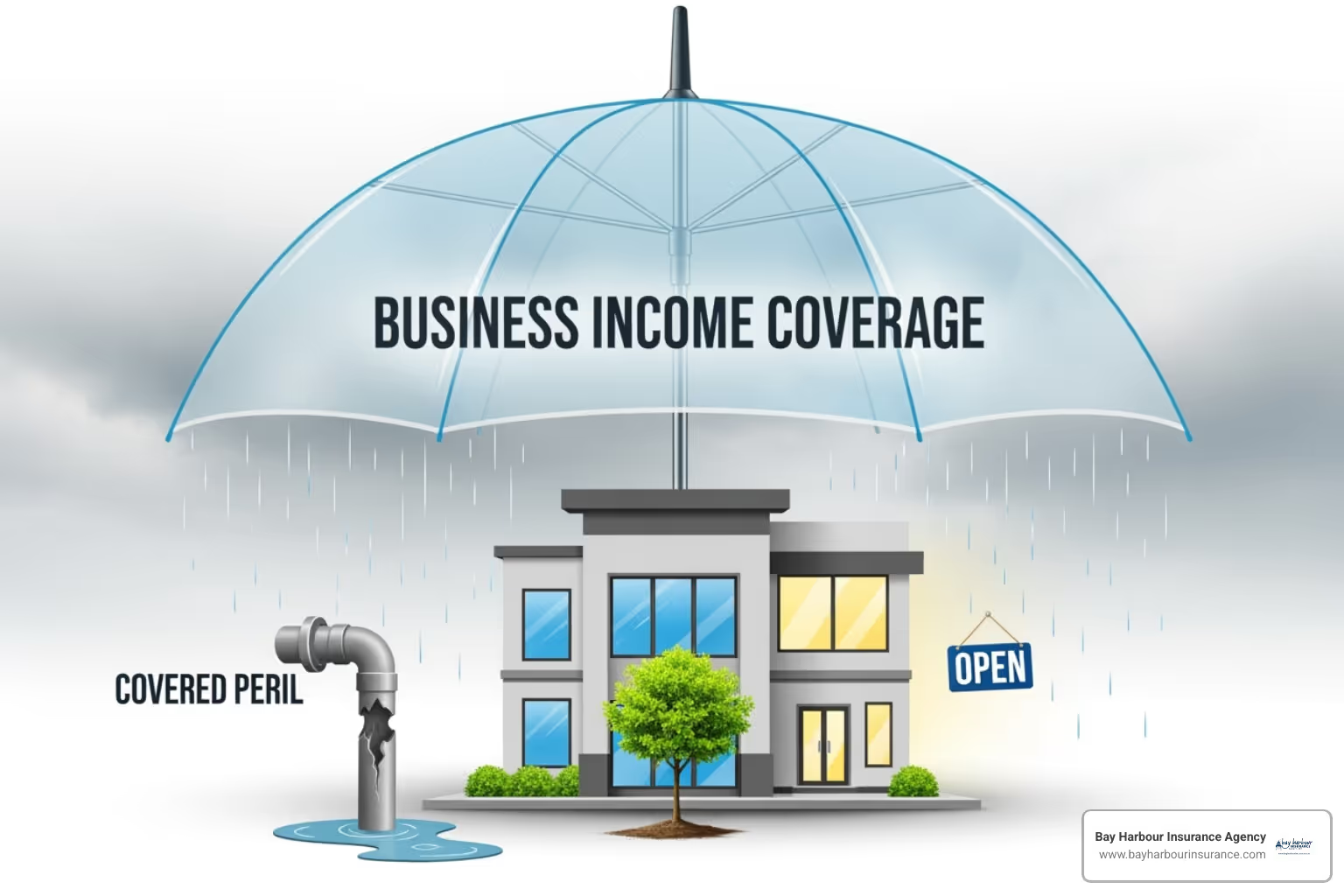
The magic words that activate your business income coverage are "direct physical loss or damage" caused by a "covered peril." Think of it this way: something physical must happen to your property that's specifically covered by your policy. You can't just wake up one morning and decide business is slow – there needs to be actual, tangible damage.
The most common covered perils include fire (the classic insurance nightmare), wind damage (especially important here on Long Island where coastal storms love to visit), hail, vandalism, and theft. If someone crashes a vehicle into your storefront or if your building suffers damage from an aircraft (yes, that's actually covered), your policy would typically respond.
Here's the catch though: the damage has to be physical. If your business struggles because the economy takes a downturn or customers simply stop coming, that's not a covered peril. Your policy is designed to protect against real, tangible damage – not market forces or changing consumer habits.
The 'Period of Restoration' and 'Waiting Period' Explained
Two terms that trip up many business owners are the 'period of restoration' and the 'waiting period.' Don't worry – they're easier to understand than they sound.
The period of restoration is essentially your coverage timeline. It starts when the damage occurs and continues for however long it reasonably takes to repair, rebuild, or replace your damaged property. Most policies provide coverage for about 30 days as standard, but you can often extend this to 360 days for additional premium. If you decide not to rebuild and instead relocate your business, the period covers the reasonable time it would take to get settled in your new location.
The waiting period (sometimes called a time deductible) is like a regular deductible, except it's measured in time instead of dollars. Common waiting periods are 24, 48, or 72 hours after the loss occurs. During this initial period, you're on your own for any lost income or continuing expenses.
Let's say a fire damages your restaurant and you have a 72-hour waiting period. Your business income coverage wouldn't start paying until three full days after the fire. Some insurers offer zero-hour waiting periods, which means coverage kicks in immediately – definitely worth considering if even a short closure could seriously impact your cash flow.
Understanding Common Exclusions
Even the best business income coverage has its limits, and knowing what's not covered can save you from some serious headaches down the road. These exclusions aren't meant to trick you – they're usually there because certain risks require specialized coverage or are simply too unpredictable to include in standard policies.
Undocumented income tops the list of exclusions. If you can't prove your lost income with solid financial records, you won't get paid. This is why keeping meticulous books isn't just good business practice – it's essential for insurance claims.
Flood damage and earthquake damage are typically excluded from standard policies. Living on Long Island, flood risk is a real concern for many businesses, so separate flood insurance, often available through the National Flood Insurance Program, might be necessary. Pandemics and viruses have become hot topics recently, and most standard policies don't cover business interruptions from widespread diseases or government-mandated shutdowns unless there's physical damage to your specific property.
Utility failures that originate off your premises usually aren't covered unless you add a specific endorsement. So if the power company has an outage that shuts you down for days, your standard policy probably won't help. Other common exclusions include acts of war, government seizure, and nuclear hazards – the kind of catastrophic events that are beyond what typical insurance is designed to handle.
Understanding these gaps helps you make informed decisions about additional coverage you might need. We're here to help you steer these complexities and ensure you're not left exposed when you need protection most.
For more insights on protecting your business from various risks, check out: Risks Without Cyber Insurance.
Tailoring Your Protection: Essential Endorsements and Add-ons
Think of your standard business income coverage like a reliable car that gets you where you need to go. But just like you might add GPS, heated seats, or all-wheel drive for specific needs, your policy can be improved with endorsements and add-ons that address your unique business risks. These customizations transform good coverage into great protection, filling gaps that could otherwise leave you vulnerable during a crisis.

The beauty of these endorsements is how they work together like puzzle pieces, each filling a specific gap to create comprehensive protection. Whether you're running a manufacturing facility in Ronkonkoma or a retail shop in Bay Shore, the right combination of endorsements can mean the difference between a quick recovery and a prolonged struggle to get back on your feet.
Extra Expense and Extended Business Income Coverage
Two of the most valuable endorsements work as a powerful team with your base business income coverage: Extra Expense Coverage and Extended Business Income Coverage. While your main policy replaces lost income during closure, these endorsements tackle the additional challenges that come with getting back to business.
Extra Expense Coverage is like having an emergency response team for your business. When disaster strikes, it covers the extra costs you incur to keep operating or reopen faster. This might include temporary relocation costs if you need to set up shop elsewhere, overtime pay for employees working around the clock to restore operations, or expedited shipping for replacement equipment.
Extended Business Income Coverage recognizes a reality many business owners don't consider: even after you reopen, it takes time to get back to normal revenue levels. This coverage extends protection beyond the physical restoration period, covering income losses during your ramp-up period as customers gradually return and operations stabilize.
Civil Authority and Utility Service Interruption
Sometimes the problem isn't damage to your property – it's that you can't access it or operate normally due to external factors. That's where these specialized endorsements become invaluable.
Civil Authority Coverage protects you when government authorities prohibit access to your business due to damage in the surrounding area. Imagine a gas leak on your street that forces evacuation of the entire block, or storm damage to neighboring buildings that makes your area unsafe. Your property might be fine, but you still can't operate. This endorsement typically covers losses when government-ordered shutdowns prevent access to your premises due to damage to neighboring properties within a certain radius.
Utility Service Interruption Coverage addresses one of the most common causes of business disruption that standard policies often exclude. When power outages, water main breaks, or communication system failures originating from off-site utility sources force your business to close, this endorsement steps in. It's particularly crucial for businesses that depend heavily on electricity, water, or internet connectivity to function.
Contingent Business Interruption (CBI) Coverage
In today's interconnected business world, your success often depends on others. Contingent Business Interruption Coverage protects you when key partners in your business ecosystem suffer covered losses that impact your operations.
This coverage recognizes that your business doesn't operate in isolation. If your key supplier in California suffers fire damage and can't deliver essential materials, or if your major customer experiences a covered loss and cancels large orders, your business suffers too. CBI Coverage extends protection to these supply chain disruptions and dependent property losses.
Consider a restaurant that depends on a specific food distributor, or a manufacturer that relies on a single supplier for critical components. If these partners face covered losses, CBI Coverage helps replace the income you lose while finding alternative sources or waiting for your partners to recover.
This type of coverage is especially relevant for businesses with anchor tenants – like a small shop in a plaza that depends on foot traffic generated by a major retailer. If the anchor tenant suffers a covered loss and closes temporarily, your business might see significant income reduction even though your property is undamaged.
For a real-world example of how specialized coverage helps businesses in specific industries, check out: An example of how restaurant insurance can help.