
Why Attorney E&O Insurance Is a Financial Lifeline for Long Island Law Firms
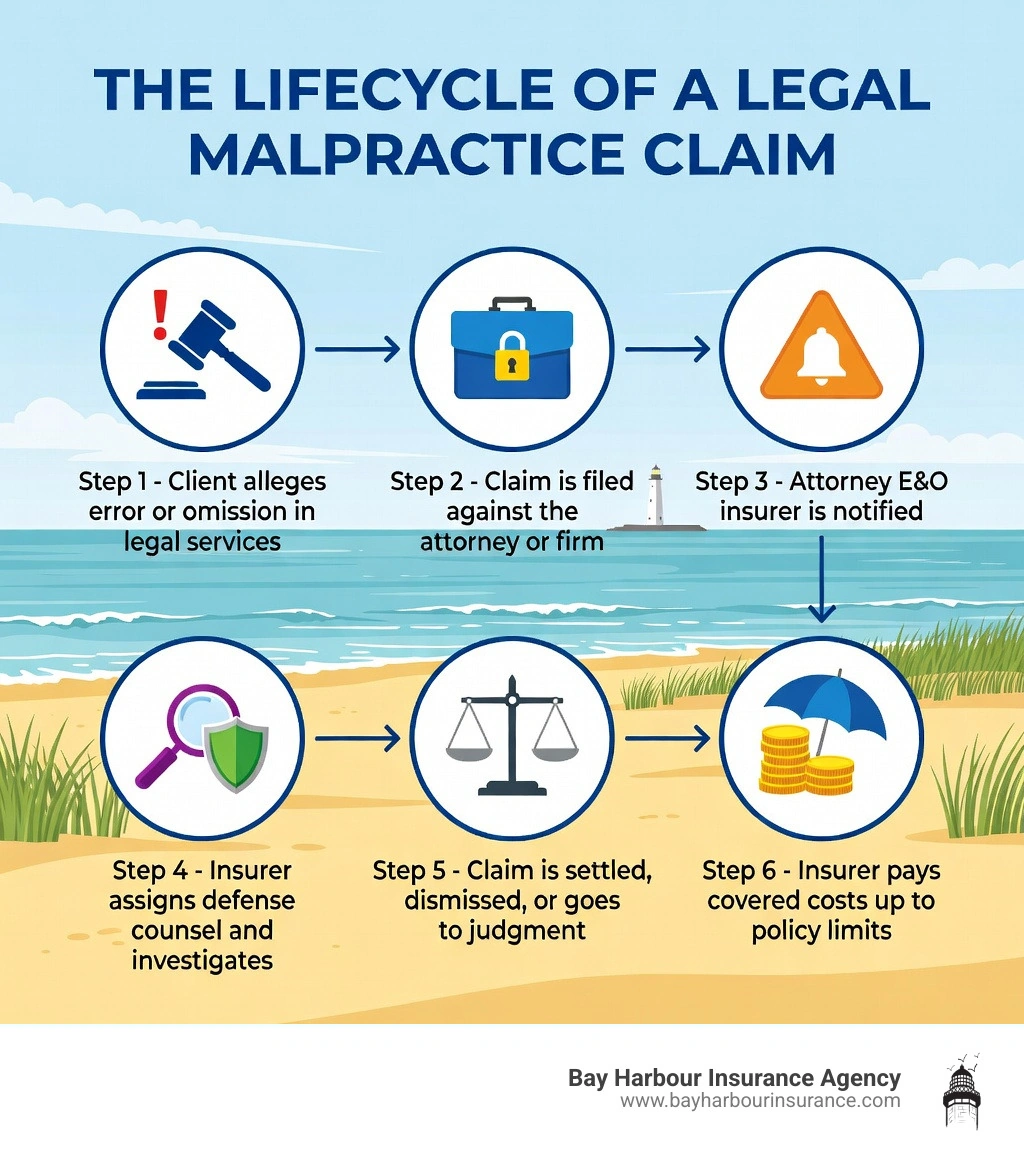
Attorney E&O insurance — also called professional liability or legal malpractice insurance — protects lawyers and law firms from claims that their advice or services caused a client financial harm.
Here's what you need to know at a glance:
Law firms on Long Island — from Patchogue to Holbrook to Medford — face real financial exposure every day. A missed filing deadline, a perceived conflict of interest, or even an unhappy client with no valid claim can result in a costly lawsuit. According to industry data, between 4% and 17% of lawyers are sued in any given year, and average defense costs alone can range from $50,000 to over $500,000.
That's a serious risk for any firm, large or small.
Even the most diligent attorney is not immune. Mistakes happen. Clients misunderstand expectations. And in today's digital world, cyber incidents are triggering a growing number of malpractice claims — making the right coverage more important than ever for New York legal professionals.
Understanding Attorney E&O Insurance and Mandatory Requirements
At its core, attorney e&o insurance is a specialized form of professional liability protection. It is designed to shield legal professionals from financial losses arising out of negligent acts, mistakes, or failures to perform professional duties. Whether you are a solo practitioner in Holbrook or part of a large firm in New York, this insurance serves as the bedrock of your risk management strategy.
The regulatory landscape for malpractice insurance varies significantly across the country. For example, Oregon and Idaho mandate that lawyers obtain professional liability insurance to practice. Other states take a different approach, focusing on transparency. Under California disclosure rules, attorneys must inform the state bar or their clients if they do not carry coverage. Similarly, Ohio ethics guidelines and South Dakota statutes create a framework where the decision to carry insurance often impacts how an attorney must interact with the public and the bar association.
In New York, while the state does not currently mandate that every attorney carry malpractice insurance, the practical reality for firms in Medford and across Long Island is that practicing "bare" is a massive gamble.
Is Malpractice Insurance Required in New York?
While New York does not have a blanket mandate like Oregon, there are several reasons why it is effectively required for most successful practices. First, many sophisticated clients and large corporations include insurance requirements in their service contracts. If a firm in Patchogue wants to represent a major developer or a financial institution, they will likely need to show proof of attorney e&o insurance.
Furthermore, even if the state bar doesn't force your hand, the risk to your personal assets is very real. Without coverage, a single judgment could jeopardize everything you've built. For those looking to secure a business with professional liability, understanding that this coverage is a prerequisite for growth is essential. Whether you are running Holbrook legal practices or a boutique firm in New York, having this safety net allows you to focus on your clients rather than your liabilities.
Key Terms: Claims-Made vs. Occurrence
When shopping for attorney e&o insurance, you will encounter two primary types of policy structures: "Claims-Made" and "Occurrence."
- Claims-Made Policies: Most modern legal malpractice policies are "claims-made and reported." This means the policy that is active at the time the claim is filed is the one that responds, provided the alleged error happened after the "retroactive date" listed in the policy.
- Occurrence Policies: These respond based on when the error actually happened, regardless of when the claim is eventually filed. These are increasingly rare in the professional liability world.
Understanding these triggers is vital for firms in Medford or Holtsville. According to the Wex definition of E&O, the focus is on protecting the professional from financial losses due to mistakes. If you switch insurers, you must ensure there is no gap in your "prior acts" coverage, or you could find yourself unprotected for work performed years ago that only recently resulted in a lawsuit.

What Does Attorney E&O Insurance Typically Cover?
A robust attorney e&o insurance policy does more than just pay out settlements. It provides a comprehensive defense package. This includes the costs of hiring expert witnesses, investigators, and specialized defense counsel. For a firm in Holbrook, these "supplementary payments" can be the difference between staying in business and closing your doors.
Beyond standard errors, modern policies are evolving. The ABA tech report on breaches highlights that 29% of law firms have experienced some form of security breach. Because of this, many E&O policies now include limited "first-party" cyber coverage to help with the immediate costs of a data incident on Long Island.
Common Exclusions in Attorney E&O Insurance Policies
It is just as important to know what is not covered. Attorney e&o insurance is designed for "inadvertent" errors, not bad actors. Common exclusions include:
- Intentional Fraud and Criminal Acts: If an attorney intentionally steals client funds, insurance will not step in to pay the judgment.
- Ethics Rules Violations: While some policies offer a small sub-limit for disciplinary defense, ethics rules violations involving the dishonest misuse of trust accounts are generally excluded.
- Scope of Expertise: Claims arising from business ventures where the lawyer has an ownership interest, or work performed far outside their scope of expertise, may face coverage challenges.
Firms in Medford and Holtsville should review their policy language carefully to ensure their specific practice areas—such as high-risk real estate or intellectual property—are not excluded.
Why Frivolous Lawsuits Require Coverage
One of the most frustrating aspects of the legal profession is the "meritless" claim. A client may be unhappy with a court's decision and decide to sue their lawyer, even if the lawyer performed perfectly.
Even if you did nothing wrong, you still have to show up in court. You still have to file motions. You still have to protect your reputation. In Patchogue and Holbrook, attorney e&o insurance provides "duty to defend" coverage. This means the insurance company takes over the headache of managing the claim and pays the legal fees to get the case dismissed. Without this, a firm could spend $100,000 just proving they were right—a pyrrhic victory that could bankrupt a small practice.
Evaluating Risk: Leading Causes of Legal Malpractice Claims
What actually leads to a claim? It's rarely a dramatic courtroom blunder. Instead, it's usually the "boring" stuff. According to the American Bar Association, the leading causes of claims include:
- Substantive Law Errors (46%): Simply getting the law wrong or failing to conduct proper research.
- Administrative Errors (28.5%): Missed deadlines (statutes of limitations), lost files, or clerical mistakes.
- Client Relations (12.3%): Poor communication or failure to follow a client's instructions.
In New York and Patchogue, conflicts of interest remain a top trigger. Whether it's a real conflict or just the perception of one, these claims are expensive to litigate and damaging to a firm's name.
The Growing Need for Cyber Coverage within Attorney E&O Insurance
We can't talk about risk in New York without talking about cybercrime. Law firms are "gold mines" for hackers because they hold sensitive financial data, intellectual property, and private client details. The IBM cost of data breach report notes that the average cost of a breach in professional services is now roughly $4.47 million.
While your attorney e&o insurance might provide a small amount of cyber protection, it is often not enough to cover a full-scale ransomware attack or a sophisticated phishing scheme. Firms on Long Island and in Patchogue should consider a dedicated cyber policy to complement their E&O. For more information on how this fits into your broader business protection, you can read about New York general liability insurance.
Risk Management and Practice Resources
The best claim is the one that never happens. Many high-quality insurance programs offer more than just a policy; they provide a suite of risk management tools. This can include:
- CLE Webinars: Free continuing legal education focused on avoiding malpractice.
- Sample Engagement Letters: Using standardized, well-drafted letters to define the attorney-client relationship.
- Mentorship Programs: Connecting junior lawyers in Holtsville or Medford with experienced practitioners to vet difficult cases.
Proactive risk management is a key part of maintaining a healthy firm. Just as directors and officers insurance protects the leadership of a corporation, these resources protect the "boots on the ground" attorneys from making avoidable mistakes.
Choosing the Right Policy Limits and Excess Coverage
How much coverage is enough? For most solo practitioners on Long Island, a $1 million per claim / $1 million aggregate ($1M/$1M) policy is the starting point. However, as firms grow in Holbrook or Medford, they often move to $1M/$3M limits.
It is crucial to remember that most legal malpractice policies are "eroding" or "depleting" policies. This means that every dollar spent on your legal defense—lawyers, experts, court fees—comes out of your $1 million limit. If a complex case costs $300,000 to defend, you only have $700,000 left to pay a settlement or judgment. This is why "asset protection" is so important; if the judgment exceeds your remaining limit, your firm's bank accounts and even personal assets could be at risk.
When to Consider Excess Liability and Umbrella Policies
If your firm handles high-stakes litigation, multi-million dollar real estate deals, or class-action suits in New York, a standard $1M limit is likely insufficient. This is where "excess" or "umbrella" policies come in.
An excess policy sits on top of your primary attorney e&o insurance, providing an additional layer of protection (e.g., an extra $4 million in coverage). For firms in Holtsville looking to secure a business with professional liability, these higher limits provide peace of mind when dealing with high-net-worth clients or complex corporate matters.
Factors Influencing E&O Premiums
Insurance companies don't just pull numbers out of a hat. They look at several factors to determine your premium in Patchogue or Holbrook:
- Area of Practice (AOP): Plaintiff personal injury, real estate, and intellectual property are generally considered higher risk than criminal defense or mediation.
- Claim History: A firm with a "clean" record will pay significantly less than one with a history of frequent claims.
- Firm Size: Generally, more attorneys mean more "touches" on files, which increases the statistical likelihood of an error.
- Risk Management: Firms that use engagement letters and have strong conflict-check systems often receive "credits" that lower their premiums.
Frequently Asked Questions about Attorney E&O Insurance
What is the difference between per-claim and aggregate limits?
The per-claim limit is the maximum amount the insurer will pay for a single error or a series of related errors. The aggregate limit is the total amount available for all claims filed during that policy year. If you have a $1M/$3M policy and suffer three unrelated $1M losses, your aggregate limit would cover all of them.
How do defense costs affect my policy limits?
In most attorney e&o insurance policies, defense costs "deplete" the limits. This means your available insurance for a settlement shrinks as your legal bills grow. Some policies offer "Defense Outside the Limits" (DOL), which keeps your full limit available for settlements, but these policies typically carry higher premiums.
Does E&O insurance cover cyberattacks?
It depends on the policy. Many standard E&O forms now include a small sub-limit (often $25,000 to $50,000) for data breach response. However, this is rarely enough to cover a major event. For comprehensive protection against ransomware, social engineering, and business interruption, a standalone cyber liability policy is usually necessary for firms on Long Island.
Conclusion
Navigating the complexities of attorney e&o insurance is about more than just checking a box for compliance; it's about ensuring the longevity and reputation of your practice. At Bay Harbour Insurance Agency, we understand the unique challenges faced by legal professionals in Patchogue, Holbrook, Holtsville, and Medford.
As an independent, client-centered agency, we pride ourselves on offering personal service that helps you identify the right limits and coverage features for your specific practice areas. Whether you are a new solo practitioner on Long Island or a partner in an established New York firm, we are here to provide the expert guidance you need to stay protected.
Don't leave your firm's future to chance. Secure a business insurance quote today and let us help you build a financial safety net that allows you to practice with confidence.