

Understanding Your Errors and Omissions Insurance Policy: An Introduction
For professionals in New York, an errors and omissions insurance policy is a critical safeguard. If a client claims your work caused them financial harm, this coverage acts as a financial shield.
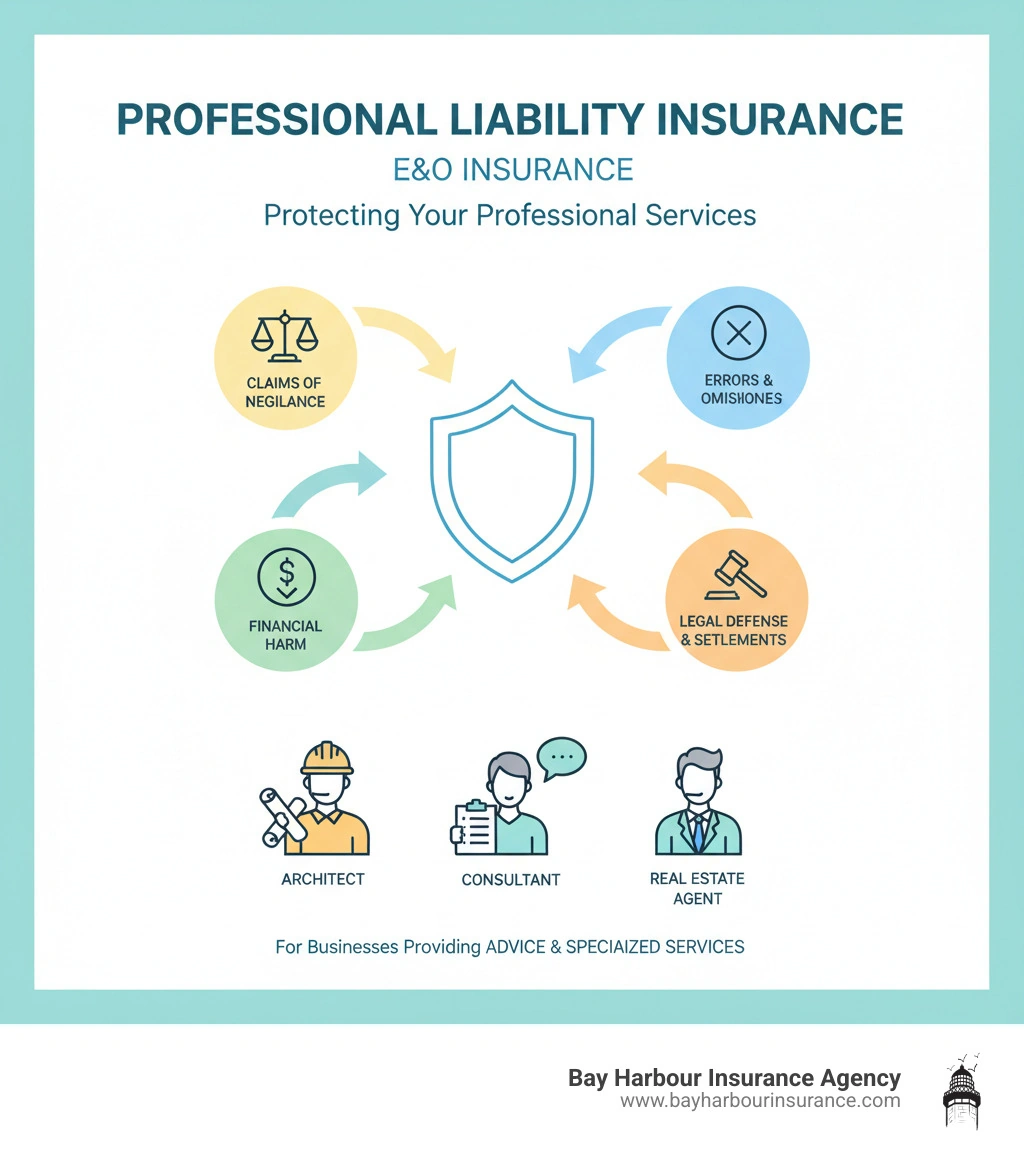
- Errors and Omissions (E&O) insurance protects businesses from claims of professional mistakes, negligence, or failure to perform services as expected.
- It covers legal fees, settlements, and judgments, even if you've done nothing wrong.
- E&O is vital for any business on Long Island that provides advice or specialized services.
In the competitive business landscape of Long Island, mistakes—or even just accusations of mistakes—can be costly. Whether you're a consultant in Holbrook, a real estate agent in Medford, or an IT specialist in Patchogue or Holtsville, defending against a claim can drain your resources. An E&O policy helps manage these legal expenses, ensuring your business can thrive.
This guide explains what you need to know about errors and omissions insurance, from who needs it to what it covers. It's about protecting your business and building client trust.
What Is E&O Insurance and Who Needs It?
If your business provides expertise or advice, what happens if a client claims your work cost them money? Even the most careful professionals in New York can face lawsuits. Defending your business, even against baseless claims, can cost thousands in legal fees alone. That's why an errors and omissions insurance policy exists. It's your financial safety net when a client alleges your professional service caused them harm, covering legal defense, settlements, and judgments. For service-based businesses across Long Island, from Patchogue to Holtsville and Medford, this protection is essential for survival.

What is an errors and omissions insurance policy?
An errors and omissions insurance policy is professional liability insurance for businesses that provide services or advice. Unlike general liability insurance, which covers physical accidents, E&O covers financial losses stemming from your professional judgment and services. For example, if an accountant in Patchogue makes a tax return error that results in penalties for a client, or a marketing consultant in Holtsville creates a campaign that a client claims failed to deliver, E&O insurance would respond.
The policy covers legal defense costs (attorney fees, court costs), settlements, and judgments up to your policy limits. Crucially, it responds to claims of alleged mistakes, not just proven ones. Even if you can prove you did nothing wrong, the legal bills can be devastating. Your E&O insurance handles those costs so you can focus on running your business in places like Holbrook or Medford.
Professions That Need E&O on Long Island
If you provide professional services for a fee on Long Island, you likely need an errors and omissions insurance policy. The financial stakes can be enormous for professionals across all industries.
- Accountants and bookkeepers face risks from financial statement or tax return errors.
- Real estate agents in Medford and throughout Long Island can be sued over missed disclosures or misrepresentations.
- IT consultants in Holbrook need coverage for system failures or data breaches.
- Marketing agencies can be sued for underperforming campaigns or copyright infringement.
- Architects and engineers face claims related to design flaws that may appear years later.
- Insurance agents need protection if clients claim they were sold the wrong policy.
- Financial advisors across Long Island carry E&O because investment advice can be scrutinized in hindsight.
The list also includes consultants of all types, notary publics, and lawyers. For professionals in competitive markets like Patchogue and Holtsville, E&O coverage signals to clients that you take your responsibilities seriously.
Legal and Contractual Requirements in New York
In New York, you may not have a choice about carrying an errors and omissions insurance policy. Depending on your profession, it might be legally or contractually required.
Some licensing boards in New York mandate E&O coverage to maintain an active license. It's essential to check with your professional regulatory body to understand your obligations. More commonly, client contracts require you to carry E&O insurance, especially when working with large corporations or on high-stakes projects. A major client in Patchogue or Holbrook isn't likely to award a significant contract without this assurance.
From a client's perspective, choosing between two providers in Holtsville or Medford, the one with E&O insurance demonstrates superior risk management and professionalism. This coverage can be a competitive advantage, helping you win more business. It shows you're prepared for the unexpected and have taken steps to protect both your business and your clients. For more on comprehensive business protection, see our guide on business owner protection.
Understanding Your Errors and Omissions Insurance Policy Coverage
Knowing what your errors and omissions insurance policy covers—and what it doesn't—is crucial for protecting your business in Holbrook, Medford, or anywhere on Long Island. This coverage is a powerful tool, but it's important to understand its specific boundaries. Every E&O policy is unique, with its own "per-occurrence" limit (for a single claim), "aggregate" limit (total for the year), and deductible (your out-of-pocket share). Understanding these details ensures you know how your policy will respond when it matters most, covering legal expenses, settlements, and judgments for your New York business.
What E&O Insurance Typically Covers
An errors and omissions insurance policy protects you from claims tied directly to your professional services. While policies vary, here’s what is typically covered for professionals in places like Patchogue and Holtsville:
- Negligence: Claims that you were careless or failed to provide the expected standard of professional service, leading to a client's financial loss.
- Errors and Oversights: Covers claims from unintentional mistakes, like a typo in a report or a misstep in a project.
- Omissions: Claims arising from accidentally forgetting to include crucial information that caused a problem for your client.
- Undelivered Services: If you fail to deliver a contractually promised service, causing your client financial harm.
- Missed Deadlines: In the world of Long Island business, missing a deadline that causes a client financial damage is a common claim.
- Misrepresentation: Covers claims where a client believes you provided inaccurate information that they acted on to their detriment.
This coverage provides a strong defense against many professional liability claims. For more details, see this overview on A guide to E&O insurance.
Common Exclusions: What E&O Insurance Does NOT Cover
It's just as important to know what your errors and omissions insurance policy doesn't cover. E&O is not an all-in-one shield for every business risk.
Common exclusions include:
- Intentional Wrongdoing or Criminal Acts: E&O is for honest mistakes, not deliberate fraud or criminal behavior.
- Bodily Injury or Property Damage: These claims fall under your General Liability Insurance NY, not E&O.
- Employee Injuries: This is covered by Workers' Compensation insurance.
- Employment Disputes: Claims like discrimination or wrongful termination are covered by Employment Practices Liability Insurance (EPLI).
- Cyber Liability: While some E&O policies offer minor cyber protection, major data breaches require a dedicated policy. Understanding these Risks Without Cyber Insurance is crucial for any business owner in Holbrook or Medford.
- Claims Outside Policy Period: E&O policies are time-sensitive and won't cover claims related to work done before a "retroactive date" or reported after an "extended reporting period" ends.
- Guarantees: If you guarantee a specific outcome and it doesn't happen, your policy generally won't cover the resulting claim.
Understanding these exclusions helps businesses in Patchogue and Holtsville identify where other insurance policies are needed for comprehensive protection across Long Island.
Key Policy Features and Terms for NY Businesses
Navigating an errors and omissions insurance policy requires understanding a few key terms, especially for businesses in New York. These features dictate when and how your coverage applies. A crucial element is the "retroactive date," which is the earliest point in time an incident can occur and still be covered. For established businesses on Long Island, ensuring this date aligns with your work history is vital. Maintaining continuous E&O coverage is essential; any gaps can leave your past work in places like Holbrook, Medford, or Patchogue uninsured.
Claims-Made vs. Occurrence Policies
It's critical to understand if your errors and omissions insurance policy is "claims-made" or "occurrence." Most E&O policies are claims-made, which has major implications for your coverage.
Here's a breakdown:
The key takeaway for a claims-made policy is that if you cancel it, a claim made after cancellation won't be covered unless you purchase tail coverage. This makes continuous coverage essential for any professional service firm in Holtsville or elsewhere on Long Island.
Understanding Prior Acts, Tail Coverage, and Lapses
For businesses with an established history in New York, understanding "prior acts" and "tail coverage" is as important as buying an errors and omissions insurance policy in the first place.
- Prior Acts Coverage: This protects you from claims arising from incidents that happened before your current policy's start date, as long as you've had continuous E&O coverage. Your policy's "retroactive date" is the cutoff; work performed before this date is not covered. For established businesses in Patchogue or Medford, ensuring your new policy includes prior acts coverage is vital to protect your entire work history.
- Tail Coverage (Extended Reporting Period): This is an add-on you can buy when a claims-made policy is canceled or not renewed. It gives you an extended period (often several years) to report claims for incidents that occurred while your policy was active. This is crucial if you retire, sell your business in Holbrook, or switch insurance types.
- Consequences of a Coverage Lapse: A lapse in E&O coverage can be disastrous for a Holtsville professional. A gap, even a short one, can eliminate your prior acts coverage. This means any claim related to work done before the lapse would be uninsured, leaving you to pay legal costs out of pocket. Maintaining continuous coverage is a best practice for all professionals on Long Island.
Obtaining and Managing Your E&O Policy
Securing an errors and omissions insurance policy is a critical first step for any professional service provider on Long Island. The process involves understanding cost factors, getting a quote, and knowing how to file a claim. For businesses in the Medford or Holbrook area, partnering with an experienced insurance agency simplifies this process. Effective policy management also involves proactive risk mitigation, like clear client communication and quality control, which can reduce claims and potentially lower your insurance costs over time.
What factors influence the cost of an errors and omissions insurance policy?
The cost of an errors and omissions insurance policy varies based on several key factors. Understanding these helps businesses on Long Island anticipate their premiums.
- Industry Risk: High-risk professions (e.g., architects, financial advisors) face higher premiums than lower-risk ones due to the potential for greater financial losses.
- Business Size and Revenue: Larger businesses with more clients and bigger projects in New York have more exposure, leading to higher premiums.
- Claims History: A history of E&O claims will increase your premium, while a clean record helps keep costs down.
- Location: Rates can vary by region. Businesses in Patchogue or Holtsville may have different cost structures based on local legal environments.
- Coverage Limits and Deductibles: Higher coverage limits and lower deductibles mean a higher premium.
- Risk Management: Businesses with strong employee training and risk management protocols are often seen as lower risk, potentially earning more favorable rates.
We can advise you on all these factors to help you Secure your professional liability coverage.
How to Get a Quote and File a Claim
Obtaining an errors and omissions insurance policy and knowing the claims process are fundamental to protecting your business in Medford or anywhere on Long Island.
Getting Your Quote:
To get an accurate quote, you'll need to provide details about your business, including your industry, services, annual revenue, number of employees, years in business, and any past E&O claims. You'll also specify your desired coverage limits and deductibles. As an independent agency serving Patchogue, Holbrook, and Holtsville, we can shop with multiple carriers to find the best value for your New York business.
Filing a Claim:
If you suspect a situation could lead to a claim, act promptly.
- Notify Your Insurer Immediately: Contact your insurance provider as soon as you are aware of a potential claim, even if it's just a threat.
- Gather Documentation: Collect all relevant emails, contracts, project plans, and communications.
- Cooperate Fully: Work with your insurer, who will guide you through the investigation.
- Do Not Admit Fault: Avoid admitting liability or making promises to the client before speaking with your insurer and legal counsel.
Your errors and omissions insurance policy is designed to manage these claims, covering legal expenses and settlements.
Frequently Asked Questions about E&O Insurance
Business owners across New York and Long Island often have questions about their errors and omissions insurance policy. We've gathered answers to the most common questions we hear from clients in Patchogue, Holbrook, Holtsville, and Medford.
Is E&O insurance the same as general liability insurance?
No, they are not the same, but both are vital. Think of it this way:
- General liability insurance covers physical risks: bodily injury (a client slips and falls) and property damage (you damage a client's equipment). It also covers personal injury like slander or libel.
- An errors and omissions insurance policy covers financial risks: claims of financial harm due to your professional services, advice, or mistakes.
For comprehensive protection, businesses on Long Island need both. A Business Owner Policy Insurance NY often bundles general liability and property coverage, which can then be supplemented with a separate E&O policy.
How much E&O coverage do I need for my business in New York?
There is no one-size-fits-all answer. The right amount of coverage for your errors and omissions insurance policy depends on your specific business. Key factors include:
- Industry Risk: High-risk fields like architecture or finance require higher limits.
- Client Contracts: Many contracts specify minimum E&O coverage you must carry.
- Potential Financial Impact: Consider the worst-case financial damage an error could cause a client.
- Legal Defense Costs: Your limits must be high enough to cover potentially staggering legal fees, even for baseless claims.
While some small businesses in New York might start with limits of $250,000 per claim, others in Holbrook or Medford may need multi-million dollar policies. We can help you assess your risks and choose the right level of protection for your business in Patchogue or Holtsville.
Can I be sued even if I didn't make a mistake?
Yes, absolutely. This is a primary reason why an errors and omissions insurance policy is so crucial for professionals in New York. Anyone can file a lawsuit, regardless of merit. A client might blame you for an issue you didn't cause, but you will still have to defend yourself.
Even if a lawsuit is frivolous, the legal fees to defend it can be financially crippling. Your E&O policy covers these defense costs, including attorney fees and court expenses. This allows you to mount a proper defense without draining your business's resources. For professionals in Patchogue, Holbrook, Holtsville, and across Long Island, this coverage provides peace of mind, ensuring an unfounded accusation won't jeopardize your future.
Protect Your Livelihood on Long Island
Running a professional service business in Patchogue, Holbrook, Holtsville, or Medford means facing the risk of client claims. An errors and omissions insurance policy is not just another expense—it's a vital safeguard for everything you've built. It acts as your financial safety net, covering staggering legal defense costs, settlements, and judgments that can arise even from baseless accusations.
For professionals across Long Island, this protection is essential. Carrying E&O coverage also sends a powerful message of credibility and responsibility to your clients in a competitive New York market. It shows you are a serious professional who is prepared for the unexpected.
At Bay Harbour Insurance Agency, we understand the unique challenges facing businesses on Long Island. As an independent agency, we work for you, not a single carrier. We take a client-centered approach to find custom solutions that provide the comprehensive protection your business deserves, whether you're in Patchogue, Holbrook, Holtsville, or Medford.
Don't leave your professional future to chance. Contact us today for a personalized Business Insurance Quote on Long Island, and let us help you secure the peace of mind that comes with the right coverage.