Understanding the Fundamentals of Business Protection
When you hear that a contractor or service provider is bonded and insured, you're learning about two distinct types of protection that work together to safeguard both businesses and their clients. While these terms are often used together, they serve different purposes and protect different parties.
Quick Answer:
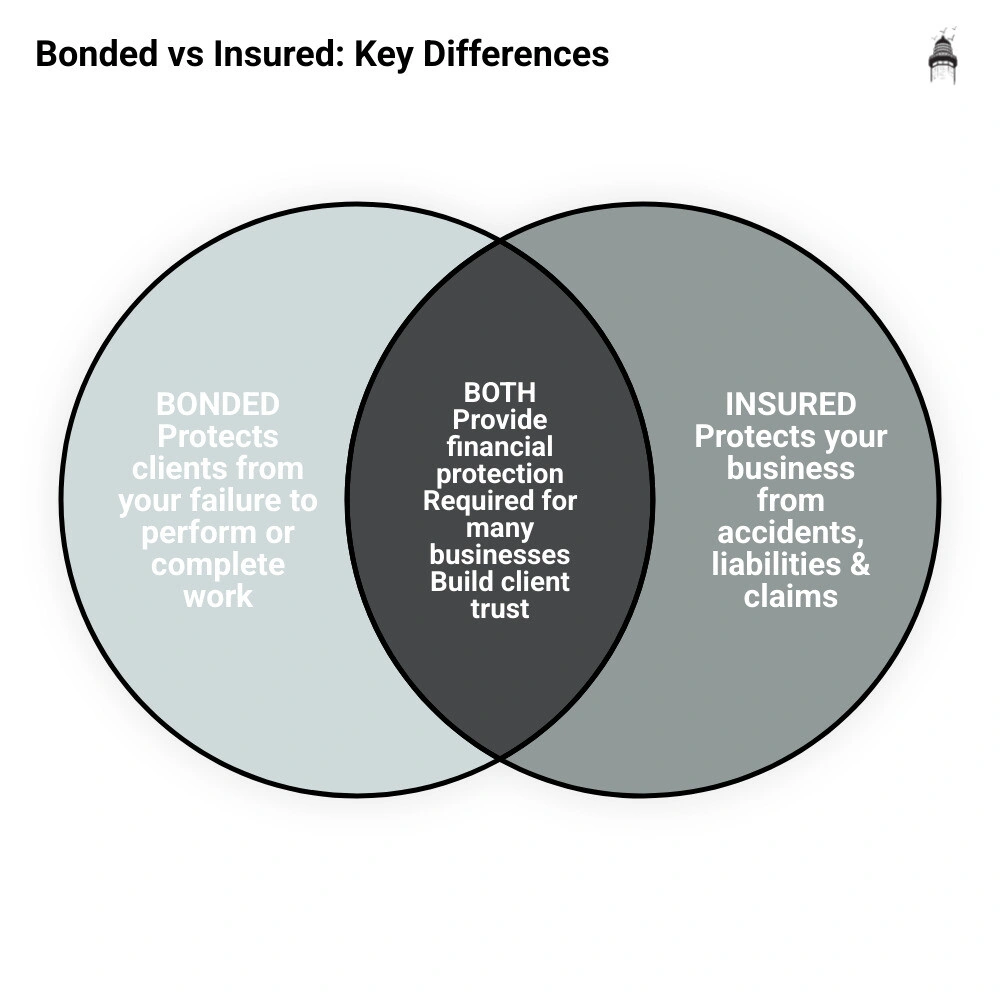
- Bonded means a business has purchased a surety bond—a three-party financial guarantee that protects clients if the business fails to complete work or meet contractual obligations. The business must reimburse any claims paid out.
- Insured means a business has purchased insurance policies that protect the business itself from financial losses due to accidents, property damage, lawsuits, or other covered risks.
If you're a small business owner in Patchogue, Holbrook, Holtsville, or Medford, understanding these protections is essential. Many Long Island contractors, service providers, and businesses need both to operate legally and compete for clients. In New York, certain industries require bonding as part of licensing, while insurance is nearly universal for protecting your business assets.
The core difference: Bonds protect your customers from your failure to perform, while insurance protects you from accidents and liabilities.
For businesses across Long Island, being both bonded and insured demonstrates professionalism and provides comprehensive protection. Clients in Patchogue want assurance their project will be completed. Property owners in Holbrook need protection against accidental damage. And businesses throughout Holtsville, Medford, and all of Long Island benefit from the competitive advantage these credentials provide.
This guide will clarify what each term means, explain the key differences, and help you determine which protections your New York business needs.
What Does It Mean to Be Bonded?
Being bonded is essentially a promise backed by a financial guarantee. In New York business, it means you have a surety bond in place. Unlike an insurance policy, which is a two-party agreement between you and the insurance company, a bond is a three-party agreement.
To understand how it works, let’s look at the three players involved:
- The Principal (You): The business owner or contractor who is required to be bonded. You are the one making the promise to do the work.
- The Obligee (Your Client): The party that requires the bond. This could be a homeowner in Patchogue or a government agency in New York state. They are the ones protected by the bond.
- The Surety (The Bonding Company): The financial institution that guarantees your work. If you fail to meet your obligations, the surety pays the obligee.
Think of a bond as a specialized line of credit. If a contractor in Medford walks away from a half-finished kitchen renovation, the homeowner can file a claim against the bond. The surety company will then step in to reimburse the homeowner for the cost of finding a new contractor to finish the job. However—and this is a big "however"—the surety will then come back to the contractor for every penny they paid out.
Because the surety company is on the hook for your performance, they don't just hand out bonds to anyone. Getting bonded often involves a rigorous background check, a review of your financial statements, and a look at your credit score. Being bonded and insured signals to your clients in Holbrook and Holtsville that you have been vetted and found trustworthy.
For those just starting out or looking to grow, the New York State Surety Bond Assistance Program provides support to help small businesses and contractors secure the bonding they need to compete for state contracts.
Common Types of Business Bonds
Not all bonds are created equal. Depending on your trade and where you operate on Long Island, you might need one or several of the following:
- License and Permit Bonds: Many municipalities in New York require these before they will grant you a business license. They guarantee that you will follow local building codes and regulations.
- Contract Bonds: These are common in construction and are often required for specific projects. They include:
- Bid Bonds: Guarantee you’ll take the job if your bid is accepted.
- Performance Bonds: Guarantee the work will be finished according to the contract.
- Payment Bonds: Guarantee you’ll pay your subcontractors and suppliers.
- Fidelity Bonds: These protect your business or your clients from dishonest acts by your employees, such as theft or fraud. If you have an employee benefit plan, you may be required to carry an Employee Retirement Income Security Act (ERISA) fidelity bond to protect the plan's assets.
What Does It Mean to Be Insured?
While bonding protects the client, insurance protects you. When we say a business is "insured," we usually mean they carry liability insurance. This is a two-party agreement: you pay a premium to the insurance company, and in exchange, they agree to pay for covered losses and legal defenses if something goes wrong.
In New York, the stakes are high. Lawsuits can cost hundreds of thousands of dollars, and without proper insurance, a single accident could bankrupt a promising business in Holtsville or Medford. Insurance acts as a safety net, ensuring that an accidental fire, a slip-and-fall, or a professional mistake doesn't end your career.
At Bay Harbour Insurance Agency, we specialize in helping Long Island businesses navigate these risks. Whether you are a plumber in Patchogue or a consultant in Holbrook, having General Liability Insurance NY is the foundation of a solid risk management strategy. It covers third-party bodily injury, property damage, and advertising injury.
Essential Insurance Policies for Small Businesses
Beyond general liability, most businesses on Long Island need a suite of coverages to be fully protected:
- Workers’ Compensation: In New York, if you have employees, you are generally required to have this. It covers medical bills and lost wages for employees injured on the job.
- Professional Liability (Errors & Omissions): This is crucial for service providers. If a client in Patchogue sues you because they claim your advice or service caused them financial loss, this policy helps cover your legal fees.
- Commercial Auto: If you use vehicles for work—whether it's a fleet of vans or just your own truck—personal auto insurance won't cut it.
- Cyber Insurance: In our digital age, even a small shop in Medford can be a target for data breaches. This covers the costs of notifying clients and recovering data.
- Business Owners Policy (BOP): This is a cost-effective way to bundle general liability and property insurance. Check out our guide on Coverage Provided Under BOP in NY to see if it fits your needs.
- Management Liability: For those running larger organizations or nonprofits, understanding Directors & Officers Insurance Basics is vital for protecting the personal assets of your leadership team.
Key Differences Between Being Bonded and Insured
Understanding the nuances between these two is the key to mastering your business's financial health. Here is a breakdown of how they compare:
The most important takeaway for a Long Island business owner is the concept of reimbursement. If an insurance company pays a claim for a fire at your Holbrook office, they don't ask you to pay them back for the building repairs. However, if a surety company pays a claim because you didn't finish a project in Patchogue, they will expect full reimbursement.
This makes bonding much more like a financial "stamp of approval" on your character and credit, whereas insurance is a true transfer of risk. For more on protecting your professional reputation, you might want to look into how to Secure Business Professional Liability for your specific trade.
Why Long Island Businesses Need Both
You might be wondering, "If I'm already insured, why do I need to be bonded?" or vice versa. The truth is that being bonded and insured offers a 360-degree shield that one alone cannot provide.
In New York, and specifically across Long Island, the competitive landscape is fierce. Whether you're bidding on a municipal project in Holtsville or trying to win a residential contract in Medford, these credentials serve as your "passport" to better opportunities.
- Comprehensive Protection: Insurance covers the "oops" moments—the accidental broken window or the slip on a wet floor. Bonds cover the "promises"—the commitment to finish the job on time and pay your bills. Together, they cover almost every major financial risk your business faces.
- Client Confidence: When a homeowner in Patchogue sees that you are bonded and insured, they feel safe. They know that if you accidentally damage their home, insurance handles it. They also know that if you disappear mid-job, the bond ensures they aren't left high and dry.
- Legal Compliance: Many New York state and local licenses require proof of both. For example, many trades in Holbrook cannot even pull a permit without showing proof of a license bond and general liability insurance.
- Contractual Requirements: High-paying commercial clients and government entities in New York almost always mandate that contractors be both bonded and insured. If you want to play in the big leagues, you need the right gear.
A great starting point for many businesses is the Coverage A Business Owners Policy, which provides essential property and liability protections that can be supplemented with the necessary bonds.
Frequently Asked Questions about Being Bonded and Insured
How much does it cost to be bonded and insured?
We get this question a lot at our offices in Patchogue and Medford. While we can't give a single number, we can explain the factors that influence the price.
For insurance, your premiums are based on your industry, your revenue, your payroll, and your claims history. A contractor in Holbrook doing high-risk roofing will naturally pay more than a consultant in Holtsville working from a home office.
For bonds, the "premium" is usually a small percentage of the total bond amount. If you need a $50,000 performance bond, you might pay a small fraction of that annually. Your personal credit score and business financial health play a massive role here. If your credit is stellar, you'll pay much less. If you've had financial hiccups in the past, the surety company might view you as a higher risk and charge a higher percentage.
Do all small businesses in New York need to be bonded?
Not necessarily, but most benefit from it. If you are in the construction, janitorial, or locksmith business, you almost certainly need to be bonded to comply with New York state laws or local Patchogue ordinances.
Even if it isn't legally required, it's often a "market" requirement. If you run a cleaning service in Medford and your employees enter people's homes, having a "dishonesty bond" is a huge selling point. It tells your clients in Holbrook that their property is protected from theft. If you're looking for work through Holtsville business permits, checking the specific bond requirements for your trade is a vital first step.
Can one company provide both bonds and insurance?
Yes! While they are different financial products, many large financial organizations and independent agencies like us can help you secure both. This is often the best route for a Long Island business owner because it streamlines your paperwork.
When you get your bonded and insured status through one agency, your agent has a bird's-eye view of your entire risk profile. If a claim happens, you have one point of contact who understands how your bond and your insurance might interact. It’s about making your life easier so you can focus on running your business in New York.
Conclusion
Navigating business protection doesn't have to be a headache. At Bay Harbour Insurance Agency, we pride ourselves on being a client-centered, independent agency that truly understands the Long Island community. From the bustling streets of Patchogue to the quiet neighborhoods of Holbrook, we are here to ensure that your business is built on a foundation of security.
Being bonded and insured is more than just a phrase you put on your van; it’s a commitment to excellence and a safeguard for your future. Whether you need a risk assessment in Holtsville or specific insurance solutions in Medford, our team is ready to provide the personal service you deserve.
Ready to protect your hard work? Explore our Business Owner Policy Insurance NY options or give us a call to discuss your bonding needs. We’ve been protecting New York businesses for years, and we’d be honored to protect yours, too.