Why Getting a Budget Home Insurance Quote on Long Island Could Save You More Than You Think
If you're looking for a budget home insurance quote, here's a quick summary of the most effective ways to lower your premium right now:
- Raise your deductible — moving from $500 to $1,000 typically cuts your premium 5–10%
- Bundle home and auto — combining policies with one carrier unlocks multi-policy discounts
- Upgrade your roof — Class 4 impact-resistant shingles can reduce your wind/hail costs by 11–25%
- Shop at least 3 quotes — rate spreads of 15–30% on identical coverage are common
- Buy online — some carriers offer first-year discounts for purchasing directly online
- Install security systems — central monitoring and smoke detectors can lower your rate
- Pay annually — avoiding monthly installments removes processing fees
- Trim unnecessary endorsements — only pay for coverage you actually need
- Maintain a claim-free record — a clean loss history keeps premiums stable
- Work with an independent local broker — they access multiple carriers to find the best fit for your home
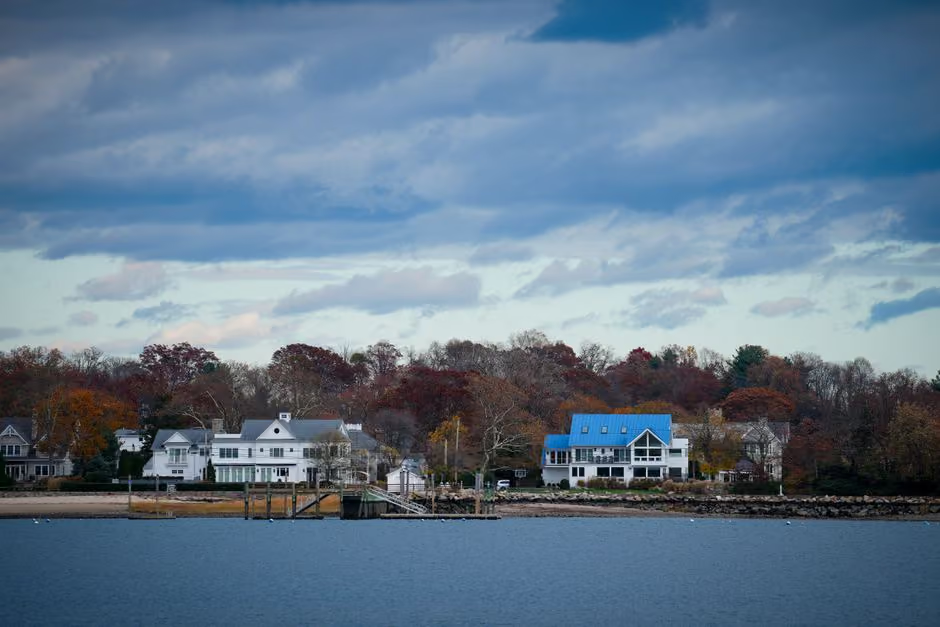
Homeowners across Long Island — from Patchogue and Holbrook to Holtsville and Medford — are paying more for home insurance than they need to. Rates have climbed significantly in recent years, and many homeowners simply renew their policy each year without realizing cheaper, better-matched options exist nearby.
The challenge isn't just finding a low number. It's finding a policy that actually covers what matters — your roof after a coastal storm, your contents after a break-in, your liability if someone gets hurt on your property — without overpaying for riders you'll never use.
According to NerdWallet's 2026 analysis, only about 1 in 5 insured Americans shopped around for a new home insurance company in the past year. That means the majority of New York homeowners may be leaving real savings on the table simply by not comparing options.
I'm Rick Braile, and in this guide I'll walk you through 10 proven strategies to help Long Island homeowners find smarter, more affordable home insurance coverage.
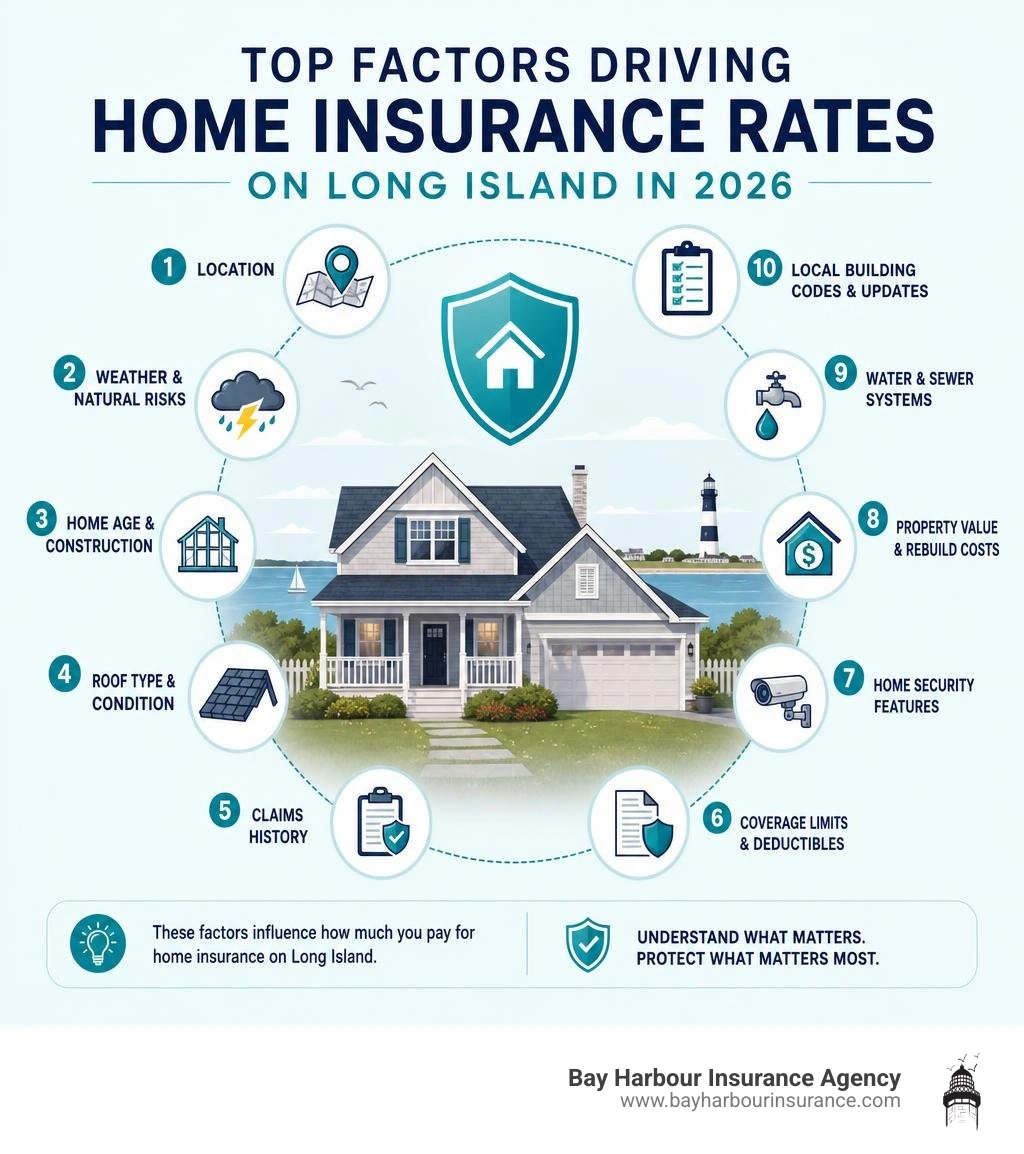
Budget home insurance quote definitions:
- instant homeowners insurance quote
- inexpensive home insurance
- buying homeowners insurance for the first time
Key Factors That Determine Your Budget Home Insurance Quote in 2026
When you request a budget home insurance quote, underwriting algorithms evaluate a series of distinct risk layers to determine your annual rate. Understanding these core drivers allows you to proactively adjust key policy levers to secure maximum savings.
The primary elements shaping your premium include:
- Dwelling Replacement Cost: The total financial expenditure required to rebuild your home’s structure from the ground up using current local materials and labor rates.
- Roof Age and Structural Condition: Older roofs present a higher risk for severe wind and water damage claims, directly influencing your policy costs.
- Credit Score and Loss History: Insurance scores predict risk probability based on past financial and claims track records.
- Deductible Selection: Choosing a higher out-of-pocket threshold immediately reduces the insurer's exposure, lowering your ongoing premium.
To explore tailored cost calculations for your property, check out our insights on affordable house insurance ny.
How Roof Condition and Property Age Impact Your Budget Home Insurance Quote
Your roof is your home's primary defense against coastal weather events in New York. Insurance carriers evaluate roof age and construction material closely when pricing a policy. Roofs aged 0 to 5 years earn substantial premium discounts—frequently between 5% and 35%—because they withstand severe weather with minimal risk of structural failure. Conversely, roofs older than 15 to 20 years often trigger ACV (Actual Cash Value) settlement restrictions or total policy non-renewal.
In communities across Patchogue, Holbrook, and Holtsville, wind resistance is critical. Installing Class 4 impact-resistant shingles or utilizing reinforced masonry construction can unlock substantial discounts off the wind and hail portion of your coverage.
Calculating Dwelling Rebuild Costs for an Accurate Budget Home Insurance Quote
A frequent mistake homeowners make when requesting quotes is confusing real estate market value with structural rebuild cost. Market value includes real estate demand and land value, whereas dwelling coverage strictly pays for labor, equipment, and structural construction materials.
In New York, regional construction costs generally range between $250 and $400+ per square foot due to local labor and supply chains. To ensure your dwelling limit is calculated accurately without over-insuring your land, you can use specialized tools like the Home Insurance Quote Calculator — 2026 Annual Homeowners Premium by Dwelling Coverage & ZIP | UseCalcPro . Adding an inflation guard or guaranteed replacement endorsement provides a protective safety net against rising material expenses without inflated initial premiums.
Top 10 Cost-Saving Alternatives and Strategies for Homeowners
Lowering your home insurance premium doesn't require sacrificing fundamental structural protection. By applying strategic policy adjustments, homeowners across Long Island can optimize coverage while securing meaningful savings.
1. High Deductible Policy Structures
Adjusting your out-of-pocket deductible is one of the most immediate ways to slash annual insurance costs.
- Shifting a standard deductible from $500 to $1,000 typically cuts overall premiums by 5% to 10%.
- Increasing your deductible from $1,000 to $2,500 can generate an additional 10% to 15% in annual savings.
By maintaining an emergency savings reserve to cover a higher out-of-pocket deductible during an event, you permanently lower your recurring rate. Learn more about optimizing your payment structures in our guide on how save money home insurance in ny.
2. Multi-Policy Bundling Strategies
Combining your home building and personal contents protection with your personal auto coverage under a single insurance provider unlocks significant multi-line discounts. Insurance carriers frequently offer discounts of 10% to 25% when you bundle home and auto policies together. Beyond direct savings, consolidating policies streamlines billing schedules and simplifies annual claims administration through a single agent contact. For full details on combining coverage, read our cheap car insurance complete guide.
3. Roof Upgrades and Wind Mitigation Credits
For homeowners in Medford and surrounding coastal areas, roof upgrades offer both physical defense and direct financial returns. Scheduling a professional wind-mitigation inspection (typically costing $75–$150) allows an accredited inspector to verify structural roof attachments, secondary water barriers, and impact-resistant materials. Passing this inspection can unlock credits ranging from 10% to 40% on the windstorm portion of your premium.
4. Smart Home and Security System Discounts
Proactive home protection directly reduces policy risks. Installing centrally monitored burglar and fire alarm systems that automatically dispatch emergency responders typically yields a 5% to 15% policy discount. Additionally, smart home upgrades like automatic water shut-off valves and freeze detectors safeguard your property against catastrophic water loss claims, earning extra policy credits.
5. Independent Local Broker Comparison Shopping
Relying on a single captive insurance agent restricts your choices to one company's rate structure. Independent local brokers, by contrast, maintain relationships with dozens of regional and national carriers. Because pricing algorithms vary significantly across insurers, independent brokers routinely uncover a 15% to 30% rate spread for identical coverage levels. To see how local market access drives savings across Long Island, visit our analysis on who cheapest home insurance in ny.
6. HO-3 Policy Customization
A standard HO-3 home insurance policy covers structural damage on an "open perils" basis while protecting personal contents on a "named perils" basis. Customizing your policy limit based on actual contents inventories—rather than selecting default percentage limits—prevents you from paying for unnecessary contents coverage.
7. Annual Payment Discount Optimization
Paying home insurance premiums in monthly or quarterly installments usually incurs recurring processing and administrative fees. Choosing an upfront annual payment schedule removes these service surcharges and frequently unlocks an additional full-payment discount from the carrier.
8. Claim-Free Track Record Maintenance
Insurers reward long-term property maintenance and low claims frequency. While insurance exists to protect you against catastrophic losses, filing small claims for minor repairs can cause your policy premiums to rise substantially over time. Maintaining a clean claims buffer over 3 to 5 years preserves preferred underwriting status and keeps baseline premiums low.
9. Safety Infrastructure Upgrades
Simple structural safety enhancements lower physical home risks. Installing deadbolt locks on exterior doors, hardwired smoke detectors, carbon monoxide monitors, and fire extinguishers throughout key living spaces qualifies your residence for basic protective device discounts across nearly all standard carriers.
10. Endorsement Trimming and Excess Removal
Over time, insurance policies accumulate optional riders and specialized endorsements that may no longer fit your situation. Conducting an annual coverage audit allows you to remove duplicate endorsements, eliminate obsolete scheduled personal property riders, and align policy terms directly with your current needs.
Comparing Policy Types and Coverage Levels to Cut Premium Costs
Selecting the right policy structure plays a vital role in balancing affordability with sufficient protection. The comparison table below highlights key functional differences between standard HO-3 policies and expanded HO-5 policies:
For additional guidance on choosing the right policy structure, explore our guide on the best affordable home insurance ny.
Tailoring Building, Contents, and Liability Options
To maintain a budget home insurance quote, carefully structure how your policy handles building, contents, and personal liability protection:
- Replacement Cost vs. Actual Cash Value: Choosing Replacement Cost Coverage for personal property ensures full reimbursement without depreciation subtractions during a loss event, providing superior value for a small premium adjustment.
- Personal Liability Thresholds: Standard policies typically include base liability protection. Raising liability limits from baseline levels to higher amounts provides significant extra asset protection for minimal cost additions.
Evaluating Essential vs. Optional Coverages
Tailoring optional add-ons prevents unnecessary policy bloat while ensuring vital protection:
- Water Backup Endorsement: Protects against sudden drain and sump pump overflows, which are excluded from standard policies.
- Accidental Damage Cover: Provides valuable financial coverage for accidental glass breakage or structural mishaps inside the home.
- Motor Burnout Protection: Pays to repair or replace burnt-out mechanical electric motors in major household appliances like refrigerators or HVAC systems.
Common Policy Exclusions and How to Avoid Overpaying
Understanding policy exclusions is essential to prevent costly out-of-pocket surprises during a major loss event. Reviewing standard exclusions helps ensure your property remains adequately protected against regional hazards across New York. Before committing to a policy, review our checklist on home insurance before make mistake.
Identifying Standard Coverage Gaps in New York
Standard HO-3 homeowners policies explicitly exclude several major hazards:
- Flood Damage: Rising surface waters and coastal storm surges are excluded under standard policies and require separate flood coverage.
- Gradual Wear and Tear: Ongoing structural deterioration, rust, mold, and rot caused by lack of maintenance are strictly excluded.
- Sump Pump Failure: Standard policies exclude water damage resulting from backup water systems unless an optional endorsement is attached.
Homeowners in coastal communities like Patchogue and interior areas like Holbrook face distinct weather risks. Ensuring you add the correct endorsements avoids severe financial gaps.
Managing Risk Factors to Avoid Rate Surcharges
Certain household structures introduce elevated personal liability exposure, resulting in rate surcharges or strict policy guidelines:
- Swimming Pools and Trampolines: Require secure surrounding fencing and locked gates to maintain liability coverage.
- Unsecured Outbuildings: Detached garages and sheds must be maintained in good repair to prevent policy restrictions.
Properly mitigating these property risks keeps rates low. For a comprehensive look at local risk guidelines, consult our resource on cheap household insurance ny.
How to Switch Insurance Providers Without Coverage Gaps
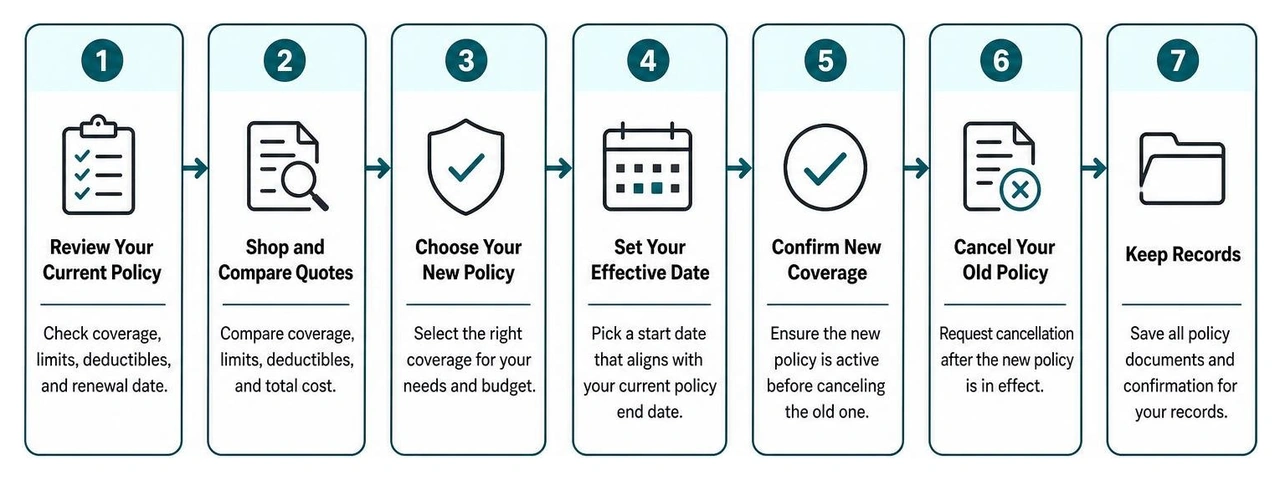
Switching insurance carriers to lock in lower rates is straightforward when following a structured sequence. Avoiding a gap in coverage protects your home and ensures compliance with mortgage agreement terms.
Step-by-Step Transition Protocol for Homeowners
To ensure a smooth transition between policy providers:
- Secure Your New Policy First: Obtain a formal binder and policy certificate from your new insurance provider before requesting cancellation of your existing policy.
- Coordinate Effective Dates: Align the start date of your new coverage precisely with the cancellation date of your old policy to prevent coverage gaps.
- Notify Your Mortgage Lender: Provide your mortgage escrow department with the new declaration page and Certificate of Currency to update escrow disbursements seamlessly.
- Notify Your Previous Carrier: Send a written cancellation notice to your previous insurer requesting confirmation of cancellation and return of unearned premium.
For homeowners in Holtsville, following this sequence ensures continuous protection without administrative delays.
Avoiding Common Pitfalls During Policy Switching
When switching insurance providers:
- Avoid Premature Cancellation: Never cancel your existing policy until your new policy is bound and confirmed.
- Track Escrow Payments: Confirm that your mortgage escrow account reflects the correct carrier information to avoid duplicate billing.
- Maintain Continuous Coverage Credits: A continuous coverage history preserves preferred carrier discount status.
Proper tracking prevents escrow errors and maintains long-term savings across Medford properties.
Frequently Asked Questions About Lowering Homeowners Premium Costs
How much can I save by raising my home insurance deductible?
Raising your standard deductible from $500 to $1,000 typically reduces your policy premium by 5% to 10%. Moving your deductible up to $2,500 generates an additional 10% to 15% in annual premium savings. Maintaining an emergency cash reserve allows you to absorb the higher out-of-pocket threshold easily if a claim occurs.
Does getting multiple home insurance quotes affect my credit score?
No. Insurance carriers perform soft credit inquiries when evaluating your insurance score for a quote. Soft inquiries do not affect your credit score or appear on consumer credit reports.
When is the best time to switch home insurance policies in New York?
While you can switch insurance policies at any time during the policy term, the best time is 30 to 45 days prior to your annual policy renewal date. Switching at renewal simplifies escrow accounting and avoids mid-term cancellation processing. To evaluate local cost benchmarks, review our details on how much home insurance cost in ny.
Conclusion: Securing the Best Value for Your Home
Finding a reliable budget home insurance quote isn't about cutting corners or taking on unsafe policy risks. It's about optimizing your coverage structure, securing available discounts, and working with independent professionals who compare multiple top-rated insurance markets on your behalf.
At Bay Harbour Insurance Agency, our team brings deep local knowledge to homeowners across Patchogue, Holbrook, Holtsville, Medford, and all of Long Island. As an independent, client-centered agency, we represent your interests—not a single insurance company. We shop multiple carriers to tailor coverage that fits your exact budget and protects your home against coastal weather risks.
Contact our local agents today to review your existing homeowners policy and secure a competitive quote designed for your home. Visit our Personal Insurance Agency Patchogue NY page to get started right away.