
Why Every Long Island Business Needs a Data Protection Policy Today
A data protection policy is a formal internal document that sets out how your organization collects, stores, uses, and deletes personal information — keeping you legally compliant and your clients' data safe.
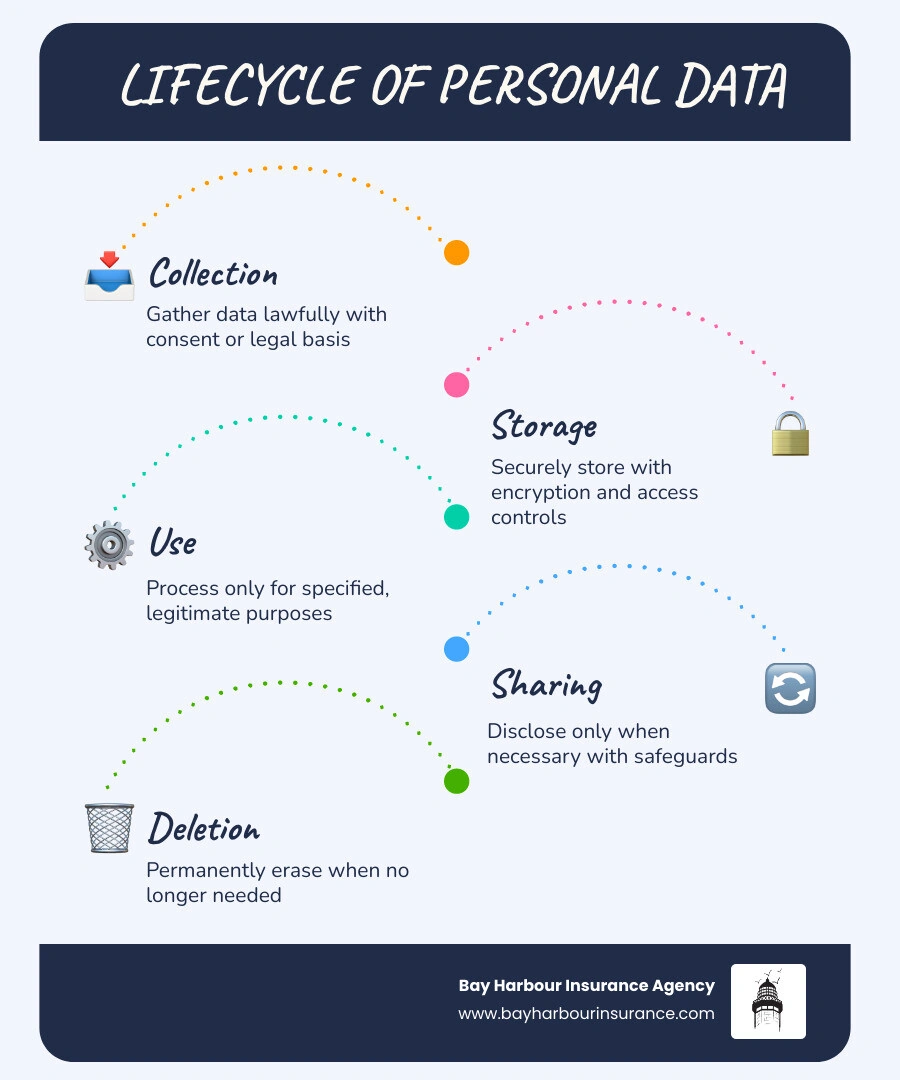
Here's what a solid data protection policy covers at a glance:
Every day, an almost unimaginable volume of data moves through businesses — roughly 2.5 quintillion bytes of new data are generated worldwide daily. For small business owners in Patchogue, Holbrook, Holtsville, Medford, and across Long Island, that number isn't abstract. It means customer records, policy details, payment information, and sensitive personal data flowing in and out of your systems constantly.
And the stakes for getting it wrong are real.
Penalties for serious violations can reach into the millions. Reputations built over years can unravel in days after a single breach. New York businesses face growing legal obligations — not just from global frameworks like GDPR, but from state-level rules like the NY SHIELD Act that directly affect how you handle private information.
This guide breaks down exactly how to build, implement, and maintain a data protection policy — in plain language, with practical steps you can actually use.
Understanding the Core Principles of a Data Protection Policy
When we sit down in our offices in Patchogue or Medford to discuss security, we always start with the "why." A data protection policy isn't just a hurdle of red tape; it is a commitment to your neighbors on Long Island that you value their privacy as much as your own. Whether you are following the strict guidelines of the UK GDPR or local New York regulations, there are several core principles that every policy must follow.
The Seven Pillars of Privacy
To build a compliant framework, your policy should be anchored by these principles:
- Lawfulness, Fairness, and Transparency: You must have a valid legal reason to process data, and you must be upfront with people about what you are doing.
- Purpose Limitation: Don't be a data hoarder. Only collect data for specific, explicit, and legitimate purposes.
- Data Minimization: Only collect the data you actually need to get the job done. If you don't need a client's middle name to issue a New York auto policy, don't ask for it.
- Accuracy: We have a responsibility to keep data up to date. Inaccurate data can lead to major headaches for residents in Holbrook and Holtsville.
- Storage Limitation: Data shouldn't live forever. Once it has served its purpose, it needs to be deleted or anonymized.
- Integrity and Confidentiality: This is the "security" part. You must use appropriate technical measures to prevent unauthorized access or accidental loss.
- Accountability: It is not enough to follow the rules; you must be able to prove you are following them.

As mentioned, with approximately 2.5 quintillion bytes of data created every day, the risk of mismanagement is high. Under certain international standards like the GDPR, non-compliance penalties can reach up to 20 million euros or 4% of the annual global turnover of a company. While those numbers sound like they only apply to tech giants, New York laws ensure that even smaller businesses on Long Island face significant scrutiny and potential fines if they fail to protect "private information."
Essential Elements for Your New York Data Protection Strategy
Creating a data protection policy for a business in Patchogue or Holtsville requires more than just a template. It needs to reflect your actual daily operations. We recommend including specific sections that define who is responsible for what.
Roles and Responsibilities
In any robust policy, roles must be clearly defined:
- Data Controller: This is usually the business itself. The controller decides why and how personal data is processed.
- Data Processor: This is a third party (like a payroll provider or a cloud storage service) that processes data on behalf of the controller.
- Data Protection Officer (DPO): While not every small business in Medford or Holbrook is required to have a formal DPO, having a designated person to oversee compliance is a best practice.
Training and Audits
A policy is just paper if your team doesn't know it exists. Regular training for staff in Patchogue and Medford ensures that everyone—from the front desk to the executive suite—understands how to handle sensitive files. Furthermore, conducting regular audits helps you spot "data leaks" before they become "data floods."
Defining the Scope of Your Data Protection Policy
The scope of your policy defines exactly what information is covered. In the insurance world here on Long Island, we deal with a wide range of data. This includes:
- Personal Data: Names, addresses, and email addresses.
- Sensitive Information: Social Security numbers, driver’s license numbers, and financial account details.
- Special Category Data: Information regarding health, race, or even criminal records, which require even higher levels of protection.
Your internal data protection policy should work in tandem with your public-facing Privacy Policy. While the privacy policy tells the world what you do, the data protection policy tells your employees exactly how to do it. This ensures that every stakeholder—from a homeowner in Holtsville to a business owner in Holbrook—knows their information is being treated with the utmost care.
Documenting Legal Bases for Processing
In New York, you can't just collect data because you feel like it. You need a "legal basis." Your policy should document which of the following applies to your data collection:
- Consent: The individual has given clear permission for you to process their data for a specific purpose.
- Contractual Necessity: You need the data to fulfill a contract (e.g., to process an insurance claim for a client in Patchogue).
- Legal Obligation: You are required by law to process the data (e.g., tax reporting).
- Legitimate Interests: Processing is necessary for your business interests, provided it doesn't override the individual’s rights.
- Vital Interests: Necessary to protect someone's life.
- Public Task: Necessary for a task in the public interest.
Step-by-Step: Implementing Data Security in Patchogue and Beyond
Once the paperwork is done, it is time for the "lock and key" part of the guide. Implementing data security across your offices in Medford, Holtsville, and Holbrook involves a mix of high-tech tools and common-sense habits.
Technical Safeguards for a Robust Data Protection Policy
We live in an era where encryption is a recommended method for safeguarding information. Encryption scrambles data so that even if a hacker intercepts it, they can't read it. Your policy should mandate:
- Data at Rest: All files stored on servers or hard drives in your Patchogue office should be encrypted.
- Data in Transit: Any information sent over the internet (like an email to a client in New York) must be protected by secure protocols (like SSL/TLS).
- Multi-factor Authentication (MFA): This is one of the most effective ways to stop unauthorized access. Even if a password is stolen, the "second factor" (like a code sent to a phone) keeps the intruder out.
- Audit Logs: You should monitor activities related to ePHI (Electronic Protected Health Information) and other sensitive data. These logs record who accessed what and when, which is vital for both security and accountability.
Data Classification and Retention Standards
Not all data is created equal. A flyer for a local event in Medford doesn't need the same protection as a client's financial records. We recommend categorizing data into four levels:
- Public Data: Information that can be freely shared (like our office hours).
- Private Data: Internal business communications that aren't for the public but aren't highly sensitive.
- Confidential Data: Information that could cause harm if leaked (like employee records).
- Restricted Data: The most sensitive information (like SSNs or medical records) that requires the highest level of encryption and limited access.
When data is no longer needed, your policy must outline clear deletion procedures. This includes digital "shredding" (securely overwriting files) and physical shredding of paper documents. For businesses on Long Island, having a regular "cleanup day" to purge old records is a great way to stay compliant with storage limitation principles.
Handling Data Breaches and Subject Access Requests in Medford
Even with the best locks, sometimes things go wrong. A data protection policy must include a "fire drill" for data breaches. If a breach occurs—whether it is a lost laptop in Holtsville or a sophisticated hack in Patchogue—you need to act fast.
The 72-Hour Rule
Under many modern regulations, you must notify the relevant supervisory authority within 72 hours of becoming aware of a serious data breach. Your internal plan should include:
- Containment: Stop the leak immediately (e.g., change passwords, take servers offline).
- Investigation: Figure out what happened and what data was taken.
- Communication Plan: Notify the affected individuals if there is a high risk to their rights or freedoms.
Subject Access Requests (SAR)
Residents of New York and Long Island are becoming more aware of their rights. A Subject Access Request is when an individual asks you for a copy of all the data you hold on them. Under GDPR standards, you generally have a 30-day deadline to provide this information free of charge.
Frequently Asked Questions about Data Protection
What is the difference between a data protection policy and a privacy policy?
This is a common point of confusion. Think of it this way: a data protection policy is an internal manual for your employees and contractors in Patchogue and New York. It tells them how to handle data safely. A privacy policy is an external notice for your customers, explaining what you do with their data. Both are essential for transparency and governance.
How does the NY SHIELD Act affect businesses in Holtsville?
The New York SHIELD Act (Stop Hacks and Improve Electronic Data Security) applies to any person or business that owns or licenses computerized data which includes "private information" of a resident of New York. It requires businesses in Medford, Holbrook, and across the state to implement "reasonable" administrative, technical, and physical safeguards. If you have a breach involving New York residents, the notification requirements are very strict.
What are the common consequences of non-compliance in New York?
Beyond the massive financial fines mentioned earlier, the biggest cost is often reputational. On Long Island, word travels fast. If a business in Patchogue is known for being careless with client data, trust evaporates. You may also face legal action from affected individuals or the New York Attorney General.
Conclusion
Building a data protection policy might seem like a daunting task, but it is one of the most important investments you can make in the longevity of your business. By establishing clear data handling standards, you aren't just checking a box for a regulator—you are building a foundation of trust with your community.
At Bay Harbour Insurance Agency, we understand the unique challenges facing businesses and families in Patchogue, Holbrook, Holtsville, and Medford. As an independent, client-centered agency, we know that your data is just as important as your physical property. We are here to help you navigate the complexities of risk, whether that means finding the right Property & Casualty coverage or ensuring your business is protected from the modern threats of the digital world.
Protecting your legacy on Long Island starts with a commitment to security. If you have questions about how to better protect your business or want to review your current coverage, we invite you to reach out.
- Read our Legal Notice
- Review our Accessibility Statement
- Ready to protect your business? Get a Business Insurance Quote
Stay safe, stay secure, and let's keep Long Island's data under lock and key.