
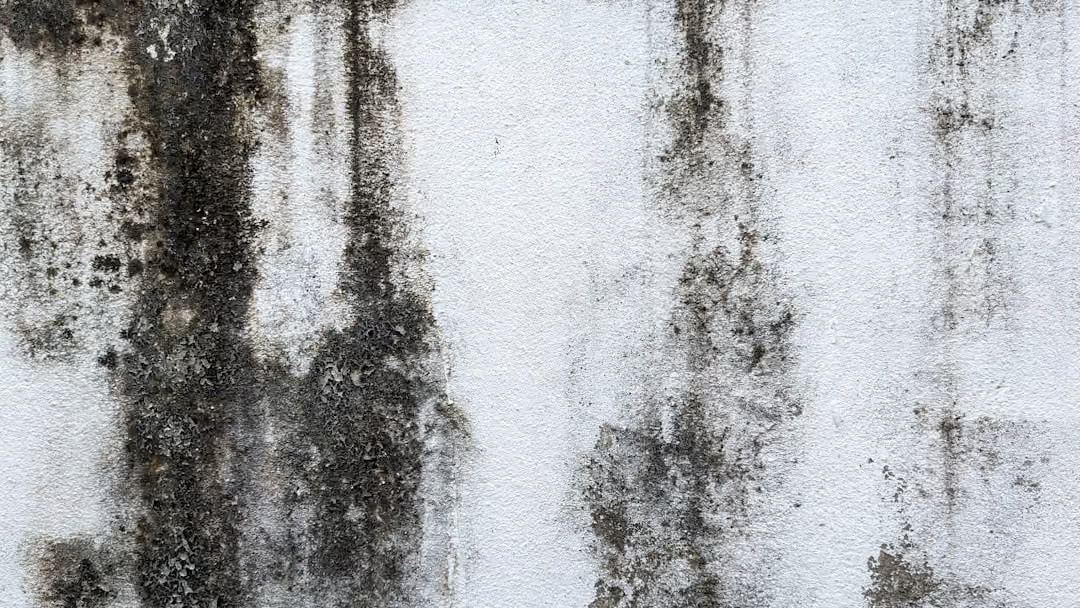
Why Understanding Mold Coverage Matters for Long Island Homeowners
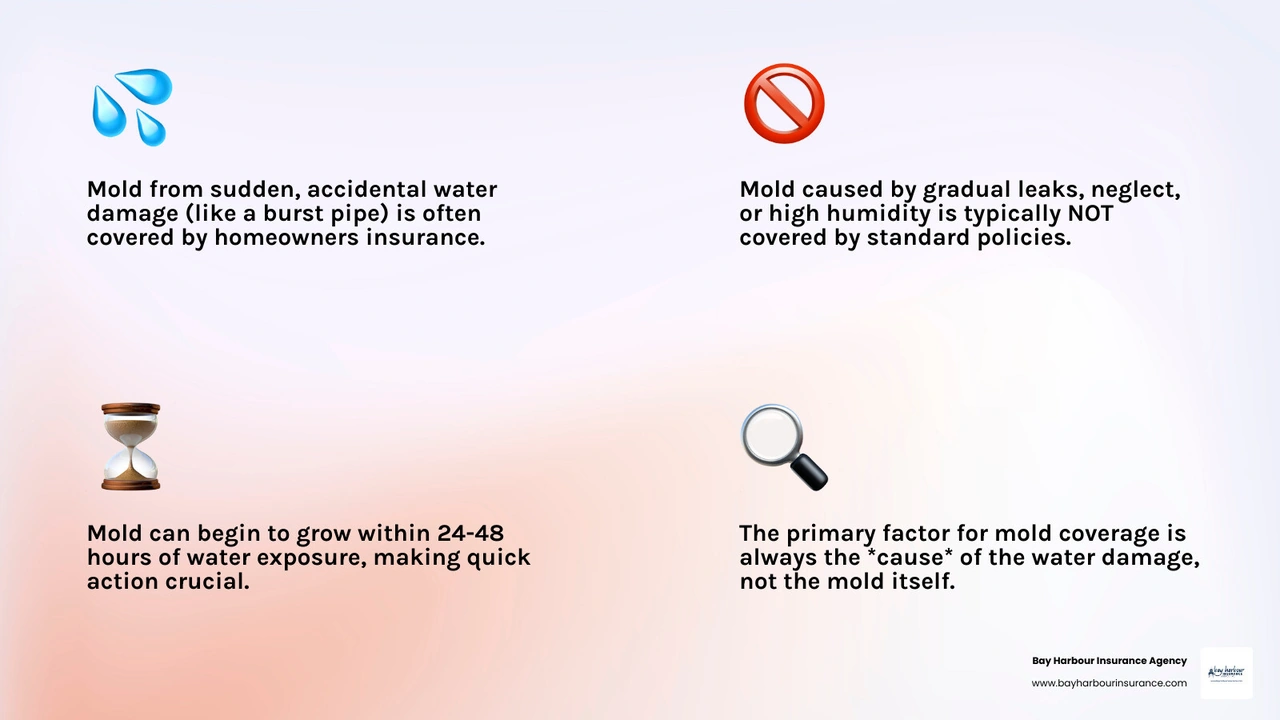
Does homeowners insurance cover mold? The answer depends entirely on what caused the mold to grow in the first place.
Quick Answer:
- Covered: Mold from sudden, accidental water damage (burst pipes, appliance overflow, storm damage)
- Not Covered: Mold from gradual leaks, poor maintenance, flooding, or high humidity
- Coverage Limits: Typically $1,000-$10,000 for mold remediation
- Key Factor: The cause of moisture determines coverage, not the mold itself
Imagine you're a homeowner in Patchogue, and you find black, fuzzy growth spreading across your wall. Your first question is likely whether your homeowners insurance will cover the cleanup.
Living on Long Island brings unique challenges. The humid coastal climate, especially in older homes in communities like Holbrook, Holtsville, and Medford, creates perfect conditions for mold. Understanding your insurance coverage before you need it can save you thousands of dollars.
Most standard New York homeowners insurance policies exclude mold damage unless it results from a specific "covered peril." This means the difference between a covered claim and paying out of pocket often comes down to how the water got there.
When Does Homeowners Insurance Cover Mold?
The good news is that does homeowners insurance cover mold when it stems from a "covered peril." The magic words are sudden and accidental—a key distinction for Long Island homeowners.
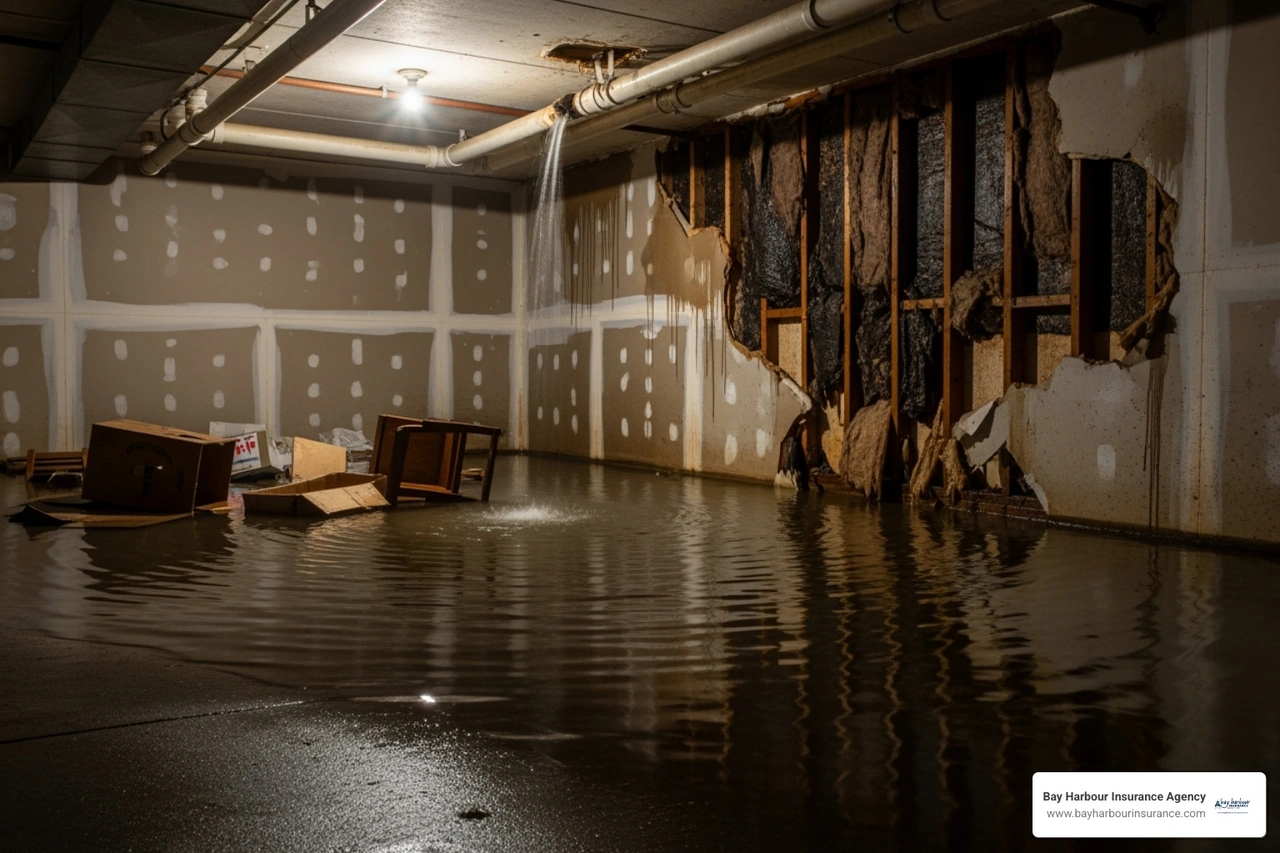
For example, if a pipe suddenly bursts in your Patchogue home, the water damage and any resulting mold growth would likely be covered. The same applies if a washing machine hose breaks, or if a storm damages your roof and lets water in, leading to mold. For homeowners in Holbrook and across Long Island, this is crucial.
This concept relies on the "proximate cause" rule: if the original event that caused the water damage is covered, the resulting mold usually is too. This is especially important when dealing with weather-related damage or aging infrastructure in New York that can fail without warning.
For a deeper dive into how your homeowners insurance works, check out our comprehensive guide on Homeowners Insurance Basics.
What are common causes of mold covered by insurance?
For Long Island homeowners, these scenarios typically result in covered claims:
- Water heater rupture: A sudden failure that floods your basement.
- Washing machine hose breaks: A common issue in older homes in Medford where rubber hoses fail.
- Ice dam damage: When ice on your roof forces water back under shingles.
- Accidental sprinkler discharge: An unexpected activation of a fire suppression system.
- Burst pipes: Often from freezing temperatures.
- Appliance overflow: A sudden malfunction of a dishwasher or toilet.
The key thread is that these events are unexpected and not due to poor maintenance.
What is the difference between sudden and gradual damage?
This is where many Holtsville homeowners get tripped up. The difference between sudden and gradual damage often determines if your mold claim is approved.
- Sudden damage is an event that happens quickly and is impossible to ignore, like a burst pipe. Insurers expect you to notice and report this damage quickly, usually within 14 days.
- Gradual damage happens over weeks, months, or years. A tiny, slow drip under a sink or seepage through a foundation is considered gradual. Insurance will not cover mold from these sources because they are seen as maintenance issues.
Insurers look at how long the water source has been active. A leak dripping for more than two weeks is likely a gradual damage situation and will lead to a denied claim. This is why regular home maintenance is essential for homeowners in Patchogue and throughout Long Island to maintain insurance coverage.
Common Exclusions: When Mold is NOT Covered
Does homeowners insurance cover mold when it stems from preventable issues? The answer is usually no. Standard New York policies have specific exclusions that leave homeowners responsible for cleanup costs in many common situations.
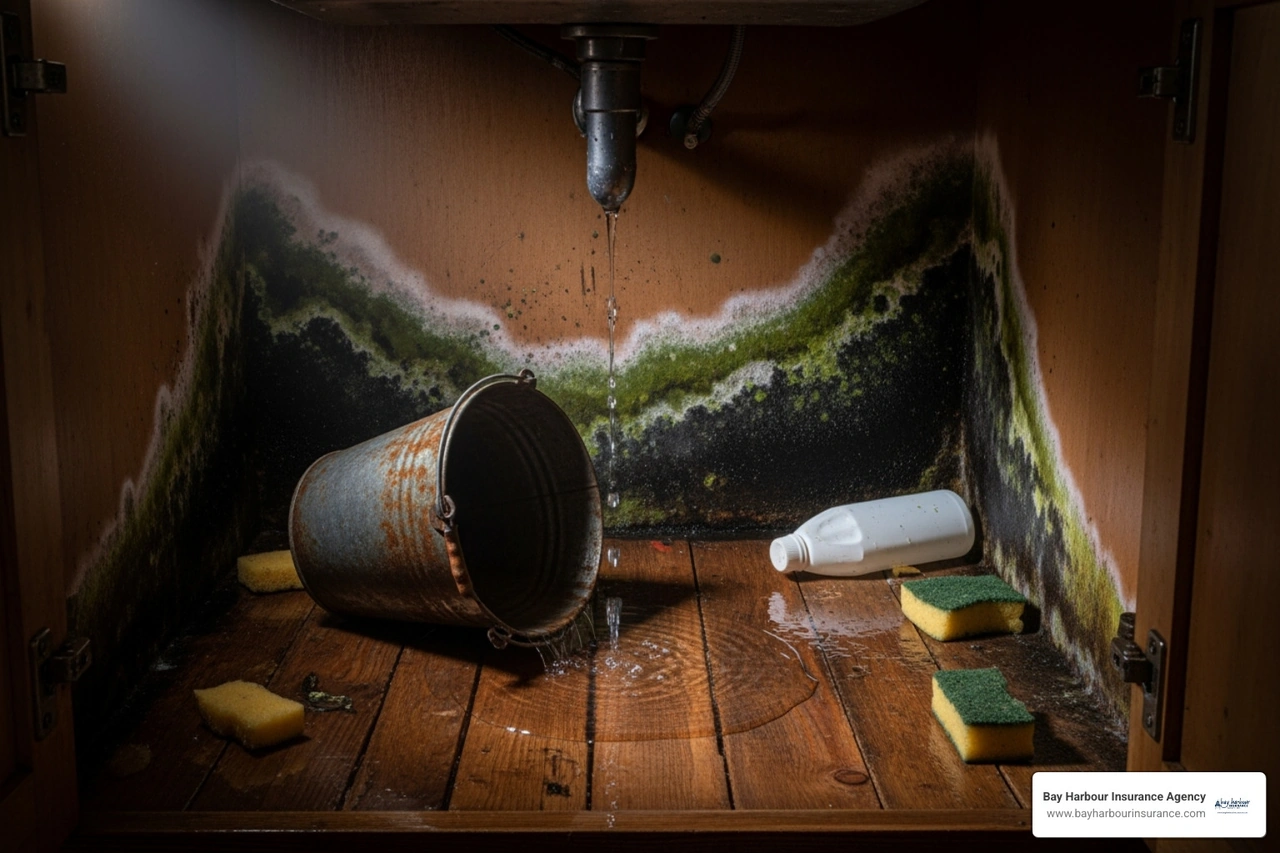
Insurers cover unexpected disasters, not problems from neglected home care. This is especially true for Long Island homeowners in towns like Holbrook or Holtsville, where the coastal climate creates ongoing moisture challenges.
Common exclusions include:
- Gradual water damage: Slow drips or minor roof leaks that you've known about for months.
- Lack of maintenance: If you haven't cleaned your gutters and water overflows into your Patchogue home's foundation, your insurer will likely point to neglected upkeep.
- High humidity & Poor ventilation: Persistent mustiness in a Medford basement or a bathroom without an exhaust fan is typically considered a maintenance issue, not a covered peril.
- Construction defects & Wear and tear: If a builder cut corners or aging materials fail, the resulting mold is usually not covered.
Why are flooding and earthquakes excluded?
Standard homeowners policies completely exclude damage from flooding and earthquakes. If a coastal storm floods your Patchogue basement or groundwater seeps into your Holbrook home, any resulting mold is not covered by a standard policy.
Insurers define flooding as water entering from outside (storm surge, overflowing rivers, surface water). These events are considered catastrophic and require separate insurance. For Long Island homes, flood insurance through the National Flood Insurance Program is essential.
What is the role of maintenance and neglect in mold coverage denials?
When adjusters investigate mold claims on Long Island, they look for one thing: could this have been prevented? If the answer is yes, your claim will likely be denied.
Insurance companies expect homeowners to act responsibly. This means fixing leaky faucets promptly, keeping gutters clean, and sealing windows. When a homeowner in Holtsville or Medford ignores a dripping pipe for months, the insurer will argue this was preventable neglect.
Adjusters look for evidence of ongoing issues, like old water stains or mineral deposits. Being proactive about home maintenance isn't just good practice—it's essential for protecting your insurance coverage.
Enhancing Your Policy: Mold Coverage Options and Limits
Even when does homeowners insurance cover mold from a covered event like a burst pipe, your standard policy likely caps remediation at just $1,000 to $10,000. For homeowners in Patchogue or Holbrook, this amount can disappear quickly.
The good news is that most insurers offer mold remediation endorsements that can boost your coverage to $50,000 or more. These add-ons cost extra but can save you from a massive bill. New York requires insurers to offer these improved options, recognizing that our humid climate and older housing stock on Long Island create unique risks.
Think of it as getting the right tool for the job. If you live in an area prone to moisture, like Holtsville or Medford, skimping on mold coverage is a significant financial risk.
What are supplemental coverage options for a New York home?
For Long Island homeowners, certain endorsements are practically essential, especially for finished basements:
- Water backup coverage: Standard policies exclude damage from sewer backups or sump pump failures. During heavy storms, these are common causes of flooded basements and mold. This endorsement covers that gap.
- Hidden water damage endorsements: This addresses leaks inside walls or under floors that you can't see. It helps bridge the gap between sudden (covered) and gradual (not covered) damage when a leak is genuinely hidden.
- Sump pump failure coverage: Many homes in Patchogue and Medford rely on sump pumps. This coverage is vital for when these systems fail due to power outages or mechanical issues, causing water damage and mold.
For more strategies on optimizing your coverage, see our guide on How to Save Money on Home Insurance in NY.
How much coverage can I expect for mold damage?
The coverage you have depends on your policy and any endorsements you've chosen.
- Standard policy limits are typically $1,000 to $10,000. This is often insufficient, as professional mold removal can cost $15,000 to $30,000 for significant contamination.
- Improved limits through endorsements can increase your protection to $25,000, $50,000, or more. The additional premium is usually a fraction of a potential out-of-pocket remediation bill.
Consider a homeowner in Holtsville who finds extensive mold costing $20,000 to remediate. With a standard $5,000 limit, they'd pay $15,000 out of pocket. With a $50,000 endorsement, they'd be fully protected (after their deductible).
It's also important to know the difference between first-party coverage (your property) and third-party liability coverage (if your mold affects others). If you live in an older home in Holbrook with a basement, higher limits make financial sense.
What to Do When You Find Mold: A Step-by-Step Guide
Finding mold is stressful, but how you react can determine if does homeowners insurance cover mold damage. Acting quickly is critical for protecting your Holtsville property and ensuring a successful insurance claim. Finding licensed New York professionals who understand both mold remediation and insurance is key for Long Island homeowners.

Step 1: Document the Damage and File a Claim
As soon as you find mold, start gathering evidence.
- Document Everything: Take photos and videos of all visible mold and water damage. Note any musty smells or warped materials, as these are signs of hidden moisture.
- Find the Source (If Safe): Look for obvious culprits like a burst pipe or leaking appliance. The water source is what determines coverage.
- Contact Your Agent Immediately: Call Bay Harbour Insurance Agency as soon as you've documented the damage. Waiting can hurt your claim. Have your policy number, the date you found the mold, and a description of the damage ready.
Step 2: Mitigate and Remediate
While waiting for an adjuster, you must prevent further damage.
- Stop the Water: Shut off the water supply to the leaking pipe or area.
- Dry the Area: Use fans and dehumidifiers to circulate air and remove moisture. Avoid opening windows if it's humid outside, a common issue in Patchogue.
- Know When to Call a Pro: Small patches (less than 10 sq. ft.) may be a DIY job, but larger areas require professional help. For homes in Holbrook, professional remediation is often the safest choice. See the CDC guidance on mold cleanup for safety info.
- Who Pays: If the mold resulted from a covered peril, your insurance typically pays for remediation up to your policy limit, minus your deductible. If not, you'll pay out of pocket.
Step 3: Navigating a Claim Denial
A denial isn't always the final word for Medford homeowners.
- Understand the Reason: Insurers must provide a written explanation citing specific policy language for the denial.
- Review and Appeal: Compare the denial letter to your policy. If you disagree, file an appeal with additional evidence, like maintenance receipts or a contractor's report.
- Seek Help: If your appeal fails, you can file a complaint with the New York State Department of Financial Services. For significant claims, consider consulting an attorney specializing in insurance disputes.
Proactive Mold Prevention for Your Long Island Home
Living on Long Island means dealing with coastal humidity that creates perfect conditions for mold. This is especially true in older communities like Patchogue, where proactive maintenance is essential. The key to preventing mold is simple: controlling moisture is everything.
By eliminating excess moisture, you cut off mold's ability to grow. Every preventive step you take today could save you thousands later. For more insights on protecting your Long Island home, read about Mistakes NY Homeowners Make When Choosing Insurance.
How can I prevent mold growth in my home?
An effective strategy focuses on keeping indoor humidity between 30% and 50%. In the humid climate of Medford and Holbrook, this often requires dehumidifiers and air conditioning.
Here are some key prevention tips:
- Improve Ventilation: Always run exhaust fans when showering or cooking to remove moisture from the air.
- Repair Leaks Quickly: A small drip can lead to mold growth in just 24-48 hours. Prompt repairs are non-negotiable.
- Manage Drainage: Ensure your landscaping slopes away from your Patchogue home's foundation to direct rainwater away.
- Clean Gutters: Clogged gutters can cause water to seep into your roof, walls, and foundation, a common problem in Holtsville.
- Inspect Hoses: Check appliance hoses on your washing machine and dishwasher every few months and replace them every five years.
- Use Smart Sensors: Consider placing smart water sensors near water heaters and under sinks to get immediate leak alerts.
How much does mold remediation typically cost?
The cost of mold remediation varies widely. The national average is around $2,365, but this figure can be misleading.
- Small-scale issues might only cost a few hundred dollars for professional cleaning.
- Extensive problems, where mold has infiltrated walls, floors, or HVAC systems, can cost $15,000 to $30,000 or more.
Mold in a Medford basement may be easier to access than mold in wall cavities or an attic, which affects the cost. If your insurance doesn't cover the damage (due to gradual leaks or neglect), you are responsible for the entire bill. This reality makes proactive maintenance and proper coverage so important for Long Island homeowners.
Frequently Asked Questions about Mold and New York Home Insurance
How do insurance companies in New York assess mold damage claims?
When you file a mold claim in New York, your insurer sends an adjuster to determine the proximate cause of the water. Their job is to find out if the water intrusion was sudden and accidental (like a burst pipe in your Holbrook home) or from an excluded cause like long-term neglect.
For homes across Long Island, from Patchogue to Medford, the adjuster will look for signs of chronic moisture versus recent damage. Your photos, videos, and maintenance records are crucial evidence. Reporting the claim promptly also strengthens your case.
Does homeowners insurance cover black mold specifically?
No. The color or type of mold, including so-called "black mold" (Stachybotrys chartarum), does not determine coverage. New York insurance policies focus entirely on the cause of the moisture.
Does homeowners insurance cover mold depends on the water source. If a sudden pipe burst in your Holtsville home causes black mold, it's likely covered up to your policy limit. If the same mold grows from a slow, ignored leak, it's not covered. The adjuster investigates the water source, not the mold species.
What should I do if my mold claim is denied in New York?
A denial can be challenged. You have several options to get your claim reconsidered.
- Request a detailed written explanation from your insurer citing the specific policy language used for the denial.
- Review your policy and file an internal appeal. Present any additional evidence you have, such as maintenance records or expert opinions that show the damage was sudden.
- File a complaint with the New York State Department of Financial Services. This free service investigates whether your insurer handled your claim properly. You can learn more at the New York State Department of Financial Services website.
- Consider professional help for high-value claims. A public adjuster or an attorney can help you steer the appeals process for your Long Island home.
Conclusion
Understanding if does homeowners insurance cover mold can save you from major financial stress. The key takeaway is that coverage hinges entirely on the cause of the moisture. Sudden, accidental water damage in your Holtsville home is likely covered, but mold from a slow leak in your Medford bathroom is not.
Living on Long Island, especially in older homes in communities like Patchogue and Holbrook, means facing a humid climate perfect for mold. Proactive maintenance—regular inspections, proper humidity levels, and prompt leak repairs—is your best financial protection.
However, maintenance is only half the battle. Many homeowners are surprised to learn their standard policy may only cover $1,000 to $10,000 in mold remediation. This is often not enough.
At Bay Harbour Insurance Agency, we are a client-centered, independent agency offering personal service. We help you steer your options to ensure you have the right protection for your specific needs. Whether you're in Patchogue or Holtsville, we'll work with you to find coverage that makes sense.
Don't wait to find mold on your wall. Get a comprehensive review of your coverage today. Learn more about Homeowners Insurance New York State and gain confidence in your home's protection.