
How to Compare Fleet Insurance for Trucks
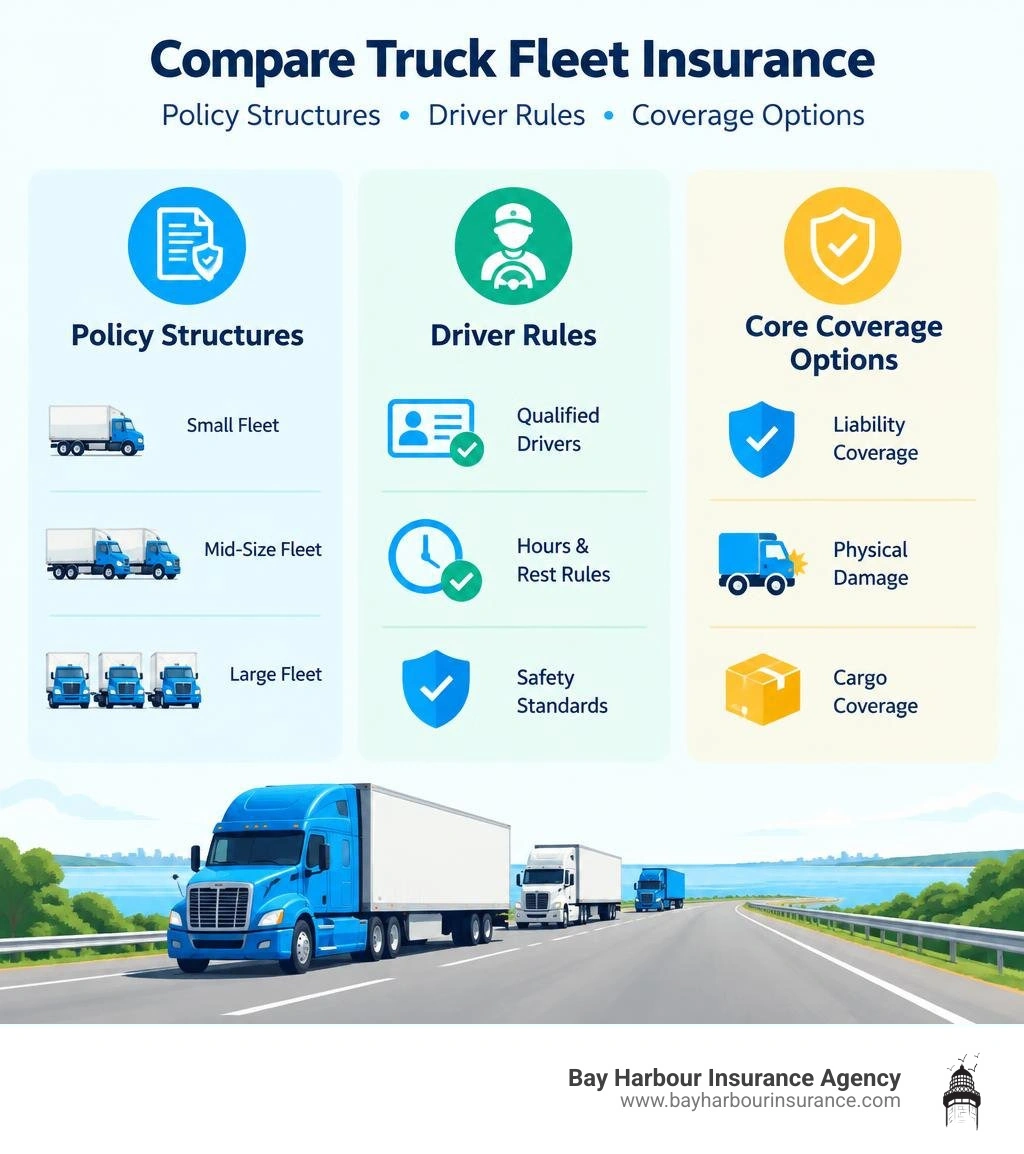
Fleet insurance for trucks covers multiple vehicles under one policy. To find the right option, compare policies by fleet size, driver rules, liability limits, physical damage, and cargo coverage. Then check which vehicles and hauling jobs the insurer will accept. A single policy can make coverage easier to manage, but the best fit depends on how your trucks are used.
For a Long Island carrier, that means looking beyond the number of trucks. A delivery fleet in Patchogue may need different coverage than a freight hauler based in Medford.
I'm Rick Braile, and I'll break down the main policy options so you can compare them with confidence.
Fleet insurance for trucks definitions:
Introduction
Managing a fleet of commercial motor vehicles demands sharp attention to logistics, scheduling, and risk mitigation. Large trucks account for 9% of all vehicles involved in fatal crashes nationwide. That single statistic underscores why operating without comprehensive, well-structured protection exposes a transportation company to catastrophic loss. In our current 2026 insurance market, motor carriers face stricter underwriting standards, increased litigation expenses, and complex regulatory frameworks across New York.
Whether your vehicles navigate major Long Island transport corridors like the Long Island Expressway and Sunrise Highway, service industrial Medford logistics hubs, support established Patchogue haulers, run critical Holtsville distribution routes, or operate out of Holbrook motor carriers yards, managing risks through individual commercial policies quickly turns into an administrative nightmare. Stacking individual policies creates coverage gaps, misaligned renewal dates, and fragmented billing.
Consolidating your vehicles into a specialized fleet policy delivers centralized administration, predictable cash flow, blanket coverage provisions, and volume-rated pricing structures tailored to your operational radius and cargo profile.
Commercial Truck Fleet Coverage Options and Policy Structures

When structuring motor carrier coverage, choosing between a scheduled vehicle policy and blanket fleet coverage forms the foundation of your risk strategy. A scheduled policy lists every vehicle explicitly, attaching specific values and coverages to each designated Vehicle Identification Number (VIN). Blanket coverage, frequently leveraged by growing regional enterprises, extends automatic physical damage and liability protection to all owned and newly acquired vehicles, simplifying paperwork when swapping equipment.
Modern commercial transportation demands agility across diverse equipment classes. A robust policy must accommodate mixed fleet management, insuring light-duty support vehicles, heavy rigid trucks, prime movers, dry vans, refrigerated reefers, and heavy flatbeds under a single master contract. This flexible framework aligns seamlessly with our commercial auto and fleet solutions, ensuring your business stays fully compliant with local freight operations across Long Island and Medford. For an overview of vehicle protections, check out our auto insurance guide 2025.
Any Driver vs. Named Driver Policies
Underwriting requirements for driver authorization directly affect daily operational flexibility and policy cost:
- Named Driver Schedules: Insurers require motor vehicle records (MVRs) for every authorized driver before they operate a vehicle. While this approach demands stricter administrative tracking, it offers significant premium savings for companies maintaining stable, vetted driver rosters across Holbrook and Patchogue commercial driver pools.
- Any Driver (Permissive Use) Policies: These endorsements permit any properly licensed, qualified employee meeting defined underwriting criteria to operate fleet vehicles without pre-listing them on the policy schedule. This structure is invaluable for operations experiencing seasonal driver turnover, though insurers apply strict driver qualification file (DQF) audits to maintain eligibility.
Deductibles, Self-Insured Retentions, and Retro Plans
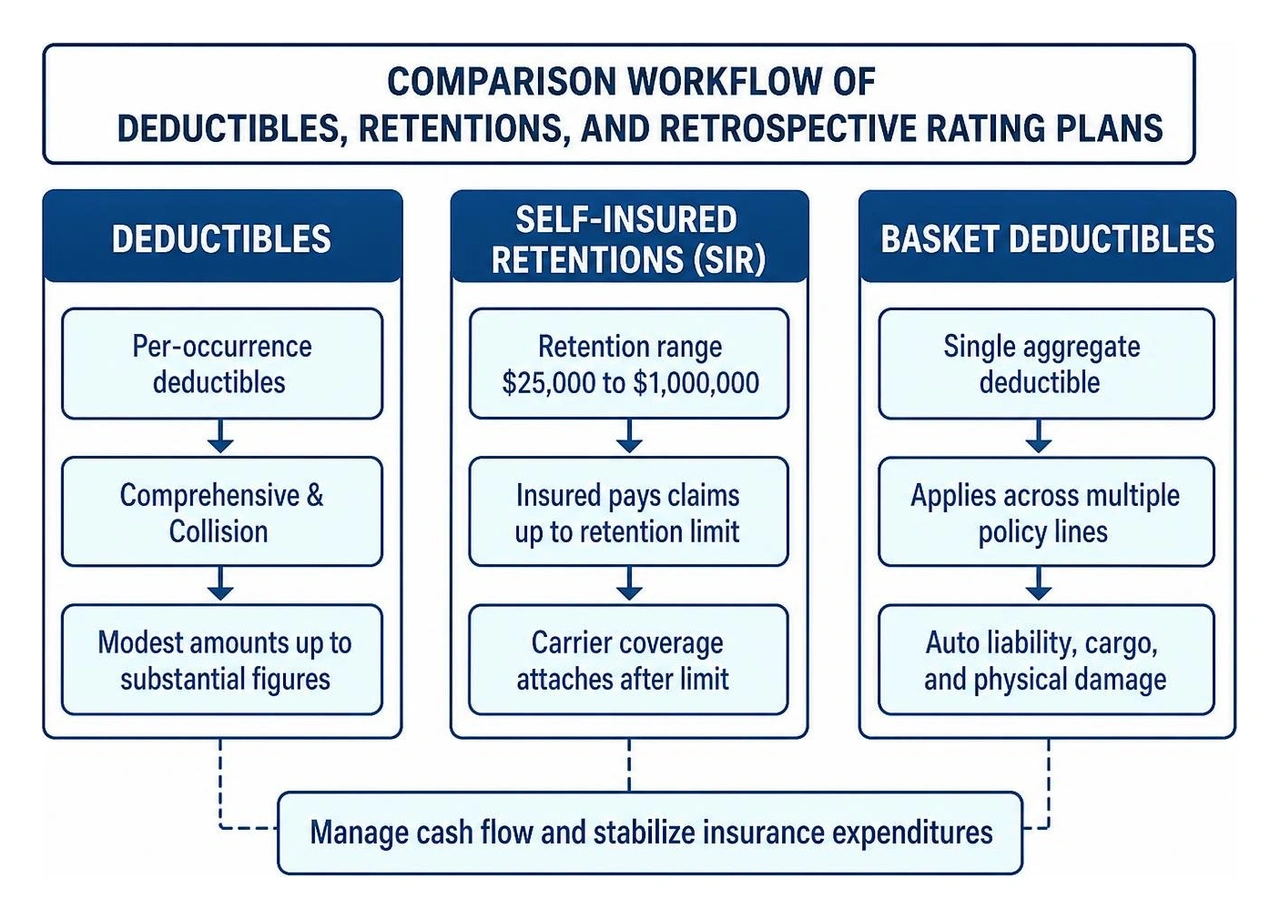
Large and mid-sized motor carriers utilize sophisticated risk-retention mechanisms to manage cash flow and stabilize insurance expenditures:
- Comprehensive & Collision Deductibles: Standard per-occurrence deductibles ranging from modest amounts up to substantial figures allow business owners to tailor out-of-pocket exposure per incident.
- Self-Insured Retentions (SIR): Starting from $25,000 and extending up to $1,000,000, an SIR requires the insured carrier to manage and pay claims up to the retention limit before carrier coverage attaches, granting greater control over claim resolution.
- Basket Deductibles: A single aggregate deductible applies across multiple policy lines (such as auto liability, cargo, and physical damage) when a single incident triggers multiple coverages simultaneously.
- Retrospective Rating Plans: Premiums adjust dynamically based on actual loss experience during the policy term, returning funds during low-loss years while charging pre-agreed adjustments if claims surge.
- Monthly Reporting Options: Fleets can report exposure monthly based on actual miles driven or gross revenue generated, ensuring premium outlays match real-world business volume for New York motor carriers.
Comparing Policy Types: Fleet Insurance for Trucks Across Fleet Sizes
Matching your fleet’s scale to the appropriate underwriting tier guarantees you do not overpay for unused enterprise features or find yourself underinsured on specialized freight lines.
Fleet underwriters establish risk tiers reflecting vehicle count, total mileage, and management controls in accordance with New York Department of Transportation standards and regional distribution operations serving Holtsville regional logistics carriers.
Small Fleet vs. Large Fleet Insurance for Trucks
Small operations running 5 to 15 power units represent the backbone of local freight. These growing fleets benefit from streamlined underwriting and predictable annual pricing structures. In contrast, large enterprises commanding 50+ power units access tailored coverage structures with dedicated subrogation units, specialized claims handlers, and custom loss control teams that conduct in-depth accident trending analysis.
Specialized Fleet Extensions and High-Risk Exclusions
Commercial policies must be customized with critical endorsements to prevent catastrophic out-of-pocket exposures during non-standard operations:
- Trailer Interchange Agreements: Covers physical damage to non-owned trailers pulled under a written interchange contract.
- Non-Trucking Liability (NTL): Provides liability protection when a tractor operates off-dispatch or during deadhead transit without an active load.
- Hired and Non-Owned Auto (HNOA): Protects the business if employee-owned or rented vehicles cause third-party damage while on company business.
- Reefer Breakdown & Earned Freight Endorsements: Reimburses mechanical failure of refrigeration units and pays lost freight charges caused by unavoidable transit delays.
- Pollution Clean-Up Endorsements: Covers broadened environmental restoration expenses resulting from fuel spills or cargo discharge during an accident.
- Underwriting Exclusions: Most standard fleet programs strictly exclude operations exceeding 125,000 miles per truck annually, mobile cranes, boom trucks, residential waste disposal, last-mile courier services, and hazardous materials haulers requiring $5,000,000 statutory filings.
Essential Coverage Stack for Commercial Motor Carriers
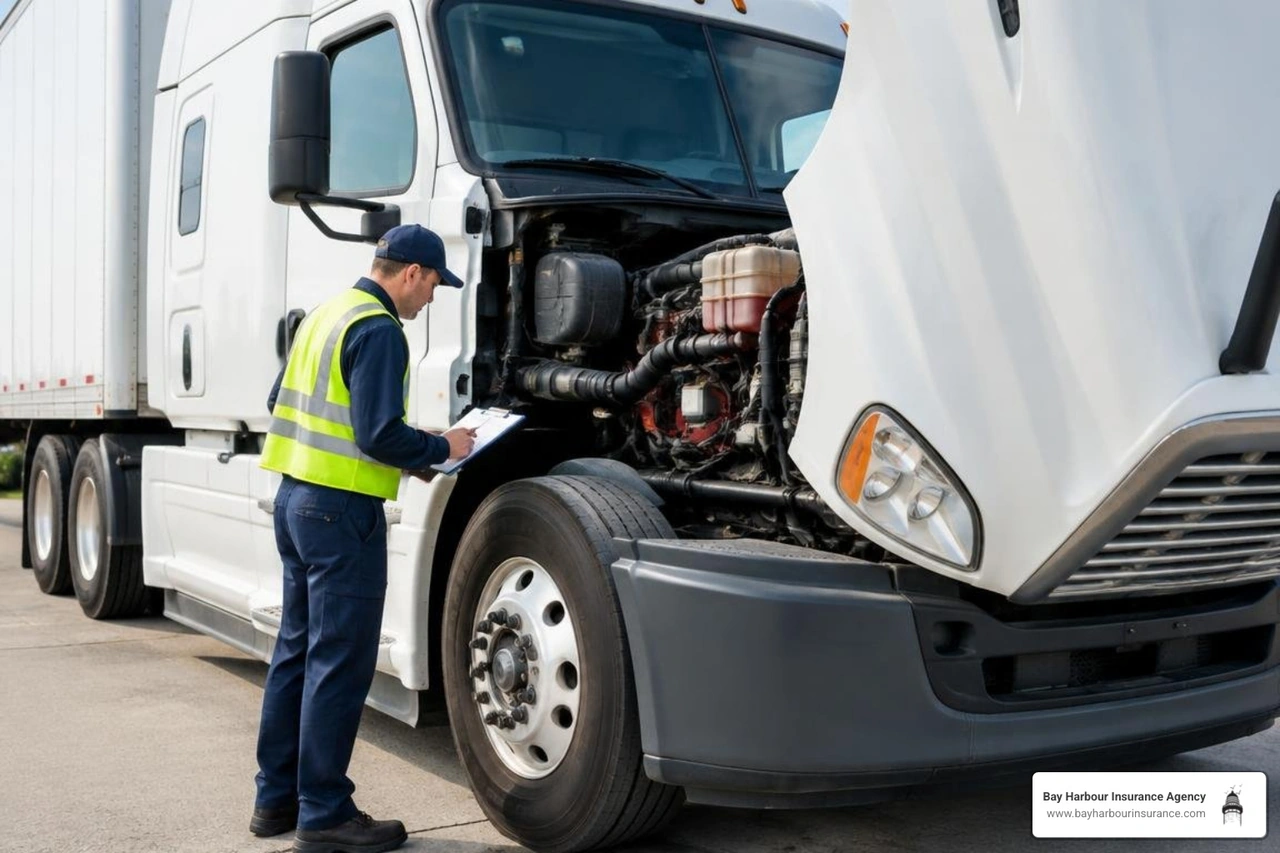
A fully structured transportation insurance stack guards against third-party bodily injury, property damage, equipment loss, and employee injury. Integrating your fleet protection alongside fundamental enterprise coverages like general liability insurance ny and statutory workers comp insurance co ny li maintains seamless compliance across all Long Island commercial transport operations.
Primary Liability and FMCSA Filings
Primary auto liability is required by federal and state statutes. Under FMCSA insurance filing requirements, federal regulations mandate a statutory floor of $750,000 for interstate general freight carriers operating vehicles rated over 10,000 lbs. GVWR. However, the standard market expectation from freight brokers, shippers, and logistics intermediaries is a minimum of $1,000,000 in Combined Single Limit (CSL) coverage.
Our agency coordinates these essential filings to ensure operating authorities remain active without risk of 30-day suspension notices for Medford and Patchogue operators.
Physical Damage and Motor Truck Cargo Protection
Physical damage coverage guards capital assets through two essential components:
- Collision Coverage: Pays for repair or total loss replacement if a covered vehicle overturns or collides with another vehicle or object.
- Comprehensive Coverage: Protects against fire, theft, vandalism, falling objects, windstorm, and animal strikes.
Carriers choose between Actual Cash Value (ACV) and Stated/Agreed Value. Fast repair resolution is critical; specialized heavy-duty repair facilities return commercial trucks to service significantly faster than non-specialized adjusters.
Motor truck cargo coverage protects goods in transit, with standard broker contracts requiring at least $100,000 in coverage limit per power unit, backed by earned freight endorsements and active subrogation recovery protocols.
Cost Breakdown and Strategies to Lower Premiums
Commercial fleet insurance premiums are calculated through detailed underwriting matrices evaluating equipment value, radius of operation, loss history, and driver experience. Motor carriers can review overall risk through our specialized business insurance long island solutions, serving busy Holbrook distribution operations and Holtsville freight terminals.
Key Factors Influencing Fleet Insurance for Trucks Rates
Underwriters assess key risk indicators when pricing commercial policies:
- Motor Vehicle Records & Driver Age: Clean driving histories and seasoned CDL holders yield lower baseline rates.
- FMCSA Safety Measurement System (SMS) Scores: Inspection histories, hours-of-service compliance, and maintenance violations directly adjust insurance scorecards.
- Garaging Location Risk Profiles: Population density, traffic congestion patterns across Long Island and Medford, and secure yard parking impact risk pricing.
- Operating Radius & Annual Mileage: Local operations (under 100 miles) benefit from lower risk classifications compared to intermediate or long-haul interstate routes.
- Loss Run Trending: Five consecutive years of clean loss runs without open reserve claims qualify fleets for prime tier credits.
Telematics, Dashcams, and Loss Prevention
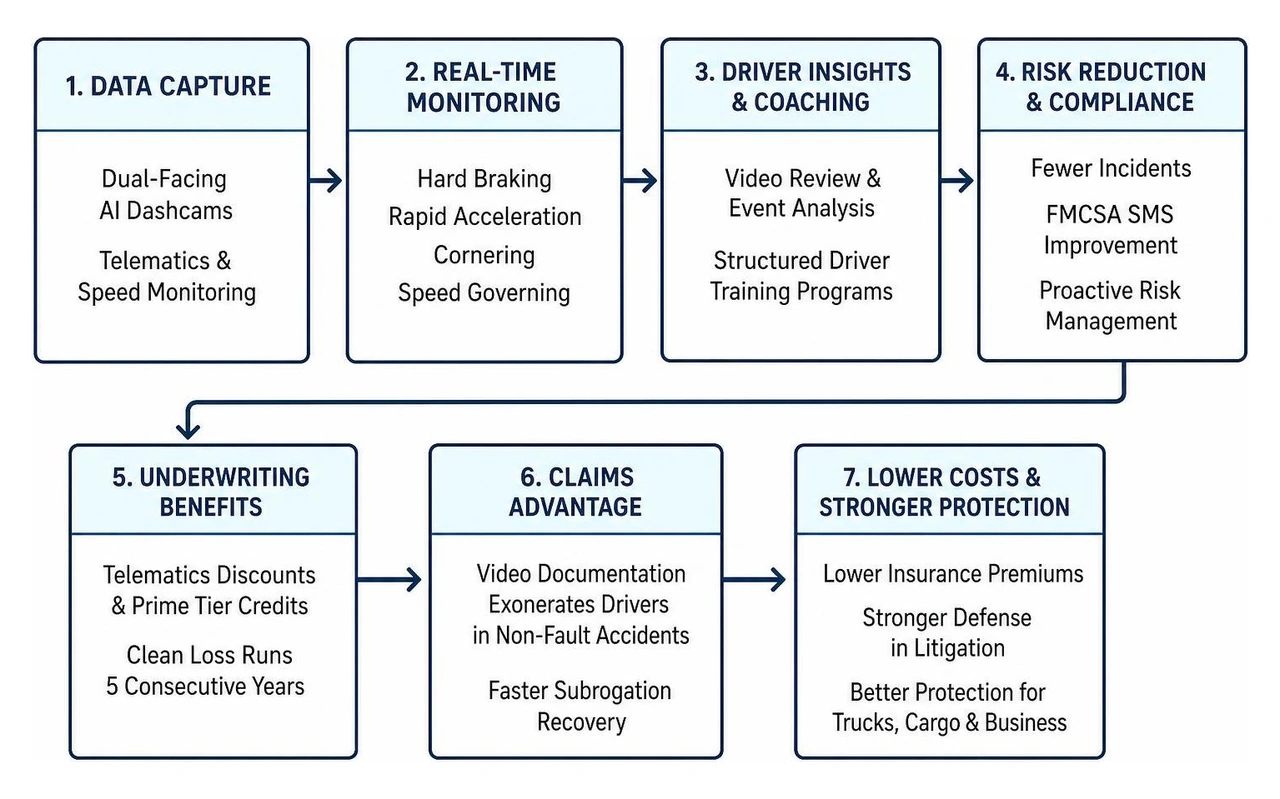
Modern loss control relies heavily on digital technology:
- Dual-Facing AI Dashcams: Video documentation exonerates fleet drivers in non-fault accidents, countering predatory litigation and speeding up subrogation recovery.
- Telematics & Speed Monitoring: Real-time monitoring of hard braking, rapid acceleration, cornering, and speed governing provides the data necessary to secure telematics discounts.
- Structured Driver Training Programs: Implementing regular safety coaching modules reduces incident frequency and demonstrates proactive risk management during annual underwriting reviews.
Frequently Asked Questions About Commercial Truck Fleet Coverage in Long Island
How many vehicles are required to qualify for a truck fleet policy?
Most commercial insurance carriers require a minimum of two to five power units to transition from an individual commercial auto structure to a true fleet policy. Reaching the five-unit threshold unlocks volume-rated fleet credits, scheduled driver schedules, and streamlined single-bill administration.
What is the difference between primary auto liability and non-trucking liability?
Primary auto liability protects motor carriers against third-party bodily injury and property damage while trucks are operating under dispatch, hauling freight, or acting within business operations. Non-trucking liability (frequently referred to as bobtail coverage) applies exclusively when the tractor is being driven without a trailer or cargo for personal conveyance or non-business purposes off-dispatch.
How do FMCSA filings like BMC-91 and MCS-90 work with fleet policies?
A BMC-91 or BMC-91X filing is an electronic certification submitted directly to the FMCSA proving that the motor carrier carries required public liability insurance. The MCS-90 endorsement attaches to the policy, guaranteeing that the insurer will pay public liability judgments even if a specific vehicle or breach of policy condition would otherwise void coverage, with the insurer retaining the legal right to seek reimbursement from the carrier.
Conclusion: Selecting the Right Fleet Protection on Long Island
Navigating commercial transportation insurance requires balancing coverage limits, deductible structures, and statutory compliance. From local distribution runs through Holtsville to freight routing out of Patchogue, Holbrook, and Medford, protecting your vehicles demands personalized, independent guidance tailored to the realities of doing business across New York.
At Bay Harbour Insurance Agency, we are a client-centered, independent agency serving Long Island and surrounding communities. We build tailored insurance stacks that protect your drivers, equipment, and balance sheet.
Ensure your fleet is fully protected on the road. Request a customized, comprehensive quote by visiting our business insurance quote long island portal today, or explore our complete property and casualty solutions at https://www.bayharbourinsurance.com to partner with an agency committed to keeping your business moving forward.