
Understanding the True Cost of Protecting Your Long Island Home
Typical homeowners insurance is a package policy protecting your home's structure, belongings, and liability. Most policies include six core coverages: dwelling protection, other structures, personal property, loss of use, personal liability, and medical payments.
Quick Answer: What Does Typical Long Island Homeowners Insurance Cover?
- Dwelling Coverage - Repairs or rebuilds your home after disasters like fire or wind.
- Personal Property - Protects your belongings from theft or damage.
- Liability Protection - Covers legal costs if someone is injured on your property.
- Additional Living Expenses - Pays for temporary housing if your home is uninhabitable.
- Other Structures - Covers detached garages, sheds, and fences.
- Medical Payments - Handles small medical bills for injured guests.
For homeowners in Patchogue, Holbrook, Holtsville, Medford, and across Long Island, your home is your biggest investment. Insurance protects it, but many in New York don't know if they're paying a fair price. Premiums on Long Island have climbed due to severe weather and rising construction costs.
The average homeowner in New York pays more than the national average. A home near the water in Patchogue has different risks than one in Holbrook or Holtsville. Your home's age, claims history, and credit score all influence your premium. This guide breaks down what typical homeowners insurance covers, what it costs, and how to ensure you're getting the right protection for your Long Island home in communities like Medford.

Typical homeowners insurance terms to remember:
What a Standard Homeowners Insurance Policy Protects
Typical homeowners insurance is a financial safety net for your most valuable asset. For homeowners across Long Island, from Patchogue to Holbrook, understanding this protection is key. A standard policy combines various coverages to address common risks like fire, lightning, and hail, as explained by the Insurance Information Institute, providing essential property protection.
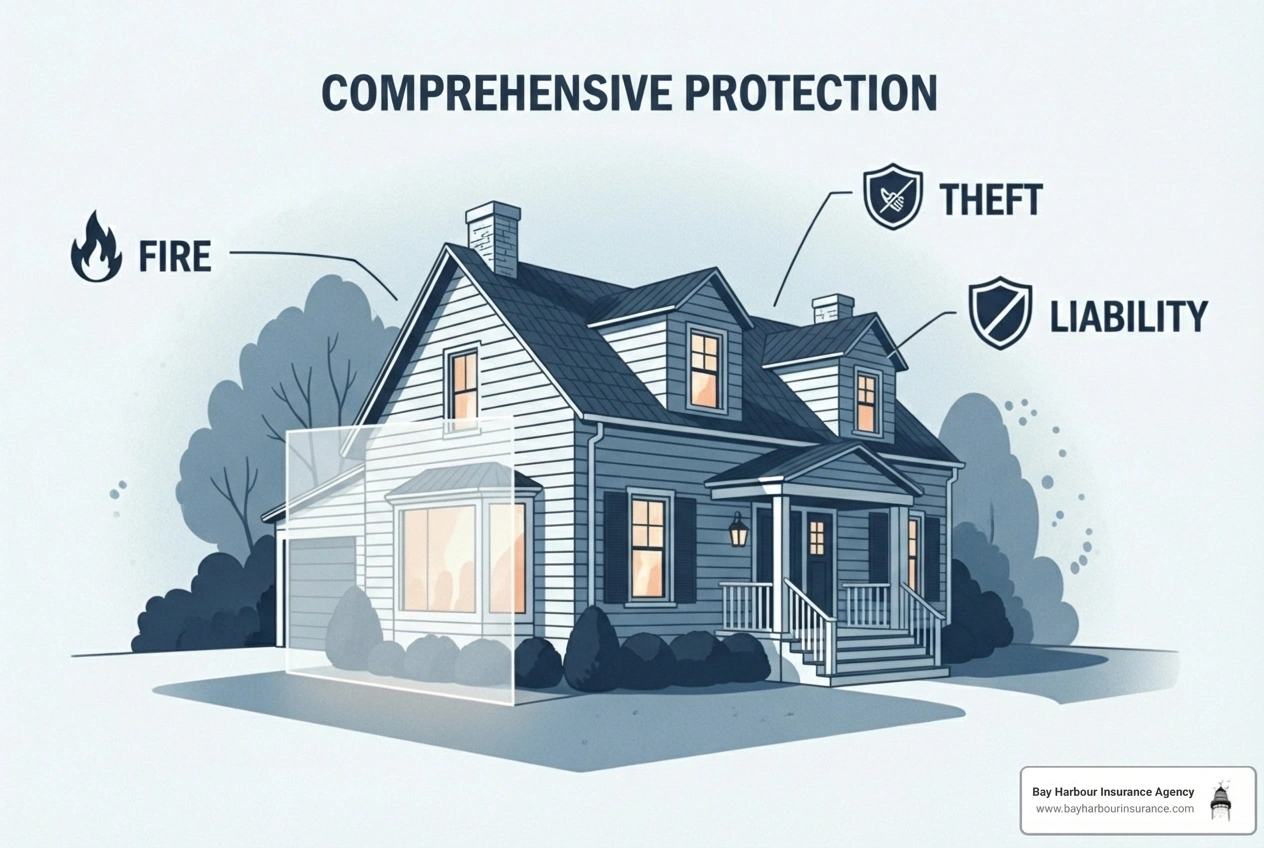
Let's explore the key components of a typical homeowners insurance policy.
Key Components of a Typical Homeowners Insurance Policy
A standard HO-3 policy, common in New York, includes six main coverages:
- Dwelling (Coverage A): This is the core of your policy, paying to repair or rebuild your home's structure if damaged by a covered event. This is crucial whether you're in Holtsville or Medford. You should have enough coverage to completely rebuild your home.
- Other Structures (Coverage B): This protects structures not attached to your house, like a detached garage, shed, or fence. It's typically set at 10% of your dwelling coverage.
- Personal Property (Coverage C): This covers your belongings (furniture, electronics, clothes) if stolen or damaged. It even applies to items away from home. For homeowners in Patchogue, creating a home inventory is a smart move.
- Loss of Use (Coverage D) / Additional Living Expenses (ALE): If your home in Holbrook becomes uninhabitable after a covered disaster, this pays for temporary living costs like hotel bills and meals.
- Personal Liability (Coverage E): This protects you financially if you're legally responsible for injuries or property damage to others. It covers legal defense costs and court awards up to your policy limit.
- Medical Payments (Coverage F): This covers minor medical bills (typically $1,000-$5,000) for guests injured on your property, regardless of fault, preventing small incidents from becoming large lawsuits.
For more details, see our article on More info about homeowners insurance basics.
Actual Cash Value vs. Replacement Cost
Choosing between Actual Cash Value (ACV) and Replacement Cost (RC) is a critical decision for your Medford home's policy. This choice dramatically affects your claim payout.
- Actual Cash Value (ACV): Pays to replace your property minus depreciation (the decrease in value due to age and wear). You'll receive what the item was worth at the time of loss, not what it costs to buy a new one.
- Replacement Cost (RC): Pays the cost to replace your property with a new one of similar quality, without deducting for depreciation. While premiums are slightly higher, RC provides far better protection, allowing you to fully restore your home and belongings.
For your dwelling, most policies use replacement cost. For personal property, you often have a choice. We always recommend RC coverage for belongings to ensure you can fully recover after a loss on Long Island.
Decoding Your Bill: What Goes into a Typical Homeowners Insurance Premium in New York?
Understanding your typical homeowners insurance bill in New York is easier when you know what factors are involved. For homeowners in Patchogue, Holbrook, Holtsville, and Medford, insurers assess the likelihood and potential cost of a claim to set your premium.
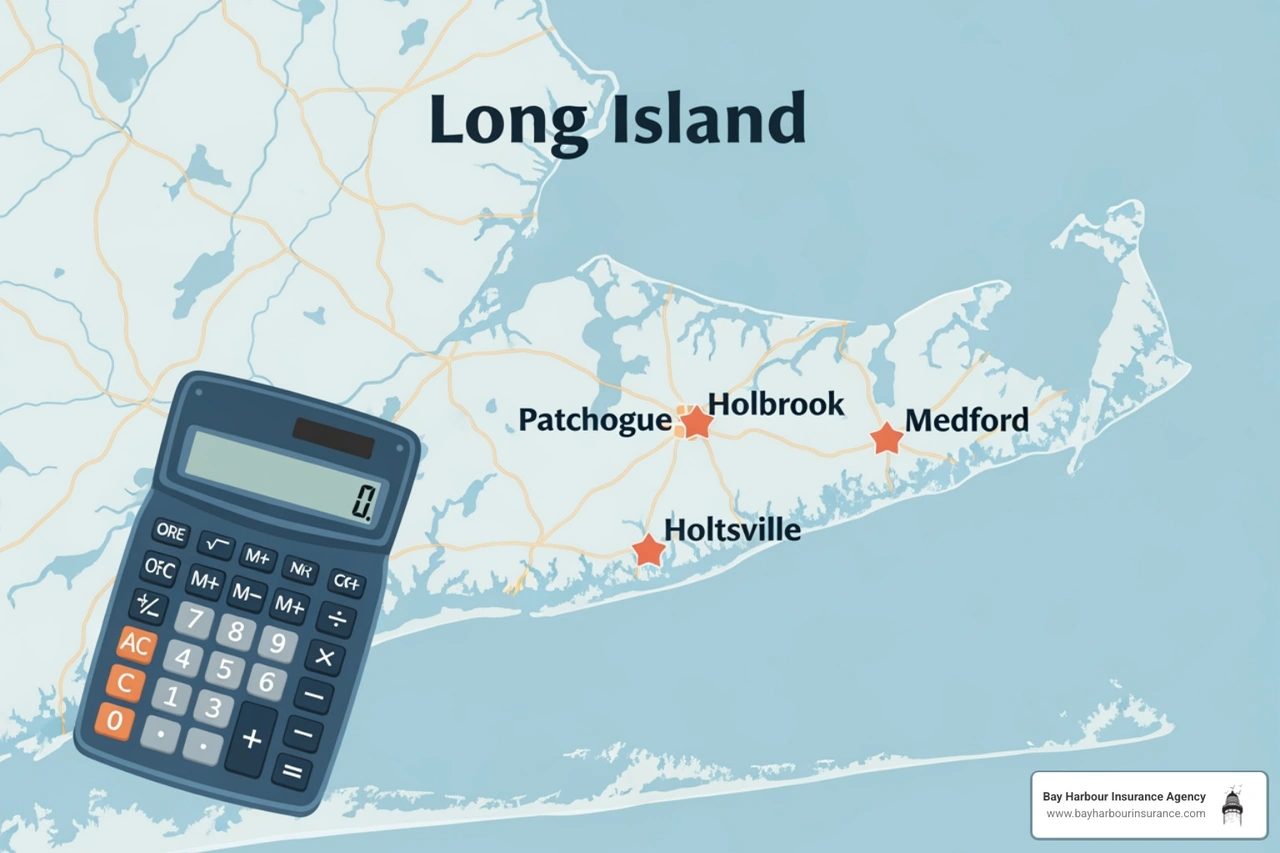
How Location and Home Characteristics Impact Your Rates
Your home's location and features are major drivers of your typical homeowners insurance rates on Long Island.
- Location Risk: Proximity to fire services in communities like Holbrook can lower rates. Conversely, coastal flood risk in areas like Patchogue increases them, often requiring separate flood insurance. Local crime rates also play a part.
- Home Characteristics: The age and construction of your home matter. Older homes, common on Long Island, may have outdated systems, leading to higher premiums. A new roof can lower rates, while an old one signals risk. Updated electrical and plumbing in a Holtsville home can lead to savings.
- Other Factors: Your personal claims history and, in New York, your credit-based insurance score can also influence your premium.
For more on how these factors impact costs, see our article on More info on NY home insurance costs.
The Role of Your Deductible and Coverage Limits
You have direct control over two key factors that affect your premium: your deductible and coverage limits.
- The Deductible: This is what you pay out-of-pocket before insurance kicks in. A higher deductible means a lower premium. For a family in Medford, it's a balance between monthly savings and what you can afford in an emergency. Coastal areas of Long Island may have a separate, higher deductible for wind or hurricanes.
- Coverage Limits: These are the maximum amounts your insurer will pay. Higher limits mean more protection but higher premiums. We recommend liability limits of at least $300,000 to $500,000 to protect your assets from lawsuits. For those with significant assets, an umbrella policy provides an extra layer of protection beyond your standard homeowners insurance limits.
What's NOT Covered and How to Fill the Gaps on Long Island
Knowing what your typical homeowners insurance policy doesn't cover is as important as knowing what it does. Many homeowners in New York and across Long Island have gaps in their coverage that can lead to financial disaster. This is especially true for risks common to our region, such as coastal flooding near Patchogue or issues in older homes in Holtsville.
Exclusions in a Typical Homeowners Insurance Policy
Standard policies exclude certain events. Here are the most common ones:
- Flood Damage: This is the biggest one. Standard policies do not cover damage from flooding, including storm surges. For homeowners in coastal communities like Patchogue, a separate flood policy from the National Flood Insurance Program (NFIP) is essential. You can check your risk on the FEMA Flood Map Service Center.
- Earthquake Damage: This is also excluded but can be added as an endorsement.
- Sewer Backup: Damage from water backing up through sewers or drains is often excluded.
- Wear and Tear/Neglect: Insurance is for sudden, accidental damage, not problems from lack of maintenance (e.g., an old, leaky roof). Regular upkeep is key for every Long Island homeowner.
- Other Exclusions: Policies also typically exclude damage from mold (unless from a covered peril), pest infestations, war, and intentional acts.
Common Add-Ons (Endorsements) for Improved Protection
You can fill many of these gaps by purchasing endorsements. For homeowners on Long Island, especially in storm-prone areas like Medford, these add-ons are invaluable.
- Flood Insurance: A separate, crucial policy for our coastal region.
- Sewer Backup Coverage: A wise investment, especially for homes with finished basements.
- Scheduled Personal Property: Insures high-value items like jewelry or art for their full appraised value.
- Ordinance or Law Coverage: Important for older homes in places like Holbrook, this covers the extra cost to bring your home up to current building codes during a repair.
- Identity Theft Protection: Helps cover expenses related to identity fraud.
Understanding these options is vital for comprehensive protection. For more on hurricane preparedness, see our article on Homeowners insurance and hurricane impact on Long Island.
Smart Strategies to Lower Your Home Insurance Premiums
Nobody wants to overpay for typical homeowners insurance. The good news is that homeowners across Long Island, from Holbrook to Holtsville, can take proactive steps to lower their premiums without sacrificing coverage.
Discounts and Savings Opportunities for NY Homeowners
Ask your agent about these common discounts, which can lead to significant savings for residents of Medford and other New York communities:
- Bundling Home and Auto Insurance: One of the easiest and most significant ways to save.
- Claims-Free History: You may get a discount for not filing claims for several years.
- Home Security: Monitored alarm systems, smoke detectors, and smart home devices can lower your premium.
- New Home Credit: Newer homes often qualify for a discount.
- Loyalty Discount: Staying with the same insurer can earn you savings.
- Other Discounts: Ask about discounts for being a non-smoker, a senior citizen, or a member of certain professional groups.
For more tips, read our guide on How to save money on home insurance in NY.
The Power of Bundling and Regular Policy Reviews
Beyond discounts, two strategies are key. First, bundling your home and auto policies not only saves money but also simplifies your life. Second, reviewing your policy annually is crucial. Life changes, and so do your insurance needs. Did you renovate your Patchogue home, add a security system in Holbrook, or pay off your mortgage? An annual review ensures your policy reflects your current situation, so your Long Island home is properly insured without overpaying.
Frequently Asked Questions about Homeowners Insurance
We understand that typical homeowners insurance can be confusing. Here are answers to common questions from our clients across Long Island, from Patchogue to Medford.
How does having a mortgage affect my homeowners insurance?
If you have a mortgage, your lender will require you to have homeowners insurance to protect their investment.
- Lender Requirements: They will mandate a minimum amount of dwelling coverage and may require specific add-ons like flood insurance.
- Escrow and Payments: Lenders often use an escrow account to collect your insurance premiums with your mortgage payment and then pay the bill for you.
- Loss Payee Clause: Your lender is named on the policy. In the event of a major claim on your Patchogue home, the insurance check is typically made out to both you and the lender to ensure funds are used for repairs. This is a standard practice for any homeowner in New York with a mortgage.
What's the difference between an HO-3 and an HO-5 policy?
The main difference between these two common homeowners insurance policies is how they cover your personal property.
- HO-3 (Special Form): This is the most common policy. It provides "open perils" (or "all-risk") coverage for your home's structure, meaning it's covered from all perils unless specifically excluded. However, your personal belongings are covered on a "named perils" basis, meaning they are only covered for perils explicitly listed in the policy (like fire or theft).
- HO-5 (Comprehensive Form): This policy offers broader protection. It provides "open perils" coverage for both your home's structure and your personal property. This means your belongings are covered from any cause of loss unless it's specifically excluded.
For many homeowners in Holtsville or Medford, an HO-3 offers a great balance of coverage and cost. An HO-5 provides superior protection for your belongings and is worth considering if you want the highest level of coverage.
How much liability coverage do I really need on Long Island?
This is a critical question for protecting your financial future on Long Island. Liability coverage protects you from lawsuits if you're found responsible for injury or property damage to others.
- Minimums Aren't Enough: Most policies start at $100,000, but this is often insufficient in today's world.
- Protect Your Assets: A good rule of thumb is to have enough liability coverage to protect your total assets (home equity, savings, investments). We generally recommend at least $300,000 to $500,000 for our New York clients.
- Consider an Umbrella Policy: If your assets exceed this amount, or if you have higher risks (like a pool), an umbrella policy is a smart, affordable investment. It adds an extra layer of liability protection (typically $1 million or more) over your existing homeowners insurance and auto policies. This is the best way to safeguard your wealth from a catastrophic lawsuit.
Get the Right Coverage for Your New York Home
Understanding your typical homeowners insurance is about recognizing the value it provides for your most significant investment. We've covered the core components, the factors that drive your premiums in New York, and the crucial gaps that need attention on Long Island.
There is no one-size-fits-all policy. The right coverage balances cost with protection custom to your home and lifestyle. Whether you're in Patchogue, Holbrook, Holtsville, or Medford, your insurance needs are unique.
At Bay Harbour Insurance Agency, we are client-centered, independent agents who find the best solutions for you. We know the Long Island insurance market and the challenges faced by homeowners in New York. Don't leave your home vulnerable. Let us help you steer the complexities of homeowners insurance with the peace of mind you deserve.
Get a personalized homeowners insurance quote for your New York State home today and experience the Bay Harbour difference.