

Understanding the Basics of Buying Homeowners Insurance for the First Time
Buying homeowners insurance for the first time is one of the most important financial decisions you'll make as a new homeowner — and one of the easiest to get wrong.
Here's a quick overview of how to do it right:
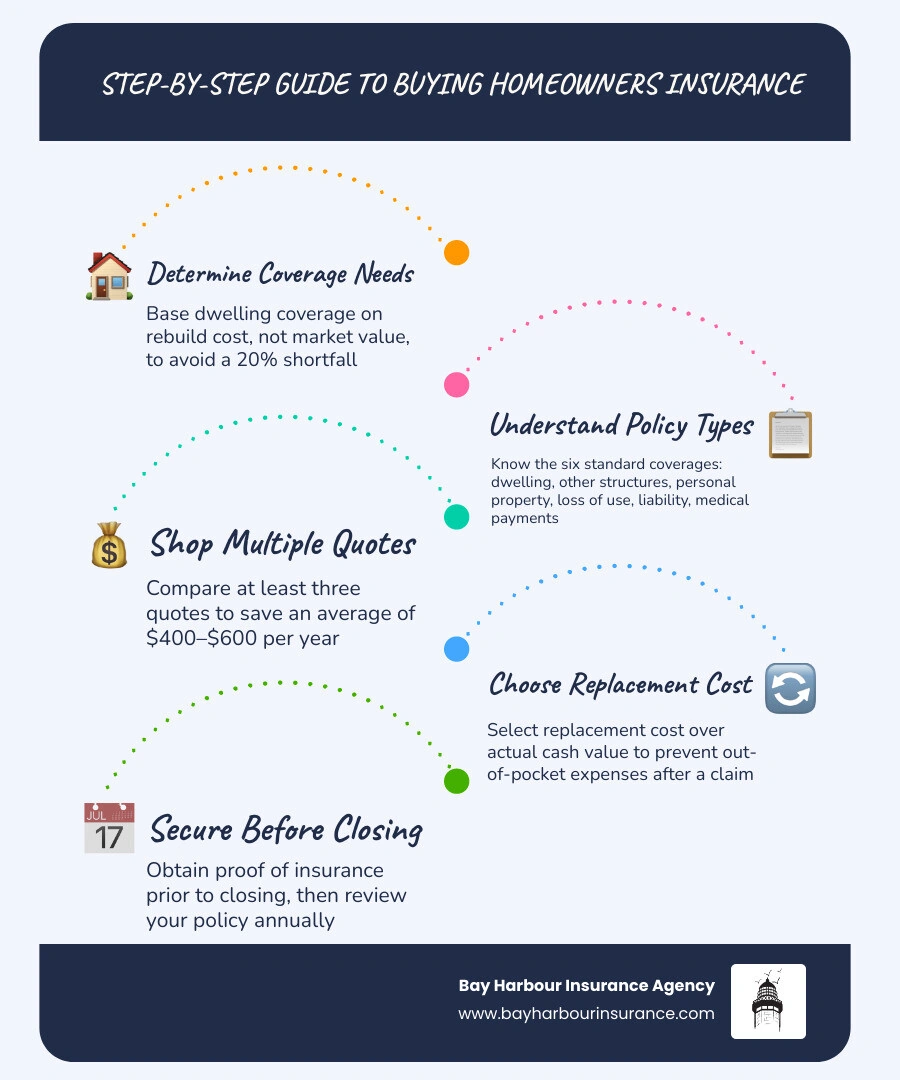
- Determine your coverage needs — base dwelling coverage on your home's rebuild cost, not its market value
- Understand the six standard coverage types — dwelling, other structures, personal property, loss of use, liability, and medical payments
- Get at least three quotes — homeowners who shop around can save an average of $400–$600 per year
- Choose replacement cost coverage over actual cash value to avoid paying out of pocket after a claim
- Secure your policy before closing — most lenders require proof of insurance before they'll fund your mortgage
- Review your policy annually — coverage needs change, and so do rates
For Long Island homeowners — whether you're closing on a home in Patchogue, Holbrook, or Holtsville — getting this right matters more than most people realize.
Nearly 60% of homeowners are underinsured, with an average shortfall of about 20% of their home's actual rebuild cost. That gap can mean tens of thousands of dollars out of your own pocket after a major loss.
This guide walks you through every step — from understanding what a policy covers to avoiding the most common mistakes first-time buyers in Medford and across Long Island make.
Explore more about buying homeowners insurance for the first time:
When you are buying homeowners insurance for the first time, it is helpful to think of the policy as a multi-layered financial safety net. It isn't just a single "product" but a collection of protections designed to safeguard your home, your belongings, and your legal liability. For a new homeowner in Holtsville or Medford, this protection is the only thing standing between a disaster and total financial ruin.
Beyond personal peace of mind, there is a practical side: mortgage mandates. If you are financing your home through a bank in New York, they will require you to have insurance. Since the lender has a financial interest in the property, they want to ensure it can be rebuilt if it burns down or is damaged by a storm. Understanding Homeowners Insurance Basics is the first step toward making an informed choice that fits your specific Medford property.
Why Buying Homeowners Insurance for the First Time is Essential for New York Lenders
In the eyes of a New York lender, your home is collateral. Until that final mortgage payment is made, the bank holds a lien on the property. To protect their investment, lenders require a "binder" or proof of insurance before they will ever release the funds for your loan.
Most first-time buyers in Patchogue and Long Island will use an escrow account. This is where a portion of your monthly mortgage payment is set aside by the lender to pay your property taxes and insurance premiums on your behalf. At closing, it is common for lenders to collect the first full year of premiums upfront, plus an additional 10% to 20% to pad the escrow account. This ensures that the policy never lapses. According to ValuePenguin, failing to provide this proof of insurance can delay your closing date, which is the last thing you want when you are ready to move into your new Long Island home.
Determining Your Coverage Needs and Rebuild Costs
One of the most frequent errors we see in Long Island is homeowners confusing "market value" with "replacement cost." Market value is what someone is willing to pay for your home and land in the current New York real estate market. Replacement cost—or dwelling coverage—is the actual dollar amount required to hire a contractor, buy materials, and rebuild your home from the ground up on your existing lot.
In Patchogue and Holbrook, local building codes and the high cost of specialized labor can make rebuilding much more expensive than you might expect. Inflation and rising material costs in 2026 mean that a policy written even two years ago might now be insufficient. We always recommend calculating your dwelling coverage based on square footage and local construction averages rather than your purchase price.
The Six Standard Coverage Types in a Homeowners Policy
When buying homeowners insurance for the first time, you need to know that a standard policy (often called an HO-3) typically includes six distinct categories of protection. According to the MoneyGeek 2026 Guide, these are:
- Dwelling (Coverage A): This covers the structure of the house itself, including the roof, walls, and attached structures like a garage or deck.
- Other Structures (Coverage B): This protects items not attached to the house, such as a detached garage, a shed in your Medford backyard, or a fence. This is usually set at 10% of your dwelling limit.
- Personal Property (Coverage C): This covers your "stuff"—furniture, clothes, electronics, and appliances. It typically covers 50% to 70% of the dwelling limit.
- Loss of Use (Coverage D): Also known as Additional Living Expenses (ALE), this pays for hotel bills and meals if a covered fire or storm makes your Long Island home uninhabitable. It is usually 20% of the dwelling limit.
- Personal Liability (Coverage E): This protects you if someone is injured on your property and sues you. Most policies start at $100,000, but we often recommend $300,000 or $500,000 for better protection of your assets.
- Medical Payments (Coverage F): This pays for minor medical bills if a guest is injured, regardless of who is at fault, helping to prevent small incidents from turning into large lawsuits.
Replacement Cost vs. Actual Cash Value: Protecting Your Investment

When selecting your policy, you will face a choice between Actual Cash Value (ACV) and Replacement Cost Value (RCV). This choice is critical for your personal property.
ACV takes depreciation into account. If your five-year-old television is stolen from your Holtsville home, an ACV policy will only pay you what a used five-year-old TV is worth today. RCV, on the other hand, pays the amount it costs to buy a brand-new, similar TV at 2026 prices. While ACV policies are cheaper, they often leave homeowners with massive out-of-pocket expenses during a claim. For most people on Long Island, RCV is the only way to truly protect their investment. You can learn more about how these choices affect your bottom line in our guide on Insurance Valuation.
Calculating Your Home's Rebuild Value in Patchogue and Holbrook
Because nearly 60% of homeowners are underinsured, we strongly suggest looking into Extended Replacement Cost or Guaranteed Replacement Cost coverage.
- Extended Replacement Cost: This adds a "buffer"—usually 10% to 50%—above your dwelling limit. If a major storm hits Long Island and construction costs spike due to high demand, this extra cushion ensures you can still afford to rebuild.
- Guaranteed Replacement Cost: This is the gold standard. It pays to rebuild your home exactly as it was, regardless of the cost.
In Patchogue and Holbrook, where labor rates can fluctuate wildly, having this extra protection prevents you from falling into that 20% shortfall statistic that plagues so many first-time buyers.
How to Shop for Quotes and Avoid Common Mistakes
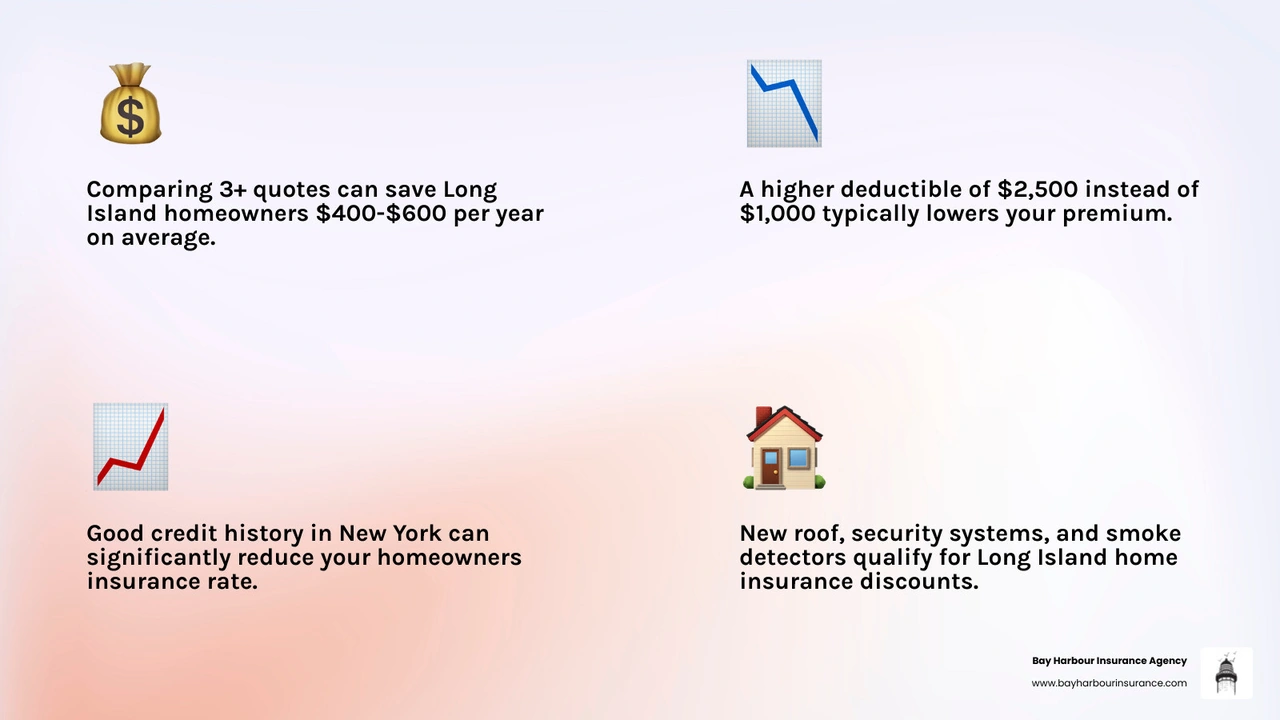
The "Three Quote Rule" is a golden standard when buying homeowners insurance for the first time. Research shows that homeowners who compare at least three quotes can save an average of $400 to $600 per year. In the Long Island market, prices vary significantly between carriers for the exact same level of risk.
However, price isn't the only factor. You must also consider:
- Deductibles: A higher deductible (like $2,500 instead of $1,000) will lower your premium, but you must ensure you have that cash sitting in a Medford bank account if you ever need to file a claim.
- Credit Score: In New York, your credit history can significantly impact your premium. Maintaining a good Credit Score helps keep your rates affordable.
- Home Condition: The age of your roof and the type of electrical system in your Holbrook home will play a huge role in the quotes you receive.
Before you make a final decision, be sure to check our list of things to know about Home Insurance Before Make Mistake.
Step-by-Step Process for Buying Homeowners Insurance for the First Time in Long Island
- Start Early: Begin shopping as soon as you have a signed purchase agreement. Don't wait until the week of closing!
- Gather Details: Have the address, square footage, year built, and roof age of the Patchogue property ready.
- Bundle and Save: Ask about multi-policy discounts. Bundling your home and auto insurance is often the single best way to Save Money on Home Insurance in NY.
- Check for Safety Features: Does the house have a security system, smoke detectors, or a new roof? These can all trigger discounts.
- Notify Your Lender: Once you've chosen a policy, give your agent the lender's "mortgagee clause" so they can send over the binder and finalize the escrow details.
Frequently Asked Questions
How much dwelling coverage do I need to fully rebuild?
You need enough to cover the total cost of labor and materials in today's market. In Medford and Holtsville, this is often higher than the purchase price. We recommend using a professional reconstruction cost estimator or working with an independent agent who understands local New York building costs.
How often should I shop for homeowners insurance?
We recommend an annual review. The New York insurance market changes, and your home's value or your personal circumstances (like a major renovation or getting a dog) can create coverage gaps. A quick check-in once a year ensures you are still getting the best value.
What factors affect my Long Island homeowners insurance premium?
The most significant factors are your home's age, the condition of the roof, your personal claims history, and your proximity to fire hydrants and fire stations in Patchogue or Holbrook. Additionally, features like swimming pools or specific dog breeds can sometimes increase your liability costs.
Conclusion
Buying homeowners insurance for the first time doesn't have to be an overwhelming hurdle in your home-buying journey. By focusing on rebuild costs rather than market value and ensuring you have the right mix of the six standard coverages, you can move into your new home with confidence.
At Bay Harbour Insurance Agency, we pride ourselves on being a client-centered, independent insurance agency. We live and work in the same Long Island communities as you—from Patchogue to Holtsville—and we understand the unique risks New York homeowners face. We don't just sell policies; we offer personalized service to ensure your Medford or Sayville home is protected for the long haul.
Ready to secure your new home? Get a New York State Homeowners Insurance Quote today and let our experts help you navigate the process with ease. Whether you are in Medford, Holbrook, or anywhere across Long Island, we are here to provide the expert guidance you deserve.