
Why Gap Insurance Matters for a Financed Car
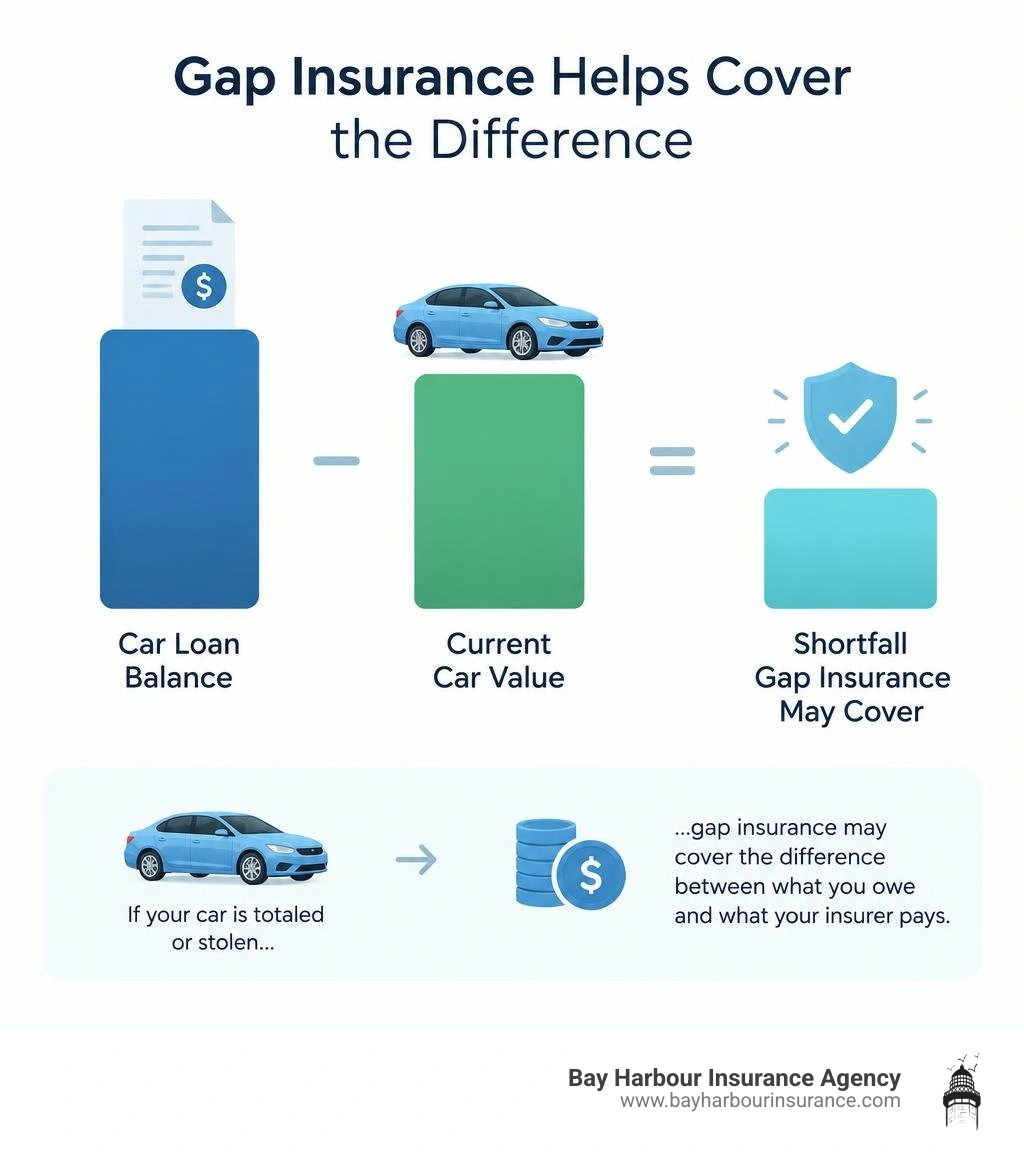
Gap insurance helps pay the difference between what you owe on a car and what your auto insurer pays if it is stolen or declared a total loss. Even with comprehensive and collision coverage, your insurer may pay the car's current value, which can be less than your loan balance.
For Long Island drivers, the question is simple: Could you pay that shortfall yourself? Gap coverage is worth a closer look if you made a small down payment or took out a long loan. It may not be needed if your car is worth more than you owe.
I'm Rick Braile, and I'll help you see where gap coverage fits before you decide whether to buy it.
Gap insurance for car terms you need:
What Is Gap Insurance for Car Financing and How Does It Work?
When you drive a brand-new vehicle off a showroom floor in Patchogue or take delivery of a certified pre-owned ride in Medford, the transaction feels exciting. However, the financial reality of vehicle financing starts ticking immediately. Guaranteed Asset Protection—commonly known as GAP insurance—serves as a dedicated safeguard for your loan or lease balance.
Standard auto insurance covers damage and liability, but it evaluates your car strictly on its market worth at the exact second an accident occurs. If an unfortunate collision happens on Sunrise Highway or a severe storm causes total flood damage near the Great South Bay, your primary comprehensive or collision carrier determines what the car was worth immediately beforehand. This figure is called the Actual Cash Value (ACV).
Unfortunately, standard insurance does not care how much money you borrowed from your bank or credit union. If your ACV is lower than your remaining loan balance, you face an out-of-pocket deficit known as negative equity. Gap insurance steps in specifically to absorb this financial disparity, ensuring you are not stuck making monthly payments on a destroyed vehicle parked in a scrap yard.
Understanding how state insurance authorities view these protections is essential. Under official NY State auto and gap policy guidelines, gap policies operate as specialized insurance contracts or debt-waiver agreements designed to insulate consumers against these catastrophic total-loss shortfalls.

How Vehicle Depreciation Creates Negative Equity
Depreciation is the silent financial drain of vehicle ownership. A new vehicle loses about 20% of its value within the first year alone. Depending on market trends, mileage, and vehicle type, a new car could be worth 15% to 35% less by the end of its first year, and after three years, it could lose between 50% and 70% of its value.
When you purchase a vehicle with a low down payment—such as 0% to 10% down—and select an extended financing term of 60, 72, or 84 months, your monthly payments initially cover mostly interest and only a small fraction of the vehicle’s principal balance.
For Medford auto owners and Patchogue commuters traveling across Suffolk County, this creates an imbalance:
- The Vehicle's Market Value Drops Rapidly: The car's physical worth plummets along a steep depreciation curve.
- The Loan Balance Drops Slowly: Your loan principal decreases at a much slower pace due to loan amortization schedules.
- Negative Equity Widens: The widening space between the two lines represents the exact financial deficit you owe if a sudden total loss occurs.
Step-by-Step Claim Payout Mechanics
To understand how gap insurance functions during an active claim, let us look at how the numbers interact in a total loss event:
- The Incident Occurs: A vehicle is involved in a severe collision or declared an unrecoverable theft.
- Primary Settlement: The auto insurer inspects the wreckage, declares a total loss, and calculates the vehicle's Actual Cash Value based on current local market data.
- Primary Carrier Payout: The insurer issues a payment directly to your lienholder representing the ACV, minus your comprehensive or collision deductible.
- The Shortfall Emerges: If your loan balance exceeds that settlement check, a deficiency remains on your lender's books.
- Gap Protection Resolves the Balance: Your gap policy pays the remaining balance directly to the financing institution, effectively bringing your remaining loan obligation to zero.
For Holbrook drivers navigating busy intersections, having this protection means you walk away from a totaled vehicle without owing thousands of dollars to a lender for a vehicle you can no longer drive.
Comparing Coverage: Gap Protection vs. Full Coverage and New Car Replacement
Many drivers assume that having "full coverage" guarantees their entire auto loan is protected. This is one of the most common misunderstandings in the auto insurance industry.
Do You Need Gap Insurance for Car Purchases With Full Coverage?
The short answer is yes—if you owe more than the vehicle is worth. Standard full coverage car insurance consists of comprehensive and collision coverages alongside mandatory liability. While these components protect against physical damage, falling objects, deer strikes, and severe weather across Long Island, their contractual payout limit is strictly capped at the vehicle's market value right before the crash.
If you owe money on an auto loan, collision exclusions and market depreciation mean full coverage alone will never pay off an inflated loan balance. For Holtsville auto financing arrangements with minimal money down, pairing your comprehensive and collision policy with gap protection ensures complete financial security.
To ensure your underlying policy provides robust protection, you can always explore our auto insurance guide 2025 and affordable car insurance NY guide 2026 for regional insights.
Gap Insurance vs. New Car Replacement Add-Ons
Drivers shopping for new vehicles often weigh gap insurance against new car replacement endorsements. While both address vehicle depreciation, they operate differently:
- Gap Insurance is designed to eliminate your debt. It zeroes out your outstanding auto loan or lease balance so you are completely clear of obligations to your bank.
- New Car Replacement Coverage is designed to put you into another brand-new car. If you total a current model-year vehicle within the first 12 to 24 months, this endorsement pays to purchase a brand-new vehicle of the same make and model rather than paying out depreciated cash value.
If you are shopping on Long Island and planning ahead for your next vehicle purchase, reviewing car insurance for new car NY 2026 will clarify which vehicle protection path best aligns with your financial strategy.
Types of Gap Coverage and Key Policy Exclusions
Gap coverage is not a one-size-fits-all policy. Different structures exist depending on whether you purchase coverage through an independent insurance agent, a financial institution, or an auto dealer.

Return to Invoice vs. Vehicle Replacement vs. Finance Cover
Depending on how your policy is structured, gap protection generally falls under several operational formats:
- Finance Gap Cover (Standard Loan Protection): The most common format in the United States. It bridges the direct difference between the primary insurer’s actual cash value payout and the outstanding balance remaining on your finance or lease agreement.
- Return to Invoice (RTI): Pays the difference between the primary insurance payout and the original invoice purchase price you paid for the car, giving you back your initial cash commitment.
- Vehicle Replacement Gap: Bridges the gap between your insurance settlement and the current cost of purchasing a brand-new replacement vehicle of the same specification today, accounting for inflation.
- Lease Contract Hire Cover: Specifically tailored for leased vehicles, this covers outstanding lease payments, early termination penalties, and any shortfall between market value and residual buyout terms.
- Negative Equity Protection: Specialized protection that covers not only the current car's depreciation gap but also negative equity rolled over from a previous vehicle trade-in.
For local motorists wanting a broader perspective on regional auto policies, our car insurance Long Island complete guide breaks down how these coverages fit into local driving conditions.
Common Exclusions in Gap Policies
While gap insurance provides essential financial relief, it does not write a blank check for every expense tied to your auto loan. Common exclusions include:
- Past-Due Loan Payments and Late Fees: If you skipped auto loan payments or accrued penalty charges before the accident, gap insurance will not cover those accumulated delinquent balances.
- Overdue Interest: Any extra financing interest resulting from late payments or loan deferrals is excluded.
- Extended Warranties and Add-On Products: Costs for dealer-sold warranties, tire protection plans, or paint protection packages rolled into your loan amount are often deducted from the gap payout.
- Deductibles Exceeding Policy Limits: Some gap endorsements cover your primary collision or comprehensive deductible up to a set limit, while others exclude deductibles altogether.
- Absence of Comprehensive & Collision Coverage: Gap insurance is invalid if you do not maintain active full coverage on your primary auto insurance policy at the time of the loss.
- Commercial or Rideshare Use Exclusions: Using the vehicle for commercial deliveries or ridesharing without a commercial endorsement may void gap protections.
Cost Breakdown: Insurer vs. Dealership Rates and How to Buy
Where you buy your gap coverage plays a huge role in the overall value you receive. Drivers typically encounter gap insurance in two places: at the car dealership finance office or through their independent auto insurance agency.
Dealerships routinely offer gap waivers at the point of sale. However, dealerships bundle the cost directly into your total loan balance. Because this cost is financed over 60 to 72 months, you end up paying interest on your gap protection for years.
Conversely, purchasing gap insurance directly through your auto insurance provider as an endorsement is typically far more affordable and avoids loan interest altogether. Drivers comparing their policy options can explore our guide on how to compare top NY car insurance companies or review our overview of cheapest NY auto insurance 2025.
Can You Buy Gap Insurance for Car Leases and Used Vehicles Later?
A frequent question we hear is whether gap coverage can be added to used vehicles or obtained months after purchasing a car.
- Used Vehicles: Yes, you can purchase gap insurance for a used car as long as you are financing or leasing it. While used cars have already absorbed their initial first-year depreciation drop, long loan terms or rolled-over negative equity can still put you upside down.
- Purchase Windows: Many insurance carriers allow you to add gap coverage within 12 months (typically 180 to 365 days) of purchasing the vehicle, provided the vehicle meets model year and mileage requirements.
- Lease Contracts: Most auto lease contracts automatically include gap protection within the agreement terms. However, lessees should verify their paperwork to confirm coverage is in place.
Before committing to dealership financing packages in Medford or finalizing a lease in Patchogue, drivers should review car insurance quotes best guide 2026 to see how independent endorsements compare.
When to Buy and When to Drop Gap Coverage
Gap insurance is essential under specific financing circumstances, but it is not intended to remain on your policy forever.
When You Definitely Need Gap Insurance:
- You put less than 20% down on a financed vehicle.
- Your loan term is 60 months or longer.
- You leased the vehicle and gap coverage is not built into the lease agreement.
- You rolled over negative equity from your previous car loan into your new financing.
- You purchased a vehicle model known for rapid market depreciation.
When You Can Drop Gap Insurance:As you make consistent monthly payments, your loan principal decreases while your vehicle's depreciation rate flattens. Once your remaining loan balance drops below the car's current Kelley Blue Book or NADA market value, you have reached positive equity. At that point, gap insurance no longer serves a purpose and can be removed from your policy with a simple call to your agent.
For drivers in Holbrook and Holtsville, checking your loan balance against your car's market value every six months ensures you only pay for gap protection while you truly need it.
Frequently Asked Questions About Gap Coverage
How do I file a claim on my gap insurance policy after a total loss?
Filing a gap insurance claim requires coordinating between your primary auto insurer, your gap provider, and your auto lender:
- Settle with Your Primary Insurer: Report the accident immediately and allow your primary carrier to complete their total loss valuation.
- Collect Documentation: Obtain the official police accident report, the primary insurer's total loss settlement statement (showing the actual cash value breakdown), and a certified loan payoff statement from your lender.
- Submit to Gap Administrator: Provide these documents to your gap insurance provider.
- Lender Payment: The gap provider reviews the deficiency calculation and sends the remaining balance payment directly to your lienholder to satisfy the debt.
- Continue Loan Payments: Always continue making regular monthly loan payments until your lender confirms the balance is officially settled at zero, protecting your credit rating during the claims review.
How long after buying a vehicle can I add gap coverage?
Eligibility windows vary by insurer, but most auto carriers allow policyholders to add a gap endorsement within 30 to 365 days of purchasing or leasing a vehicle. If you missed adding coverage at the dealership, you can still add it through your independent insurance agent, provided you carry comprehensive and collision coverage and the vehicle meets age and mileage criteria.
When is gap insurance no longer worth keeping on a car loan?
Gap insurance is no longer worth keeping once your loan balance is equal to or less than the vehicle's actual market cash value. If your vehicle is worth more on the open market than what you owe your bank, standard collision and comprehensive coverage will fully satisfy the lender in a total loss, leaving no financial shortfall for gap insurance to cover.
Conclusion
Car financing allows drivers across Long Island to get behind the wheel of safe, reliable, modern vehicles. However, rapid vehicle depreciation creates an unavoidable risk of negative equity during the first few years of loan repayment. Whether you are driving through Patchogue, commuting past Medford, or traveling local routes around Holbrook and Holtsville, unexpected accidents or severe weather can quickly turn a financed vehicle into a total financial loss.
Gap insurance provides an essential financial safety net, ensuring that an unexpected accident does not leave you saddled with thousands of dollars in debt for a vehicle you can no longer drive. As an independent agency, Bay Harbour Insurance Agency works closely with drivers across New York to review loan balances, evaluate depreciation risks, and structure tailored New York auto insurance coverage.
Whether you live in Patchogue, Medford, Holbrook, or Holtsville, our team provides client-centered, independent advice to keep you protected on every road across Long Island and throughout New York. Connect with our local agents today to review your existing policy and ensure your vehicle financing is fully protected.