

Find a Licensed Homeowners Insurance Broker You Can Trust
To find a homeowners insurance broker in New York, ask for local referrals, then check the broker's license with the New York State Department of Financial Services. Before choosing someone, ask which insurers they can quote, how they are paid, and whether they can help you review coverage and claims.
That guidance matters whether you live in Patchogue, Holbrook, Holtsville, Medford, or elsewhere on Long Island. A broker can compare options, but the right policy depends on what your home needs covered, not just the quote you receive. I'm Rick Braile, and I'll walk you through what to check before you hire one.
Homeowners insurance broker terms to know:
For a broader view of how brokers fit into the insurance marketplace, the New York State Department of Financial Services explains the role of insurance agents and brokers.
What Is a Homeowners Insurance Broker and How Do They Work?
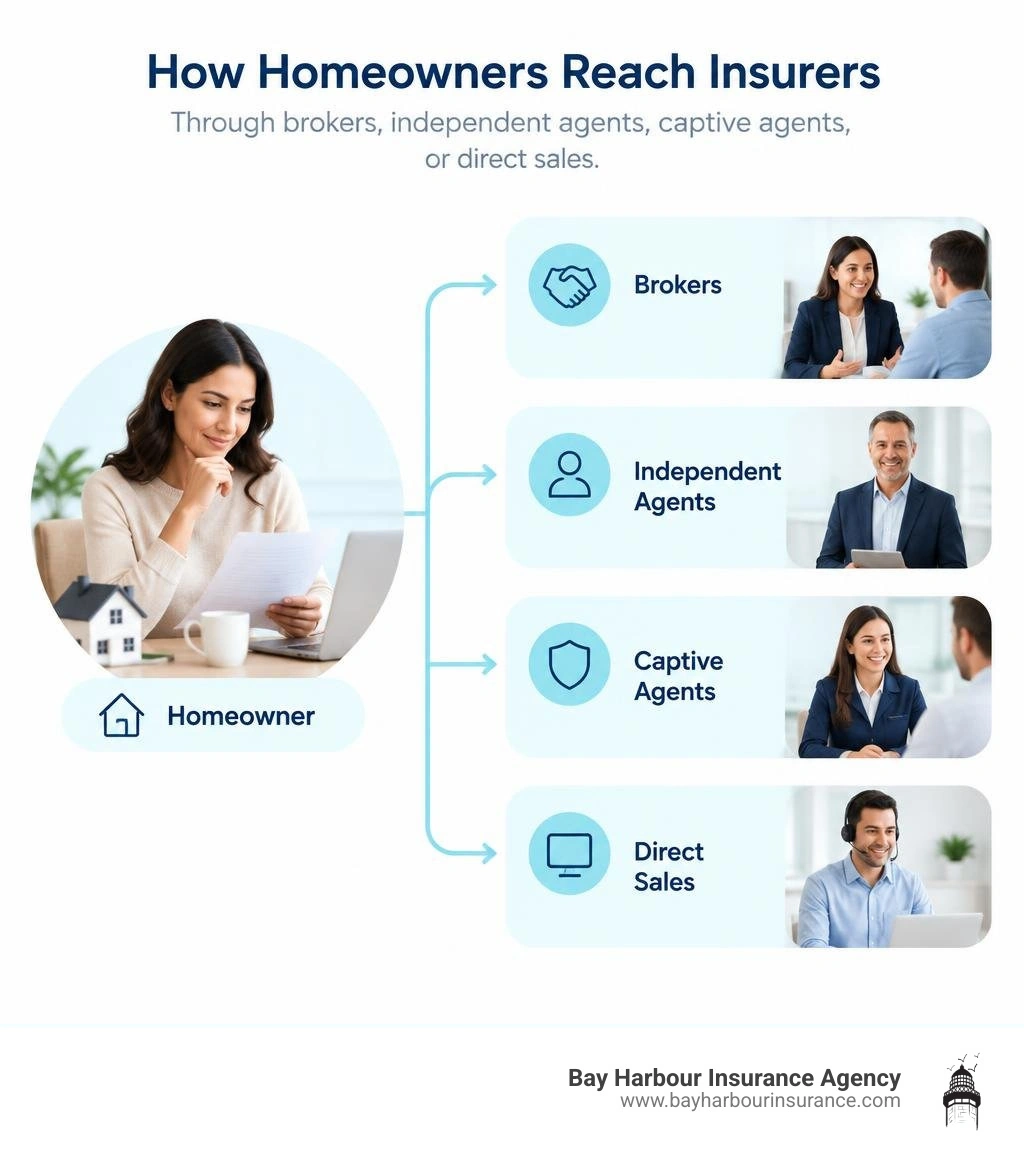
When securing coverage for your property, you will encounter various professionals offering policies. A homeowners insurance broker acts as an independent intermediary between you and multiple insurance carriers. Unlike representatives bound to a single corporation, a broker's primary duty is to represent you, the buyer.
Brokers analyze your unique living situation, assess property risks, and shop the open market to find policies matching your coverage needs and budget. Understanding these distribution channels helps clarify the buying process:
Whether your home is situated near the Great South Bay in Patchogue or nestled further inland on Long Island, mastering homeowners insurance basics ensures you partner with a professional who prioritizes your long-term security.
Differences Between Captive Agents, Independent Agents, and Brokers
A captive agent works exclusively for one carrier. If that company changes underwriting guidelines or raises rates across New York, a captive agent cannot move your policy to a different company.
Independent agents and brokers offer significantly more flexibility. Independent agents maintain contracts with multiple insurance companies, allowing them to compare policies within their network. Brokers take this a step further by operating as your direct representative, surveying a broad marketplace to secure custom terms. For families relocating to Holbrook or updating coverage across New York, working with a professional who isn't locked into a single carrier's pricing structure provides vital flexibility.
How Brokers Earn Compensation and What It Costs You
A common misconception is that using a broker adds substantial out-of-pocket costs. In standard personal lines insurance, brokers receive compensation directly from the insurance company you select, typically structured as a percentage of the policy premium.
Because insurance carriers establish fixed rates that must be approved by state regulators, premium prices remain consistent whether you purchase directly or through an advisor. You receive personalized guidance, risk reviews, and ongoing support without paying extra for your policy.
Key Policy Protections and Valuation Methods to Review
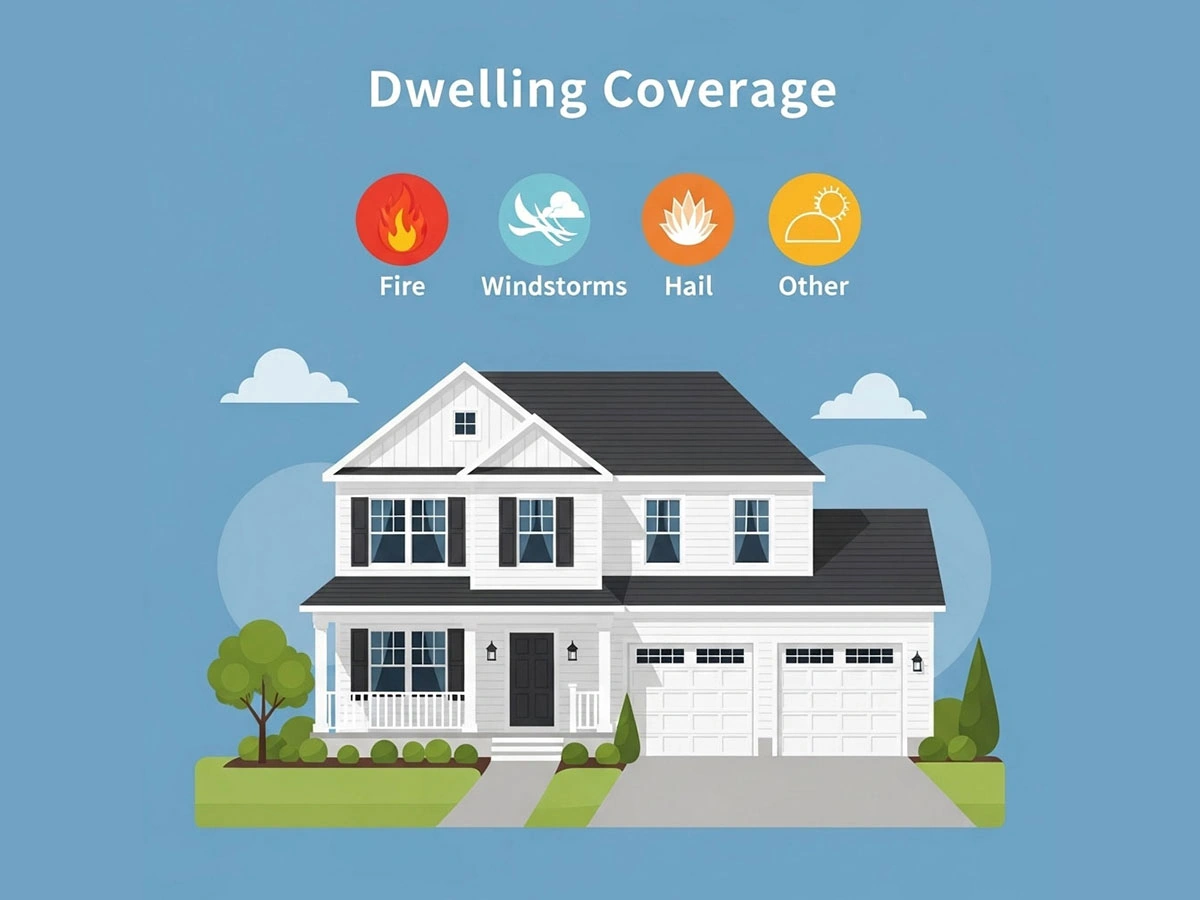
A comprehensive homeowners policy contains several distinct protection categories:
- Dwelling Coverage (Coverage A): Rebuilds or repairs the physical structure of your house after a covered loss.
- Other Structures (Coverage B): Protects detached garages, sheds, fences, and swimming pools.
- Personal Property (Coverage C): Compensates you for furniture, electronics, clothing, and personal items.
- Loss of Use / Additional Living Expenses (Coverage D): Pays for hotel stays, temporary rentals, and meals if your home becomes uninhabitable.
- Personal Liability (Coverage E): Protects your financial assets if a guest is injured on your property or you accidentally cause damage to others.
- Medical Payments to Others (Coverage F): Covers minor medical expenses for guests injured on your property, regardless of fault.
Understanding how perils apply to these areas is crucial. For instance, knowing does NY home insurance cover fire helps homeowners in Medford and Holtsville ensure their dwelling limits keep pace with modern construction expenses.
Understanding Actual Cash Value vs. Replacement Cost Coverages
Policy valuation methods dictate how much an insurer pays after a loss. Choosing the wrong method can leave you with significant out-of-pocket expenses:
Reviewing these structures helps you protect your home insurance before make mistake decisions that leave your family underinsured during major rebuilding projects.
Why Work with a Homeowners Insurance Broker for Hard-to-Insure Properties?
Certain homes present underwriting hurdles due to location, architecture, or environmental exposures. Properties facing complex risks benefit substantially from an experienced advisor:
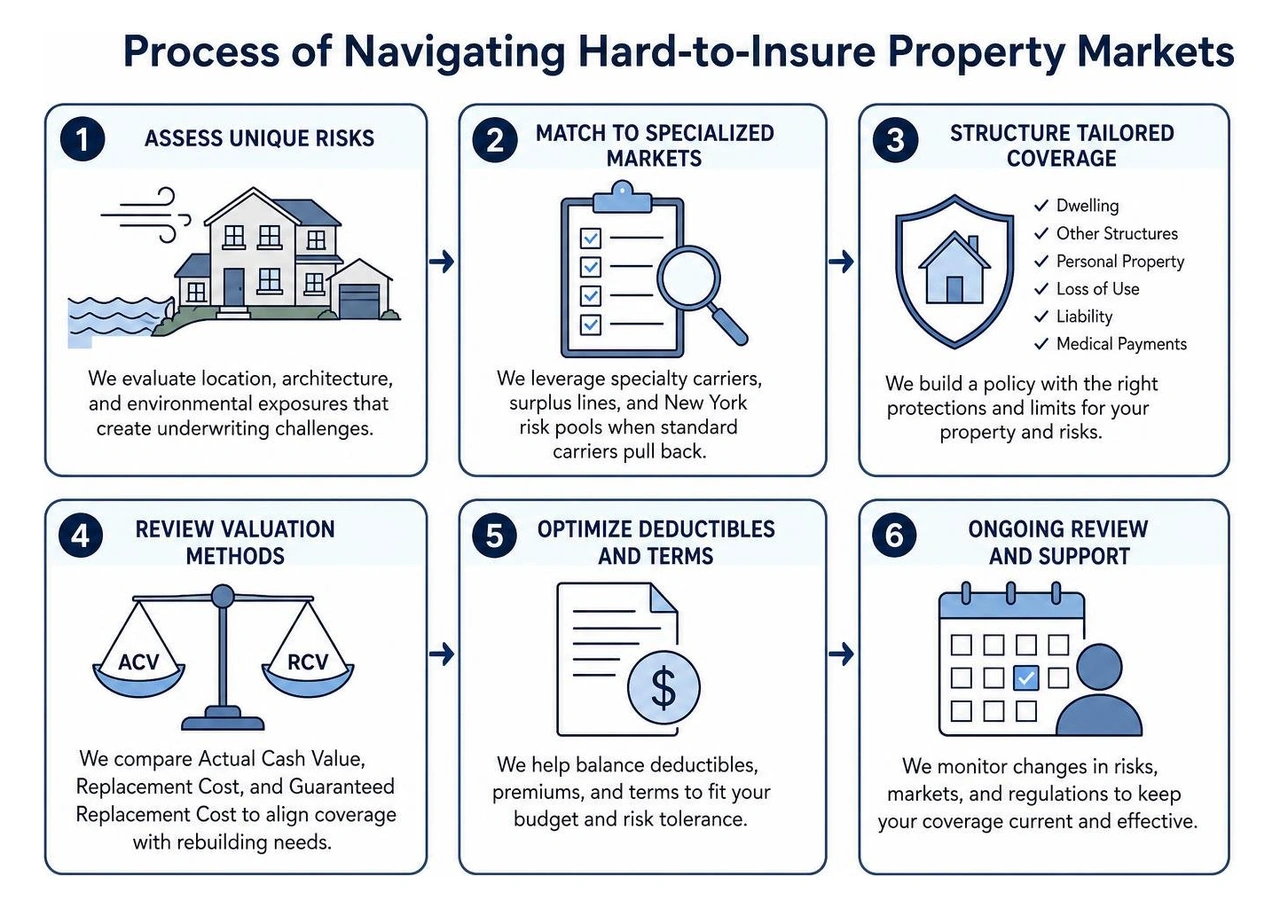
When coastal storms threaten coastal areas, understanding homeowners insurance hurricane impact is vital for properties throughout Long Island. Brokers tap into specialized surplus lines and state-specific risk pools across New York when standard carriers pull back, ensuring your home remains fully protected.
Navigating Deductibles and Preparing Information for Your Quote
Your policy deductible is the amount you pay out of pocket before coverage applies. Higher deductibles reduce your annual premium, while lower deductibles mean smaller out-of-pocket costs when filing a claim.
Deductibles generally fall into two categories:
- Flat Dollar Deductibles: A fixed amount (such as $1,000 or $2,500) applied per loss.
- Percentage Deductibles: Calculated as a percentage (typically 1% to 5%) of your dwelling coverage limit, often applied to specific perils such as hurricanes, named storms, or windstorms.
When calculating home insurance Long Island residents in Patchogue and Holbrook must balance deductible savings against their available emergency funds. Remember: if damage repair costs less than your deductible, you handle the repair yourself without insurance payouts.
Required Property and Personal Information for Accurate Quotes
To provide accurate policy options, a broker will request specific details about your home and claims background:
- Complete property address and estimated square footage
- Age and structural material of your roof
- Dates of major updates to heating, electrical, and plumbing systems
- Presence of protective devices (monitored alarms, smoke detectors, deadbolts)
- Special features such as swimming pools, trampolines, or detached structures
- Prior 5-year claims history and current policy declarations page
Gathering these details in advance allows your advisor to pinpoint carrier credits and avoid underwriting surprises.
How to Find a Reputable Professional and Avoid Common Scams
Protecting your primary investment requires working with licensed, ethical professionals who respect state insurance guidelines.
Steps to Vet and Verify a Homeowners Insurance Broker
- Verify State Licensing: Ensure the professional holds active licensing via the state insurance department regulator database.
- Review Consumer Records: Search state databases for official complaint indices and disciplinary actions.
- Examine Client Feedback: Review independent feedback and local community recommendations across Holtsville and Medford.
- Evaluate Carrier Access: Confirm the advisor works with multiple top-rated insurance companies across New York and Long Island.
Red Flags to Watch Out for When Shopping for Coverage
- Unsolicited High-Pressure Sales: Demands to purchase immediately or lose an unrealistic rate.
- Cash-Only Demands: Legitimate advisors process payments through verifiable carrier billing systems, never untraceable cash channels.
- Blank Documents: Never sign blank applications or incomplete coverage forms.
- Suspiciously Low Rates: Quotes drastically below market averages often exclude vital protections or carry extreme deductibles.
Frequently Asked Questions About Home Insurance
Does hiring a broker make my homeowners policy more expensive?
No. Insurance rates are filed and regulated by state insurance departments. Carriers compensate brokers through standard commissions included within base rates, giving you professional guidance at no additional cost.
How far in advance of closing should I contact a broker?
Contact an advisor at least 30 days before closing. This provides ample time to satisfy mortgage lender requirements, especially for best home insurance for first time buyers navigating purchasing deadlines in Patchogue.
Can a broker assist me when filing an insurance claim?
Yes. An independent advisor explains your coverage, helps gather repair documentation, communicates with company adjusters, and advocates for a fair claims resolution.
Conclusion
Securing the right policy protects what matters most. Whether you reside in Patchogue, Holbrook, Holtsville, or Medford, partnering with an independent team ensures your coverage matches your lifestyle. At Bay Harbour Insurance Agency, we deliver tailored coverage across Long Island and throughout New York. Connect with us today to evaluate your property with personalized care and explore your options for Homeowners Insurance New York State.