What Is an HO-5 Policy?
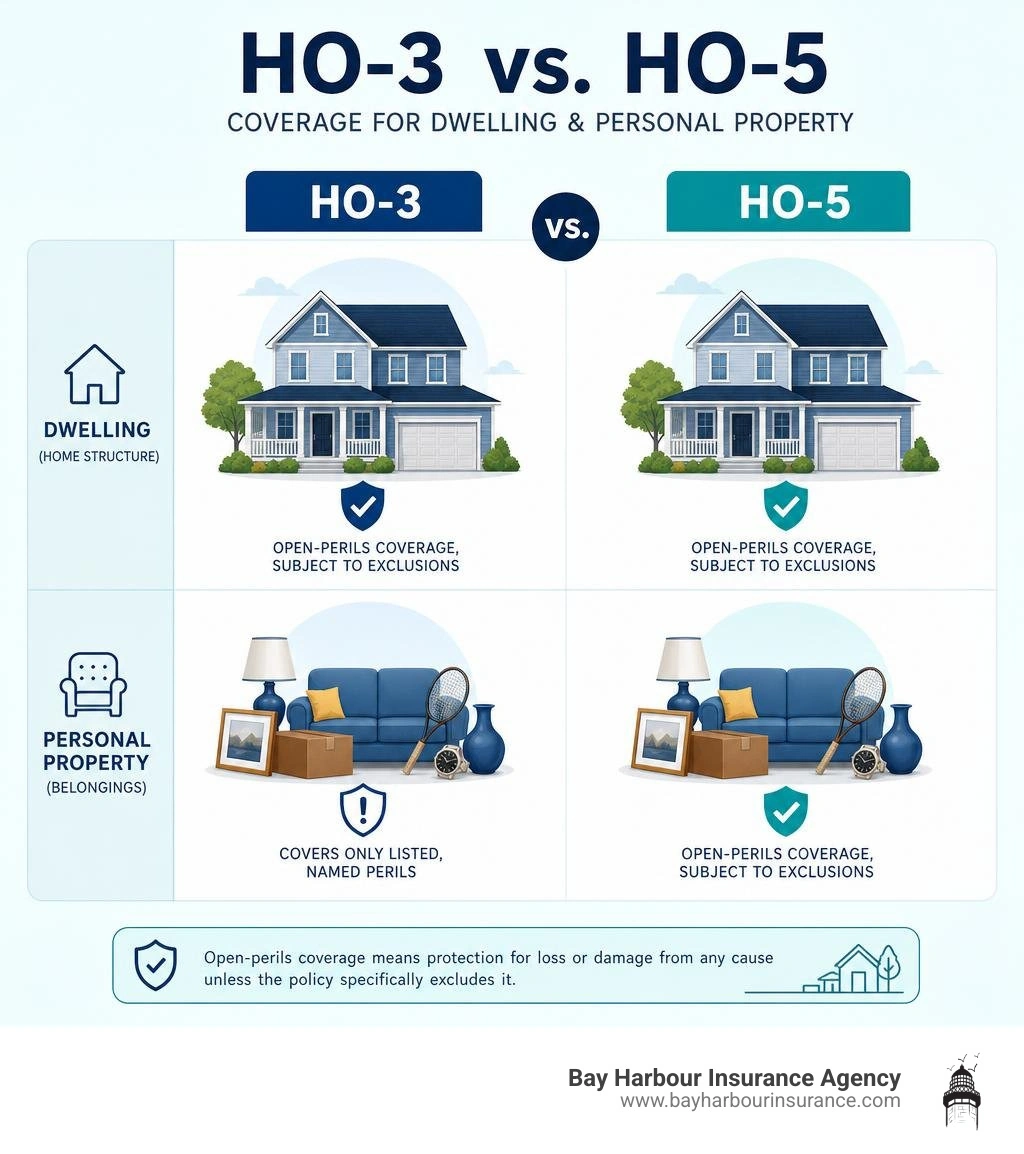
An ho 5 policy is the broadest standard type of homeowners insurance. It generally covers both your home and personal belongings for damage from any cause unless the policy specifically excludes it.
The quick difference between an HO-3 and HO-5 is simple:
For homeowners in Patchogue, Holbrook, Holtsville, Medford, and across Long Island, that distinction can matter. An HO-3 may protect belongings only when damage comes from a peril named in the policy. An HO-5 offers broader protection for everyday, unexpected losses - though it still does not automatically cover risks such as flooding, earthquakes, gradual wear, or poor maintenance.
I am Rick Braile, and next we'll break down what open-perils coverage really means and how to decide whether an HO-5 fits your home.
Ho 5 policy terms at a glance:
Understanding the HO 5 Policy: Open Perils vs. Named Perils
When we evaluate standard coverage options for homeowners across Long Island, understanding the core structure of insurance forms is essential. The insurance industry, guided by standard Insurance Services Office (ISO) forms, breaks down property protection into distinct categories. To grasp why an ho 5 policy (officially known as the Comprehensive Form) stands out, we first need to look at how insurers define losses.
In the realm of personal property protection, coverage typically operates under one of two core philosophies: open perils or named perils. If you are reviewing your homeowners insurance basics, you will discover that a peril is simply an event that causes damage or loss, such as a fire, theft, windstorm, or burst pipe.
Under a named perils arrangement, your policy acts like a guest list for a party: if the cause of damage is not specifically written down in the policy contract, it cannot come in, and the claim is denied. Conversely, open perils coverage operates like an open invitation with a VIP security list: every cause of damage is automatically invited (covered), except for a specific group of troublemakers explicitly barred at the door (excluded).
For families living in New York, selecting between these two concepts shapes how protected your contents really are. Whether you reside in a classic suburban neighborhood in Holbrook, an updated dwelling in Medford, or a coastal home near Patchogue, an ho 5 policy provides open perils protection across both your physical house structure and all your unscheduled personal belongings.
HO-3 vs. HO-5: Key Coverage Differences
The most frequent question homeowners ask us when choosing coverage in New York is how the standard HO-3 (Special Form) differs from the comprehensive HO-5 form. While both policy forms belong to the standard portfolio of eight homeowners policy forms (HO-1 through HO-8), their protection for personal property could not be more distinct.
An HO-3 policy insures your house structure (Coverage A) and detached structures (Coverage B) on an open perils basis, but it steps down to named perils for your personal belongings (Coverage C). Specifically, an HO-3 protects personal items against approximately 16 named perils, including:
- Fire or lightning
- Windstorm or hail
- Explosion
- Riot or civil commotion
- Aircraft damage
- Vehicle impact
- Smoke
- Vandalism or malicious mischief
- Theft
- Volcanic eruption
- Falling objects
- Weight of ice, snow, or sleet
- Accidental discharge or overflow of water/steam
- Sudden cracking or tearing of heating/cooling systems
- Freezing of plumbing or HVAC systems
- Sudden damage from artificially generated electrical current
If your property is damaged by something outside those 16 listed items under an HO-3, you bear the financial loss out of pocket. For instance, if an off-balance washing machine rocks violently and smashes an adjacent water heater glass liner, or if an aggressive wild animal breaks down a back door and raids a kitchen pantry, an HO-3 policy may leave you empty-handed because wild animal damage or mechanical impact is not among the 16 named perils.
Under an ho 5 policy in Long Island, however, those bizarre, unexpected incidents are covered because personal property is protected against all risks except those specifically named in the policy's exclusion list.
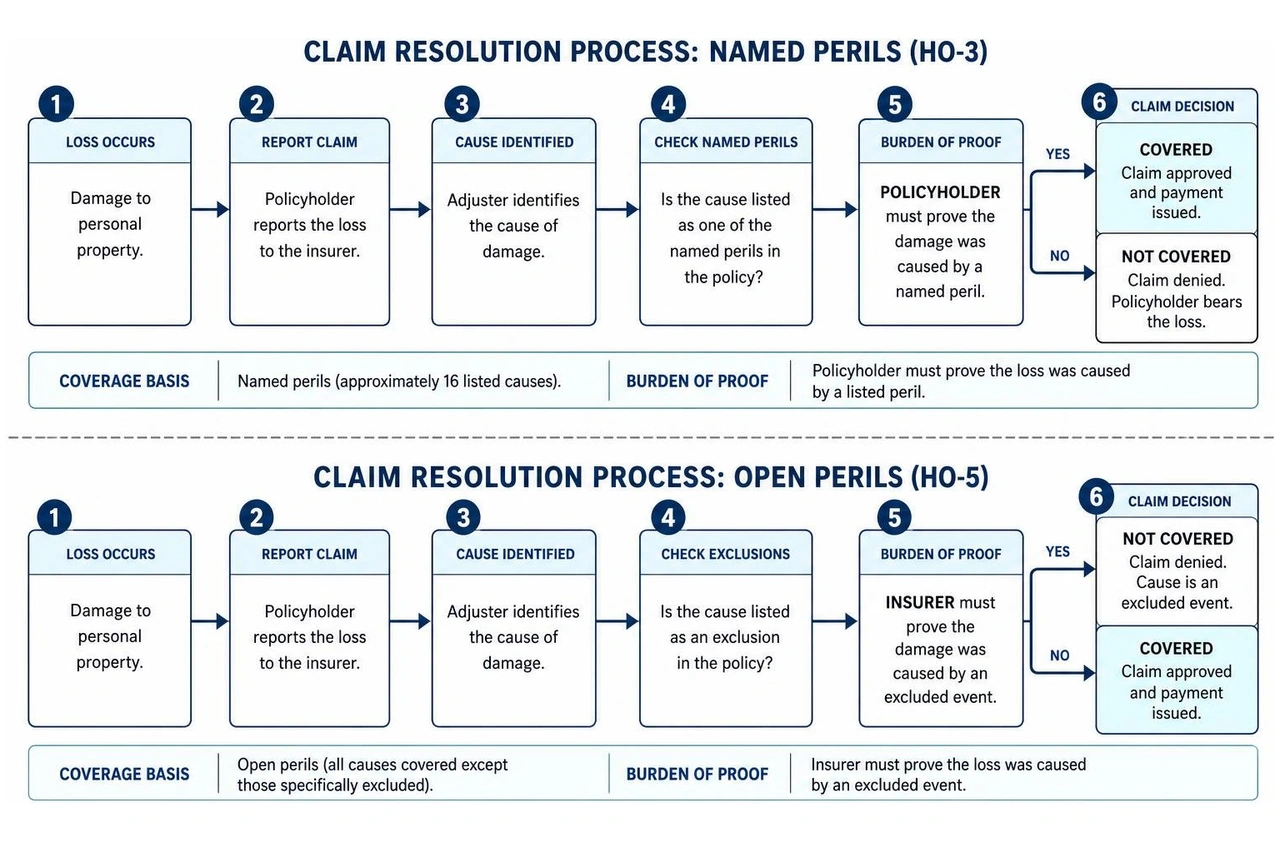
Furthermore, there is a fundamental legal difference between the two policies regarding the legal "burden of proof" during a claim:
- Under an HO-3 policy (Named Perils for contents): The policyholder carries the burden of proof. You must prove to the adjuster that the damage to your couch, television, or dining set was directly caused by one of the 16 listed perils.
- Under an HO-5 policy (Open Perils for contents): The insurance carrier carries the burden of proof. The insurer must prove that the loss was caused by an explicitly excluded event (such as flood, earthquake, or neglect) to deny the claim.
What an ho 5 policy Covers for Dwelling and Personal Belongings
An ho 5 policy offers total peace of mind by bundling six core protection categories under a comprehensive blanket:
- Coverage A (Dwelling): Pays to repair or rebuild the physical house structure, attached garages, and built-in appliances. Check our guide on dwelling insurance coverage ny for details on setting adequate limits.
- Coverage B (Other Structures): Protects unattached buildings on your parcel, such as detached garages, modern storage sheds, gazebos, or inground swimming pools.
- Coverage C (Personal Property): Covers furniture, clothing, electronics, cookware, and personal belongings anywhere in the world on an open perils basis.
- Coverage D (Loss of Use / Additional Living Expenses): Reimburses temporary living costs—including hotel stays, restaurant dining, and short-term rentals—if a covered loss renders your primary residence in Holtsville or Patchogue uninhabitable.
- Coverage E (Personal Liability): Protects your household assets if someone suffers bodily injury or property damage on your premises and brings a lawsuit against you.
- Coverage F (Medical Payments to Others): Pays minor medical expenses for guests injured on your property, regardless of legal fault.
Consider how personal property open perils coverage works in everyday life across Long Island:
- The Sprinkler Mishap: A lawn sprinkler head shoots high-pressure water straight through an open ground-floor window in your Medford residence, ruining custom drapes, expensive leather furniture, and high-end audio equipment. Under an HO-3, sprinkler spray is not a named peril. Under an ho 5 policy, it is covered.
- The Accidental Drop: While moving a solid granite coffee table across your living room in Holbrook, it tips over and cracks a high-end OLED television screen. An HO-3 would deny contents protection for accidental drops; an HO-5 reimburses the loss.
- Travel Losses: You lose a suitcase containing designer apparel and personal cameras while traveling abroad or visiting New York City. An HO-5 policy steps in to cover the missing belongings.
Cost Analysis and Eligibility for High-Value Home Insurance
Because an ho 5 policy provides broader safety nets and shifts the burden of claim verification onto the carrier, it naturally commands higher premiums than basic policy forms. However, many policyholders are surprised by how accessible comprehensive coverage can be when structured properly through an independent agency.
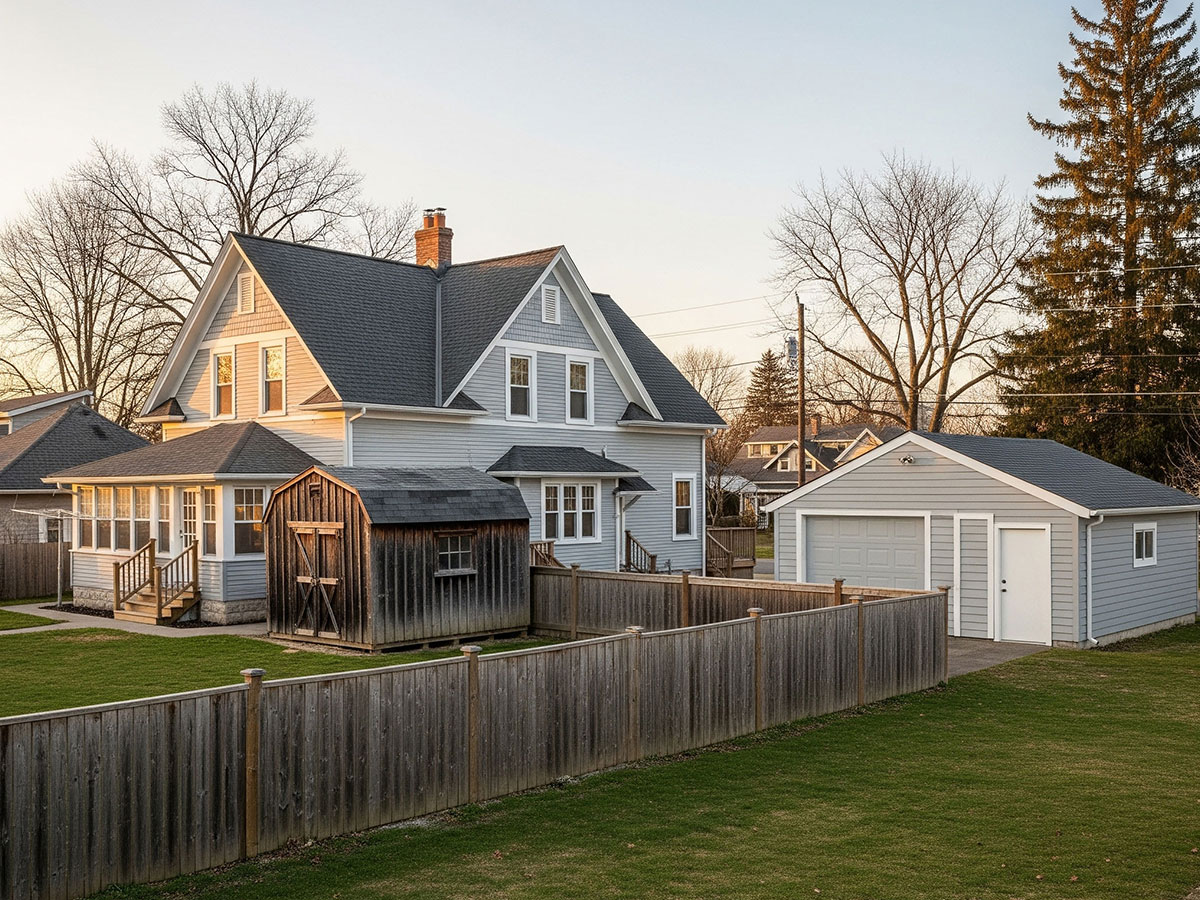
Premium Breakdown: HO-3 vs. HO-5 Costs in New York
Insurance carriers determine homeowners insurance pricing using sophisticated rating systems. The price difference between an HO-3 policy and an ho 5 policy typically ranges from a modest 10% to 30% increase for equivalent dwelling limits.
When you evaluate typical homeowners insurance ny, several factors dictate where your property lands within that spectrum:
- Location & Coastal Proximity: Properties situated along the South Shore in Patchogue or coastal communities face different weather exposures than inland homes in Holtsville or Holbrook.
- Home Construction & Square Footage: Premium custom construction, larger living areas, and high-end materials increase the total replacement valuation of the home.
- Claims History & Credit Score: Clean claims histories recorded in CLUE (Comprehensive Loss Underwriting Exchange) databases lower overall premium costs.
- Deductible Choices: Choosing standard flat deductibles versus percentage deductibles for coastal wind hazards directly influences your annual bill.
To offset the broader protection costs of an ho 5 policy, policyholders in New York frequently utilize multipolicy bundling discounts. By combining home insurance with auto policies, watercraft, or personal umbrella coverage through a single carrier, homeowners routinely unlock total premium savings between 10% and 25%.
Qualifying Your Home for an ho 5 policy
Because an ho 5 policy pays out broader claims on personal property and structure damage, insurance carriers apply strict underwriting rules before issuing standard policies. Insurers generally restrict this comprehensive form to primary residences that represent low physical risk.
Key eligibility factors required during underwriting include:
- Property Condition and Roof Age: Insurance carriers usually enforce a strict roof age cutoff, typically requiring roofs to be under 15 to 20 years old. Homes in Medford or Holbrook with architectural asphalt shingles or metal roofs in excellent condition easily pass inspection.
- Updated Infrastructure: Electrical, plumbing, and heating systems must meet modern standard codes. Homes built with older knob-and-tube wiring or unreinforced galvanized plumbing usually must be modernized before securing HO-5 coverage.
- Occupancy Requirements: The dwelling must be an owner-occupied primary single-family residence. Vacant properties, seasonal rentals, or multi-family investment properties are excluded from standard HO-5 programs.
- Local Fire Protection: Proximity to municipal fire hydrants and professional fire stations in areas like Holtsville, Patchogue, and across Long Island helps properties meet carrier safety standards.
- Underwriting Inspections: Insurance companies issue temporary coverage binders lasting 30 to 90 days while physical on-site or digital exterior/interior inspections take place.
For detailed guidelines on how industry professionals assess comprehensive forms, real estate owners can explore HO5 Insurance Basics for REALTORS®.
Policy Exclusions, Endorsements, and Claims Valuation
Even the most comprehensive ho 5 policy is not an "insure-everything" contract. The phrase "all-risk" or "open perils" means all unlisted risks are covered, but specific exclusions remain clearly defined within the contract text.
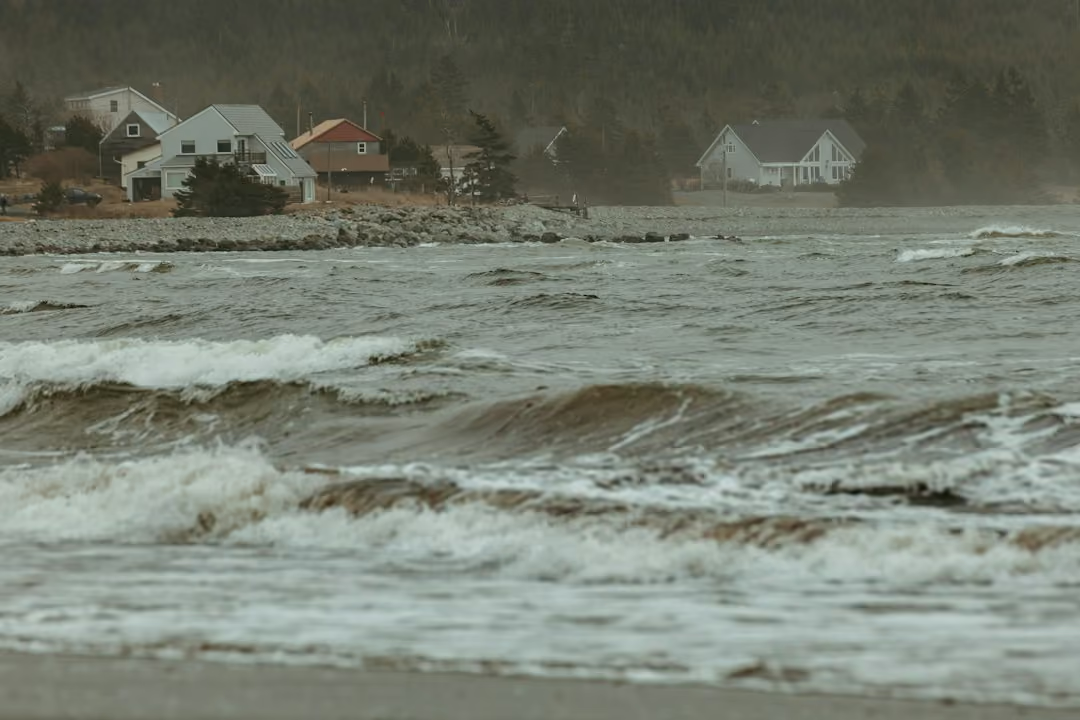
Key Exclusions to Keep in Mind
To avoid unexpected surprises when filing a claim in New York, homeowners must familiarize themselves with standard policy exclusions written across standard HO-5 policy documents:
- Flood and Rising Surface Water: No standard homeowners policy covers damage caused by coastal storm surges, overflowing rivers, rising surface water, or heavy torrential rainfall accumulation outside the home. Properties across Patchogue and coastal Long Island require separate dedicated flood insurance policies.
- Earth Movement and Settlement: Earthquakes, landslides, mudslides, and gradual foundation settling or cracking are excluded.
- Wear, Tear, and Maintenance: Natural deterioration, corrosion, dry rot, rust, thermal expansion, or damage caused by smog and environmental exposure are the owner's responsibility.
- Gradual Water Leaks: While a sudden, accidental pipe rupture is fully covered, slow seepage or leaking pipes over months or years caused by lack of maintenance will be denied.
- Pest Infiltration: Infestations by insects, rodents, termites, birds, or wild raccoons are considered home maintenance issues.
- Government Action and Ordinance: Seizure of property by legal authorities or demolition forced by local government orders are excluded.
- Intentional Acts and War: Fraudulent damage created intentionally by the named insured, nuclear hazard, or acts of war.
- Extended Vacancy Rules: If a dwelling in Holtsville or Medford remains vacant for more than 60 consecutive days prior to a loss, coverage for vandalism, glass breakage, and water damage is automatically suspended.
For homes exposed to severe coastal storms, review our expert analysis on homeowners insurance hurricane impact.
Essential Endorsements and Replacement Cost vs. ACV
To maximize the benefits of an ho 5 policy, homeowners should understand how claims are paid and which policy endorsements elevate standard protection.
There are two primary ways insurance companies calculate loss payouts:
- Actual Cash Value (ACV): ACV calculates the replacement cost of an item at today's retail market rates minus physical depreciation based on age and wear. If a five-year-old high-definition television is destroyed, ACV pays only its current used value, leaving you to pay the difference for a new model.
- Replacement Cost Value (RCV): RCV pays the actual price needed to buy a brand-new equivalent item in today's retail market without deducting a single penny for age or depreciation.
While basic HO-3 policies often default personal contents payouts to Actual Cash Value unless you pay extra for an upgrade, standard ho 5 policy products inherently incorporate Replacement Cost Value payouts for your contents.
To customize your protection even further, consider these vital endorsements:
Understanding how your belongings are valued is critical during a severe loss. Learn more about valuation principles in our breakdown of insurance valuation methods. You can also explore independent regulatory explanations at What Is an HO-5 Policy? Coverage, Costs, and Eligibility - LegalClarity.
Frequently Asked Questions About Long Island Home Insurance
Who is the ideal candidate for an HO-5 policy?
An ho 5 policy is ideal for homeowners who own high-value properties, possess extensive personal belongings, or simply want the most robust safety net available in the market today.
Specifically, you are a prime candidate if:
- You own a newer or substantially renovated home in areas like Holtsville, Holbrook, or Medford with modern electrical and roofing systems.
- You have accumulated high-quality furnishings, designer clothing, electronics, or personal collections across your residence.
- You want to eliminate stressful claim disputes where adjusters examine whether an unusual accident fits a strict named-peril list.
- You travel frequently with expensive personal property, cameras, or electronics that need worldwide protection.
How do mainstream and high-value insurance carriers handle HO-5 policies?
The approach to comprehensive coverage varies between regional mainstream carriers and specialized premier insurers:
- Mainstream Regional Insurers: Many standard insurance companies write HO-5 policies directly or convert an HO-3 base contract into comprehensive HO-5 equivalent coverage by attaching open perils personal contents and replacement cost endorsements.
- High-Value Specialty Carriers: Insurers catering to affluent policyholders construct true bespoke HO-5 policies from the ground up. These forms often feature unlimited replacement cost protection for structures, higher sub-limits for high-value items, and cash cash-out options if you choose not to rebuild after a total loss.
How can Long Island homeowners get accurate HO-5 policy quotes?
Getting an accurate quote requires more than typing basic numbers into an automated online form. To ensure your home in New York is evaluated correctly:
- Compile an Inventory: Walk through your residence in Patchogue, Holbrook, or Medford to list valuable contents, home improvements, and special feature upgrades.
- Determine Accurate Dwelling Limits: Ensure replacement estimates reflect realistic modern labor and material costs across Long Island, adhering to the 80% replacement cost rule to prevent underinsurance penalties.
- Work with an Independent Agency: Independent agents review multiple insurance companies simultaneously, matching your home's age and location to carriers offering competitive comprehensive rates.
Conclusion
Selecting the right homeowners protection comes down to balancing broad coverage peace of mind with household financial value. For homeowners across Patchogue, Holbrook, Holtsville, Medford, and all across Long Island, an ho 5 policy provides the highest tier of standard safety available—protecting both your physical home structure and your personal belongings on an open perils basis.
At Bay Harbour Insurance Agency, we pride ourselves on delivering client-centered, personal service as an independent agency deeply rooted in New York. We don't believe in one-size-fits-all policies. We take the time to evaluate your unique property exposures, examine carrier underwriting rules, and tailor custom coverage packages that protect what matters most to your family.
Ready to explore how comprehensive open perils coverage can secure your home? Contact our expert team today to review your current policy or request a personalized quote for homeowners insurance in New York State.