
What the Average Price for Home Insurance Tells You
There is no single average price that fits every home. Your premium depends most on where you live, what it would cost to rebuild your home, and the coverage and deductible you choose. To estimate your own cost, compare annual quotes with the same coverage limits and deductibles.
That matters on Long Island, where a home in Patchogue may face different risks than one in Holbrook, Holtsville, or Medford. I’m Rick Braile, and I’ll walk you through what drives the price and where you may be able to save.
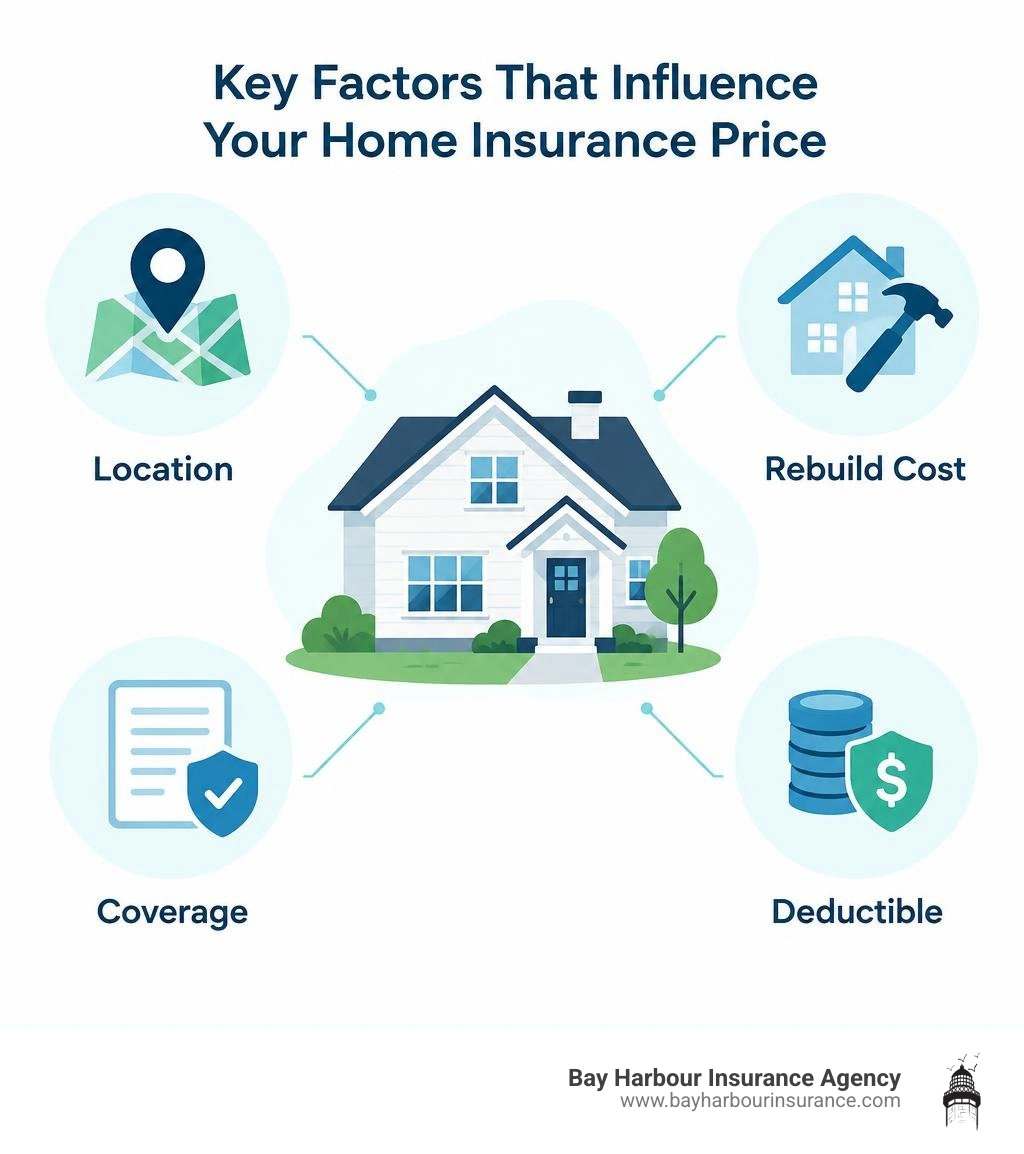
Average price for home insurance vocab explained:
National and Global Breakdown: Average Price for Home Insurance in 2026
When evaluating property coverage, understanding baseline benchmarks helps put local policy costs into perspective. Insurers calculate premiums primarily around the cost of rebuilding a structure from the foundation up rather than its real estate market value. A comprehensive review in an Average Home Insurance Cost Complete Guide in (2026) underscores that materials, labor rates, and local weather risks establish the base price for any standard policy.
US National Averages and Dwelling Coverage Benchmarks
Across the United States, dwelling limits serve as the core driver of premium calculations. A home with higher reconstruction requirements demands greater structural limits, directly shifting your base rate. According to The Average Home Insurance Cost 2026 - Forbes , broader macroeconomic factors like material inflation and severe storms continue to influence baseline expenses across all coverage tiers.
International Comparisons: UK and France Policy Costs
Looking outside domestic borders provides interesting context for how risk is shared globally. In the United Kingdom, combined buildings and contents policies for single-family freehold properties are structured around standardized rebuilding tables. Meanwhile, renters frequently secure contents-only policies to protect personal belongings without carrying structural liabilities.
In European markets such as France, property insurance often reflects distinct construction styles, ranging from historic stone houses with detached outbuildings to modern town center homes. In these markets, properties featuring high-exposure amenities such as in-ground swimming pools or extensive outbuildings command customized liability and structural surcharges, echoing the underwriting principles we see domestically.
Key Cost Drivers and Property Factors Determining Your Premium
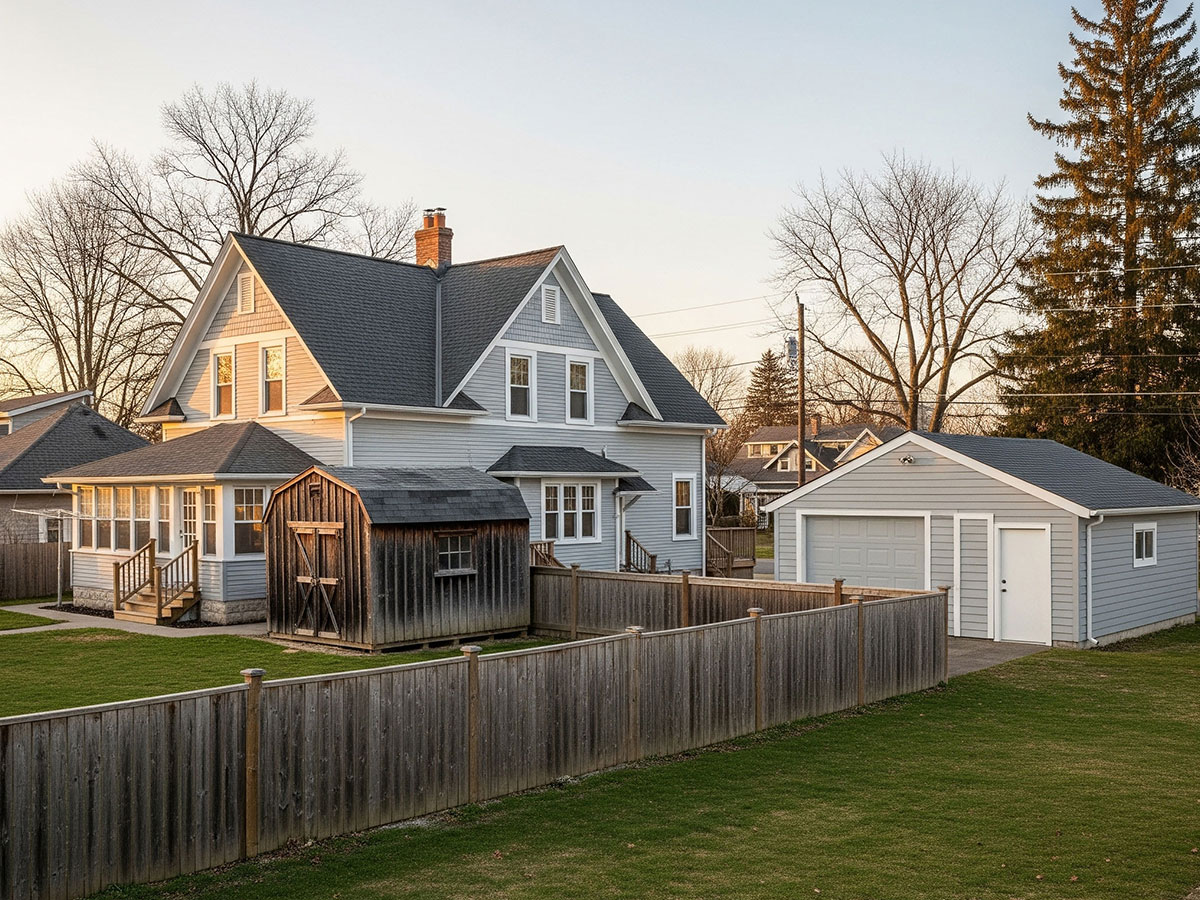
Every house tells a story through its building materials, architectural lines, and square footage. When underwriters evaluate a property, they look closely at structural vulnerability. Understanding your dwelling insurance coverage in NY ensures that your policy accurately mirrors modern labor and construction expenses rather than outdated municipal assessments.
How Property Type and Structural Risks Change the Average Price for Home Insurance
The structural design of your home plays a major role in determining claim vulnerability:
- Detached Single-Family Homes: These structures have four exposed exterior walls, making them fully susceptible to wind, hail, and exterior perimeter hazards.
- Semi-Detached and Attached Properties: Shared firewall partitions reduce exterior exposure, often resulting in adjusted structural risk profiles.
- Roof Geometry and Materials: Hip roofs, which slope downward on all four sides, perform significantly better in high winds than traditional gable roofs with flat vertical ends.
- Older and Historic Construction: Properties with vintage plaster, custom millwork, or older wiring require specialized policy structures such as an HO-5 policy for Long Island to properly cover comprehensive replacement needs.
Liability Risk Factors: Pools, Trampolines, Dogs, and Home Businesses
Insurance isn't just about the physical roof over your head; it also protects your personal assets against third-party liability claims. Certain property features introduce elevated liability exposures known as attractive nuisances:
- Swimming Pools: In-ground and above-ground pools represent major drowning and slip hazards, requiring secure perimeter fencing, self-latching gates, and higher underlying liability limits.
- Trampolines: Due to severe fall and impact injury risks, many carriers apply specific coverage exclusions or require dedicated safety netting.
- Dog Breeds: Specific breeds with higher historical bite frequencies may lead to increased liability premiums or breed-specific exclusions.
- Home-Based Businesses: Operating a commercial enterprise out of your residence introduces customer foot traffic and business property exposures that standard residential policies exclude without specialized endorsements.
Policy Structure: Buildings vs Contents and Coverage Add-Ons
A standard homeowners policy combines several distinct coverage sections. Buildings coverage repairs the permanent physical structure, fixtures, and attached outbuildings. In contrast, contents coverage protects your furniture, clothing, and personal electronics.
To bridge common coverage gaps, homeowners frequently select policy riders:
- Accidental Damage Cover: Protects against sudden unintentional mishaps within the home.
- Home Emergency Assistance: Provides rapid dispatch support for burst pipes, heating system failures, or electrical faults.
- Legal Protection Endorsements: Covers legal defense costs associated with boundary disputes, contractor conflicts, or property claims.
- Water Backup Coverage: Crucial protection for sewer line or sump pump failures that standard base policies exclude.
Regional Variations: Cheapest vs Most Expensive States and Local Markets
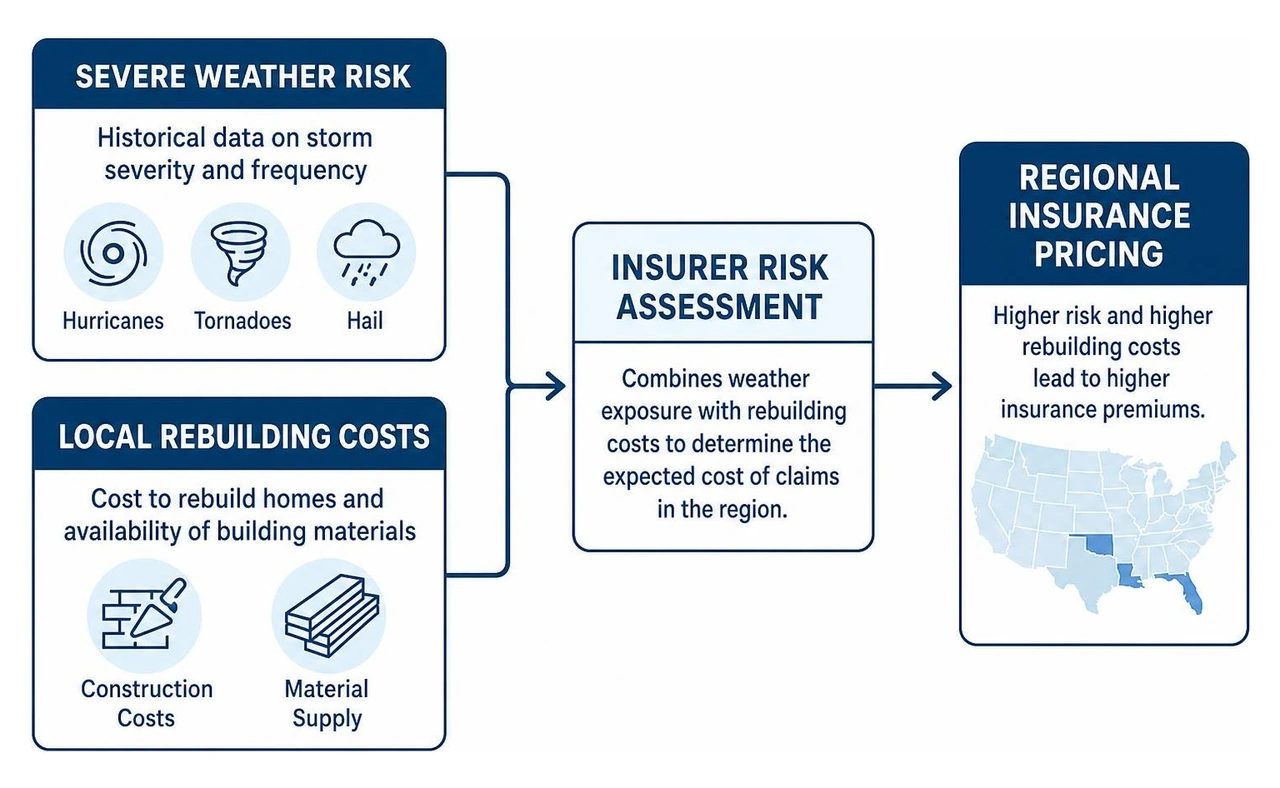
Geography dictates exposure to catastrophic weather. Insurers assess historical meteorological data to measure storm severity, frequency, and wildfire corridors across different regions.
State-by-State Rate Extremes and Weather Exposure
Regions with minimal severe weather history, such as Hawaii and Vermont, benefit from lower baseline risks. Conversely, areas situated in active tornado alleys or exposed coastal hurricane tracks, such as Oklahoma, Florida, and Louisiana, face substantial structural exposures. In these high-risk areas, catastrophe reinsurance rates and building supply demands following major storms place upward pressure on standard policy pricing.
Regional Focus: The Average Price for Home Insurance in New York and Coastal Areas
For property owners throughout New York, location within the state creates significant premium variations. Upstate inland properties encounter heavy winter snow loads and freezing pipes, while coastal communities face oceanic wind and storm surge exposures.
Here on Long Island, proximity to the coastline shapes policy terms. Homeowners in historic south shore villages like Patchogue face distinct coastal wind patterns compared to inland suburban neighborhoods in Holbrook, Holtsville, and Medford. In these areas, specialized hurricane and windstorm deductibles often apply. Reviewing how typical homeowners insurance costs across New York operate allows property owners in Patchogue, Holbrook, Holtsville, and Medford to balance high-limit coverage with practical deductibles.
Strategic Ways Homeowners Can Lower Their Premiums

Rising property values and construction costs do not mean you are powerless against climbing expenses. By taking proactive risk management steps, homeowners can control their policy costs while maintaining robust protection. Reviewing a practical step-by-step checklist for buying home insurance helps identify coverage opportunities before signing a policy.
Deductible Strategies, Policy Bundles, and Security Discounts
Implementing strategic policy adjustments can yield meaningful annual savings:
- Adjust Voluntary Deductibles: Choosing a higher out-of-pocket deductible shifts minor repair expenses away from the insurer, resulting in lower base premiums.
- Multi-Policy Bundling: Combining your personal auto coverage with your property policy through a single carrier remains one of the most effective ways to earn multi-line discounts.
- Protective Device Credits: Installing centrally monitored burglar alarms, automatic water shutoff valves, and certified fire suppression systems reduces hazard ratings.
- Mature Homeowner Credits: Retirees who spend more time at home often qualify for mature homeowner credits, as their presence allows for faster detection of plumbing leaks or security threats.
- Targeted State Savings: Learn specific local tactics by exploring how to save money on home insurance in NY.
Claims History and Understanding the Payout-to-Premium Ratio
Insurance is designed to protect your household from catastrophic financial loss, not routine property maintenance. When you file small, frequent claims, carriers adjust your Comprehensive Loss Underwriting Exchange (C.L.U.E.) report, which can increase your rates or even lead to non-renewal.
Maintaining a claim-free record protects your carrier discounts. Because average industry claim payouts for major fire, severe storm, or major water damage reach substantial figures, reserving your coverage for major events keeps your annual baseline manageable.
Frequently Asked Questions About Home Insurance Costs
What is the national average price for home insurance in 2026?
The national baseline is shaped by rising material supply costs, labor shortages, and regional weather trends. While standard policies across the country fluctuate based on dwelling rebuild limits and local risk factors, comparing coverage options on an identical replacement-cost basis provides the clearest benchmark for your property.
Why are coastal and storm-prone areas significantly more expensive to insure?
Coastal properties experience heightened exposure to tropical storms, high-velocity wind events, and flooding. To account for this increased risk, insurers utilize specialized wind and hurricane deductibles. Higher reinsurance costs in these coastal corridors also influence underlying policy rates.
How much can I save by increasing my deductible or bundling policies?
Adjusting your standard deductible to a higher threshold can lower your overall policy cost by reducing the insurer's exposure on minor claims. Additionally, bundling your home and auto policies, maintaining a claims-free record, and installing monitored protective devices deliver substantial compounding discounts.
Conclusion
Finding reliable, cost-effective property coverage requires balancing local structural risks with proper dwelling replacement values. As an independent agency rooted right here on Long Island, Bay Harbour Insurance Agency works directly with homeowners across Patchogue, Holbrook, Holtsville, and Medford to design tailored coverage solutions. Whether you live in a coastal home in Patchogue, a quiet neighborhood in Holbrook, or a family residence in Holtsville or Medford, our independent team provides personal service and local insight. Connect with our team today to request comprehensive New York homeowners coverage quotes and ensure your home is fully protected.