

How to Compare Home and Contents Insurance
When comparing home and contents insurance, start with what you need to protect. Building coverage protects the structure; contents coverage protects your belongings. A combined policy covers both. Then compare quotes with the same coverage limits and check the deductibles, exclusions, and how claims are paid. The lowest premium may leave a costly gap.
That matters on Long Island, where a home's storm and flood risks can shape the coverage you need. I'm Rick Braile, and I'll help you sort through those choices.
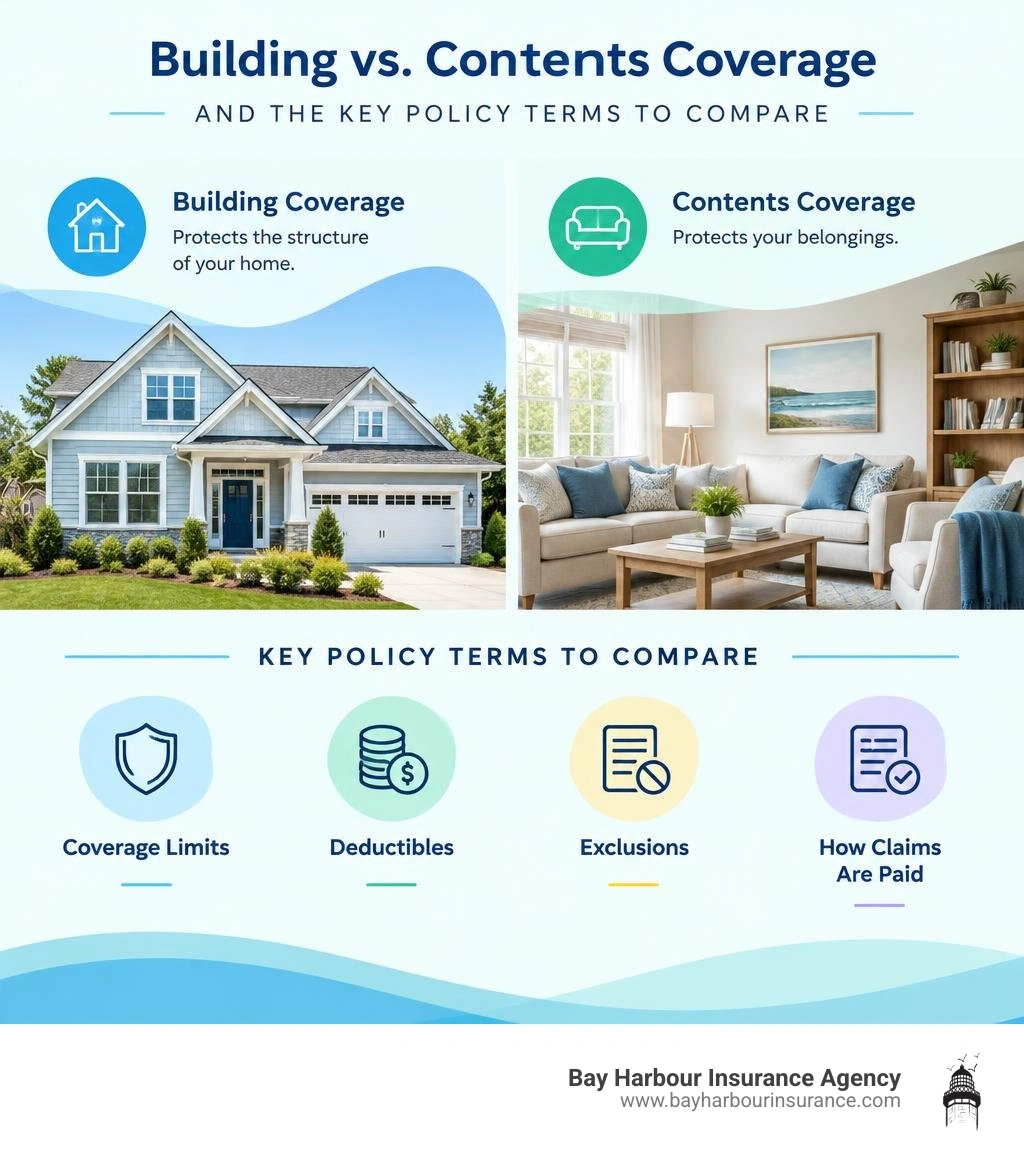
Explore more about comparing home and contents insurance:
Core Differences When Comparing Home and Contents Insurance

Understanding the core distinctions between property structures and movable belongings is the foundation of smart risk management. When we look at standard homeowners insurance basics, protection splits into distinct buckets: building protection, personal property protection, and personal liability.
Building insurance (often classified as dwelling coverage) repairs or rebuilds the physical fabric of your house if disaster strikes. Contents insurance handles what you fill that house with—from your living room couch and dining table to your wardrobe, laptop, and kitchenware. If you turned your home upside down and shook it, everything that falls out is generally classified as contents, while everything that stays attached falls under building coverage.
Purchasing a unified policy often streamlines your experience. Instead of managing separate policies with mismatched renewal dates, a combined package coordinates your limits. According to established guide to home buildings and contents insurance principles, keeping your structure and personal possessions under one roof ensures you do not face conflicting claim disputes between two different carriers after a major loss.
Dwelling Coverage vs Personal Property Coverage
Dwelling coverage takes care of the heavy lifting when severe weather or fires compromise your home's integrity. It covers your roof shingles, exterior siding, load-bearing walls, subfloors, plumbing infrastructure, and electrical wiring. It also extends out to other permanent structures on your land, such as detached tool sheds, perimeter fencing, and driveways. Securing adequate dwelling insurance coverage in NY ensures that rising construction material prices do not leave you short if your house requires structural reconstruction.
Personal property coverage steps in for everything else. If an electrical fire breaks out in the kitchen or a pipe bursts over your entertainment system, contents coverage funds the repair or replacement of your furniture, designer clothing, televisions, and kitchen appliances. Whether you reside in Patchogue, Holbrook, or Medford, maintaining an accurate distinction between what is bolted down and what is portable prevents nasty surprises during claim assessments.
Step-by-Step for Comparing Home and Contents Insurance Policies by Property Type
Your living arrangement dictates how you should structure your policy search. No two property deeds carry the same legal obligations, making it vital to customize your approach.
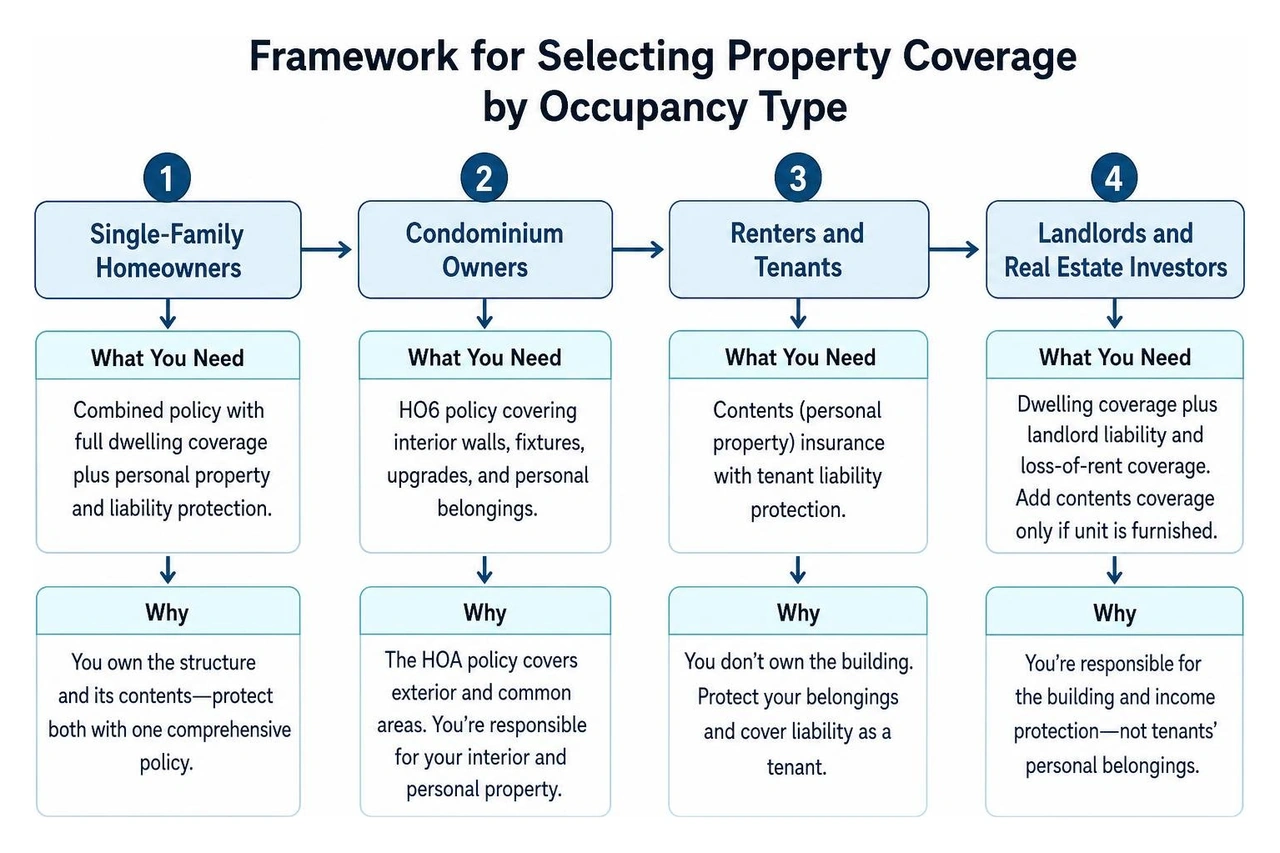
- Single-Family Homeowners: You need a comprehensive policy combining full dwelling replacement coverage with robust personal property and liability protection.
- Condominium Owners: Your homeowners association (HOA) maintains a master policy covering the exterior siding, roof, and common hallways. You require a specialized HO6 insurance policy to cover interior walls, custom fixtures, upgraded countertops, and your private belongings.
- Renters and Tenants: You hold zero responsibility for the building's brick and mortar. Your sole focus is securing contents insurance to protect your personal wardrobe, electronics, and furnishings, alongside tenant liability coverage.
- Landlords and Real Estate Investors: You need dwelling protection plus specialized landlord liability and loss-of-rent coverage, adding only minimal contents coverage if you lease the unit fully furnished.
Whether evaluating single-family residences in Patchogue, private condo communities in Holtsville, or suburban subdivisions across Holbrook and Medford, aligning your policy type with your deed avoids paying for overlapping or redundant coverage.
Critical Policy Elements and Valuation Methods

Comparing quotes requires looking past the monthly premium and evaluating how an insurer calculates losses. When calculating home insurance on Long Island, you must inspect the policy schedule, insured perils (named perils versus open perils), coverage limits, liability baselines, and policy exclusions.
Replacement Cost vs Actual Cash Value (ACV)
The settlement method you choose directly determines your claim payout. The two primary valuation standards operate very differently:
- Actual Cash Value (ACV): Calculates the cost to replace an item minus physical depreciation and age. If a lightning surge destroys your five-year-old television, ACV pays what that used television was worth on the open market today—often just a fraction of what you paid.
- Replacement Cost Value (RCV): Pays the actual cost to buy a brand-new item of similar kind and quality today, without factoring in depreciation.
Opting for replacement cost coverage on both your dwelling and your personal possessions is vital. Due to building material inflation and modern labor rates, selecting proper insurance valuation safeguards your household from absorbing thousands of dollars in unexpected out-of-pocket costs after a covered disaster.
Understanding Deductibles, Limits, and Scheduled Floaters
Your deductible is the out-of-pocket amount you agree to pay before insurance funds take over. While selecting a higher base deductible lowers your ongoing premium, you must be comfortable paying that amount on short notice.
Standard personal property policies also enforce sub-limits on high-risk categories:
- Jewelry, watches, and precious gems: Standard caps often limit theft payouts to $1,500 unless specifically endorsed.
- Fine art, antiques, and memorabilia: Subject to strict per-item claim ceilings.
- Specialized business equipment and high-end electronics: Capped when stored inside a private home.
If you own valuable engagement rings, rare coin collections, or high-end musical instruments in Holtsville or Patchogue, you should add a scheduled personal property floater. Floaters provide agreed-value coverage, bypass your standard deductible, and protect against accidental loss or damage anywhere in the world.
Pitfalls to Avoid When Comparing Home and Contents Insurance Options
Underinsurance remains one of the most common mistakes property owners make. Upgrading a kitchen, finishing a basement, or adding an outdoor patio increases your home's replacement value, but failing to notify your agent leaves you vulnerable.
Similarly, forgetting to catalog new electronics or high-value furniture can leave your contents limit well below what you actually own. It is equally important to know what standard policies exclude; for instance, confirming your coverage for fire damage in NY gives peace of mind, but assuming that same policy covers rising floodwaters or sewer backups without specific endorsements creates dangerous coverage gaps.
Regional Risks and Reducing Your Coverage Costs on Long Island
Living on Long Island offers exceptional lifestyle benefits, but our unique geography introduces distinct weather hazards. Coastal exposure directly shapes policy pricing across New York, making it essential to discover proven methods for how to save money on home insurance in NY without gutting essential safety nets.
Navigating Coastal Hazards, Flood Zones, and Hurricane Deductibles
Standard property insurance policies treat wind, hurricanes, and rising water very differently:
- Hurricane and Windstorm Deductibles: Unlike a flat $500 or $1,000 all-peril deductible, coastal policies often carry mandatory hurricane deductibles expressed as a percentage (typically 1%, 2%, or 5% of your dwelling limit). If your house is insured for $500,000 with a 2% hurricane deductible, your out-of-pocket cost is $10,000 for a named storm event.
- Flood Exclusions: Standard homeowners insurance does not cover flood damage caused by tidal storm surge, overflowing waterways, or severe surface runoff.
- Specialized Flood Insurance: Homes near Patchogue waterfronts, Holbrook groundwater basins, or low-lying sections of Medford require dedicated National Flood Insurance Program (NFIP) or private flood policies.
Understanding how homeowners insurance is impacted by hurricanes allows you to properly budget for seasonal storms and secure separate flood endorsements before hurricane season arrives.
Actionable Strategies to Lower Premium Costs
You do not have to settle for runaway insurance costs. Applying these practical steps helps Medford homeowners, Holbrook residents, and Patchogue families keep premiums manageable:
- Bundle Your Policies: Combining your home and auto insurance with the same carrier yields significant multi-policy discounts.
- Upgrade Home Security: Installing central-station smoke alarms, burglar alarms, smart water leak sensors, and deadbolts earns safety credits.
- Select a Manageable, Higher Deductible: Shifting your standard property deductible from $500 to $1,500 can meaningfully lower your annual premium.
- Maintain a Claim-Free Record: Avoid filing small claims for minor repairs that cost barely more than your deductible.
- Review Your Policy Annually: Ensure you are not paying for structures you have removed or floaters for items you no longer own.
Frequently Asked Questions About Home and Contents Coverage
How often should I review my home and contents coverage limits?
You should review your insurance policy annually at renewal. You should also reach out to your agent whenever you complete a major home renovation, install built-in appliances, or acquire high-value personal assets like jewelry, fine art, or high-end electronics. Regular updates prevent underinsurance caused by rising local construction costs.
Do condo owners and renters in New York need building insurance?
Renters never need building insurance because structural maintenance rests entirely with the landlord; tenants only require contents insurance to protect their personal belongings. Condo owners in New York do not need a full building policy, but they do require an HO-6 policy to cover their interior walls, cabinetry, fixtures, and personal contents that fall outside the HOA master policy.
What events are typically excluded from standard property policies?
Standard homeowners and contents insurance policies exclude damage caused by rising floodwaters, surface runoff, earth movement (earthquakes and sinkholes), sewer or drain backups, continuous mold buildup, pest infestations, and everyday wear and tear. Most of these excluded hazards can be covered by purchasing separate policy endorsements or standalone flood and water-backup coverage.
Conclusion
Securing the right balance of building and personal property insurance is all about protecting your hard-earned assets against unexpected disasters. Whether you are settling into a single-family home in Medford, managing a condo in Holtsville, or updating your family's coverage in Holbrook and Patchogue, taking the time to compare limits, deductibles, and valuation methods ensures you are never caught unprepared.
At Bay Harbour Insurance Agency, we are proud to serve Long Island families across New York with independent, personalized guidance. As an independent agency, we work for you—not the insurance carriers. Contact our team today to explore customized New York homeowners insurance solutions and ensure your home, belongings, and financial future remain secure.